

One of the oldest night markets in Taipei, the Raohe Street Night Market 饒河夜市 is packed with food, retail and entertainment stalls.
Raohe Street Night Market is the epitome of authentic Taiwanese experience. With its wide range of traditional street food stalls, quaint retail shops, and arcade style activities, this is a must visit for any tourist.
As the name suggests, it’s located along Raohe Street in the Songshan District.
So while the market is not as big or well-known as the Shilin Night Market, it has around 600 meters of shopping space. This single pedestrian lane makes this open air market easy to navigate and browse through. It is also not as touristy and crowded as some of the orher markets.
You know when you’re at Raohe the moment you see a temple at the beginning of the road.
The 250 year old Ciyou Temple, built during the Qing Dynasty by residents, sits at the eastern end of the market just outside the Songshan Station. Its is close to the MRT Green Line, making...


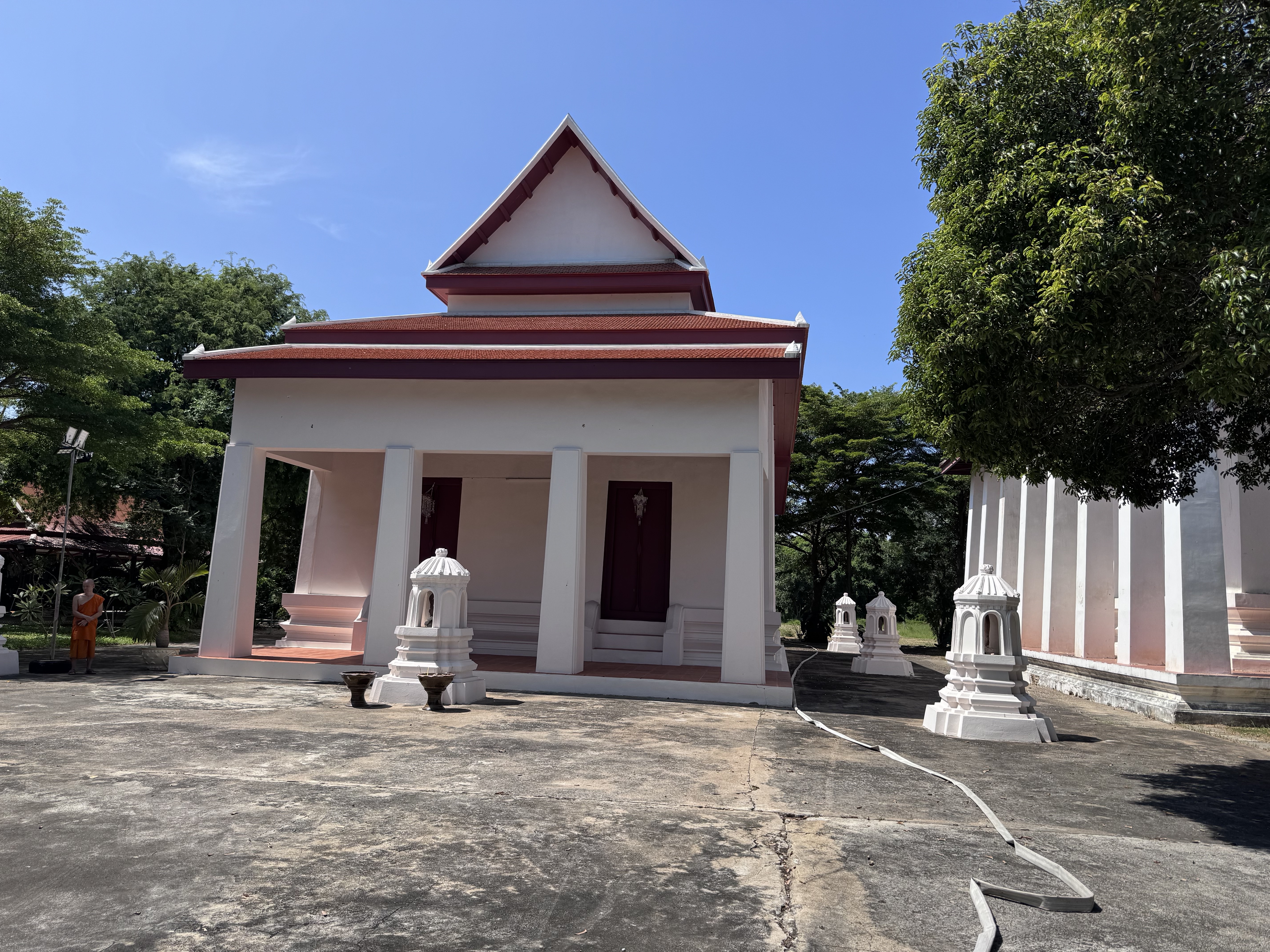
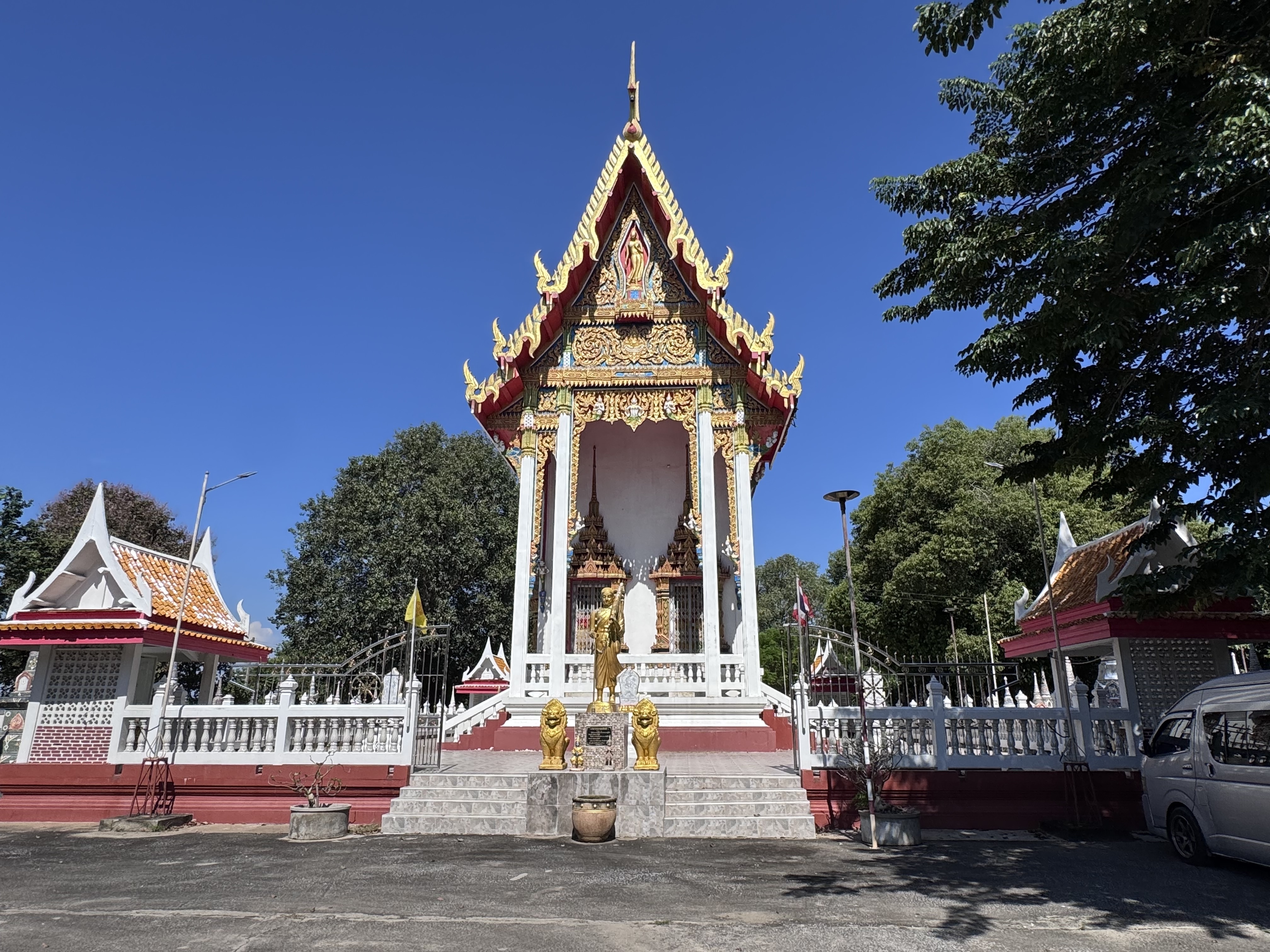
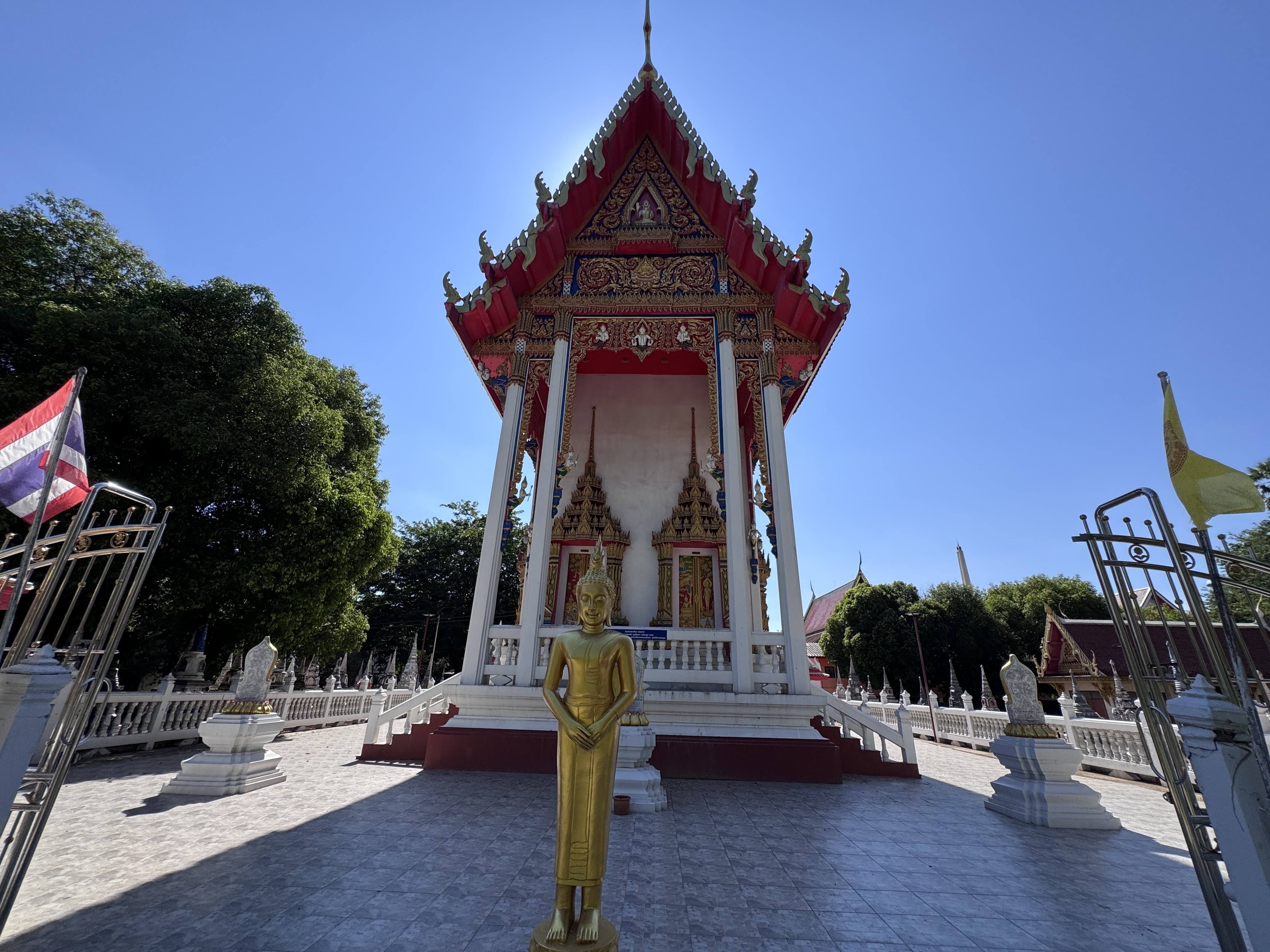
Wat Muang, the Purple Monastery, stands as an active community temple north of the old city island. Its name derives from the earlier village of Ban Muang that occupied the same ground, a common pattern in Thai rural naming where the local monastery takes its identity from the settlement it serves.
The temple sits on land that once lay on the right bank of a meandering stretch of the old Lopburi River. In earlier centuries that waterway curved past the site and continued toward Hua Ro; later road construction severed and silted the channel, though remnants of the former course and the short surviving canal known as Khlong Ban Muang can still be traced in the landscape.
Historical records of the temple’s foundation are sparse and rest largely on oral tradition rather than contemporary documents. The most widely accepted account places its establishment in the early Rattanakosin period, around 1812, with the formal granting of boundary stones two years later in 1814. The ordination hall itself is ...
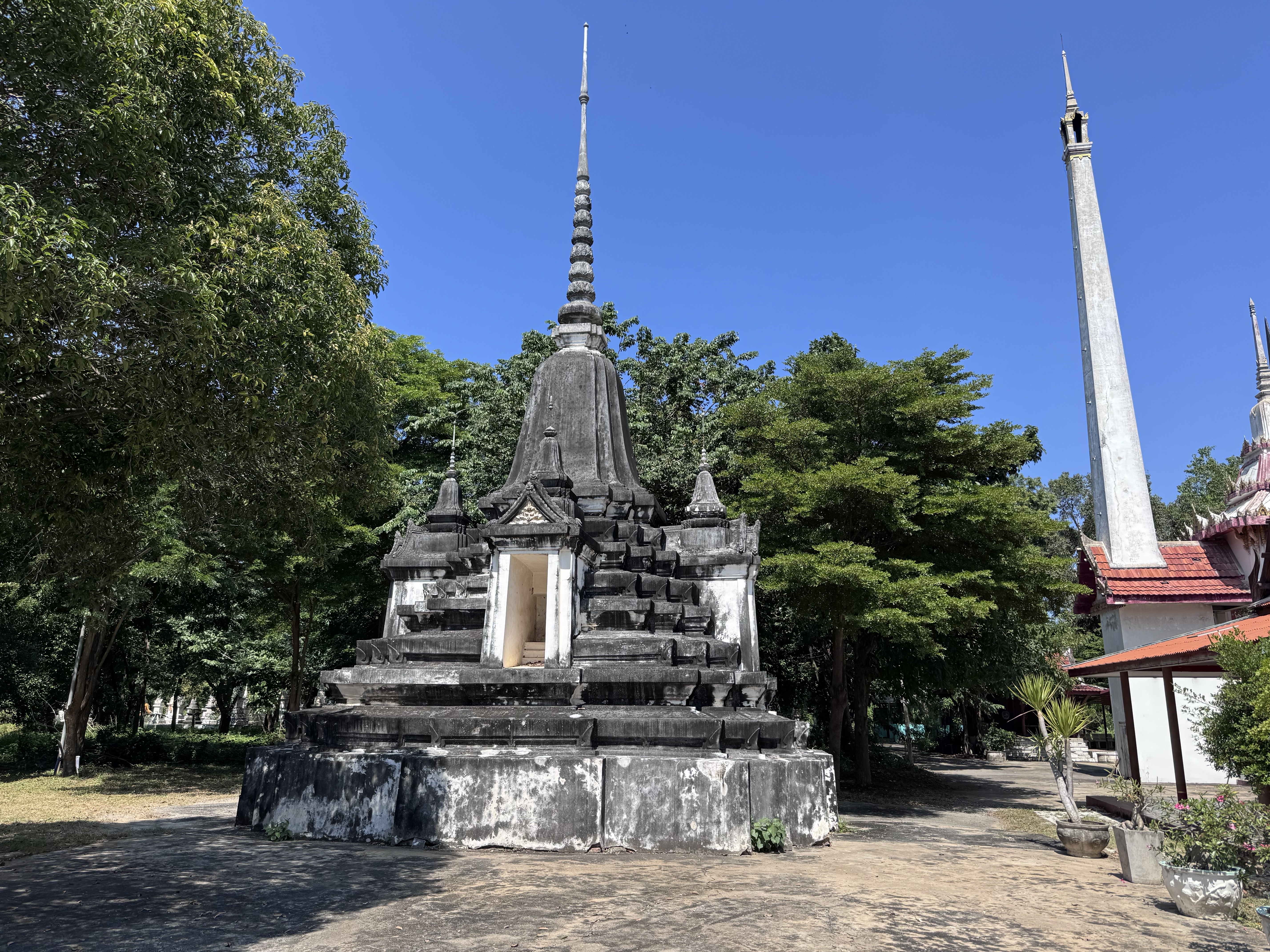
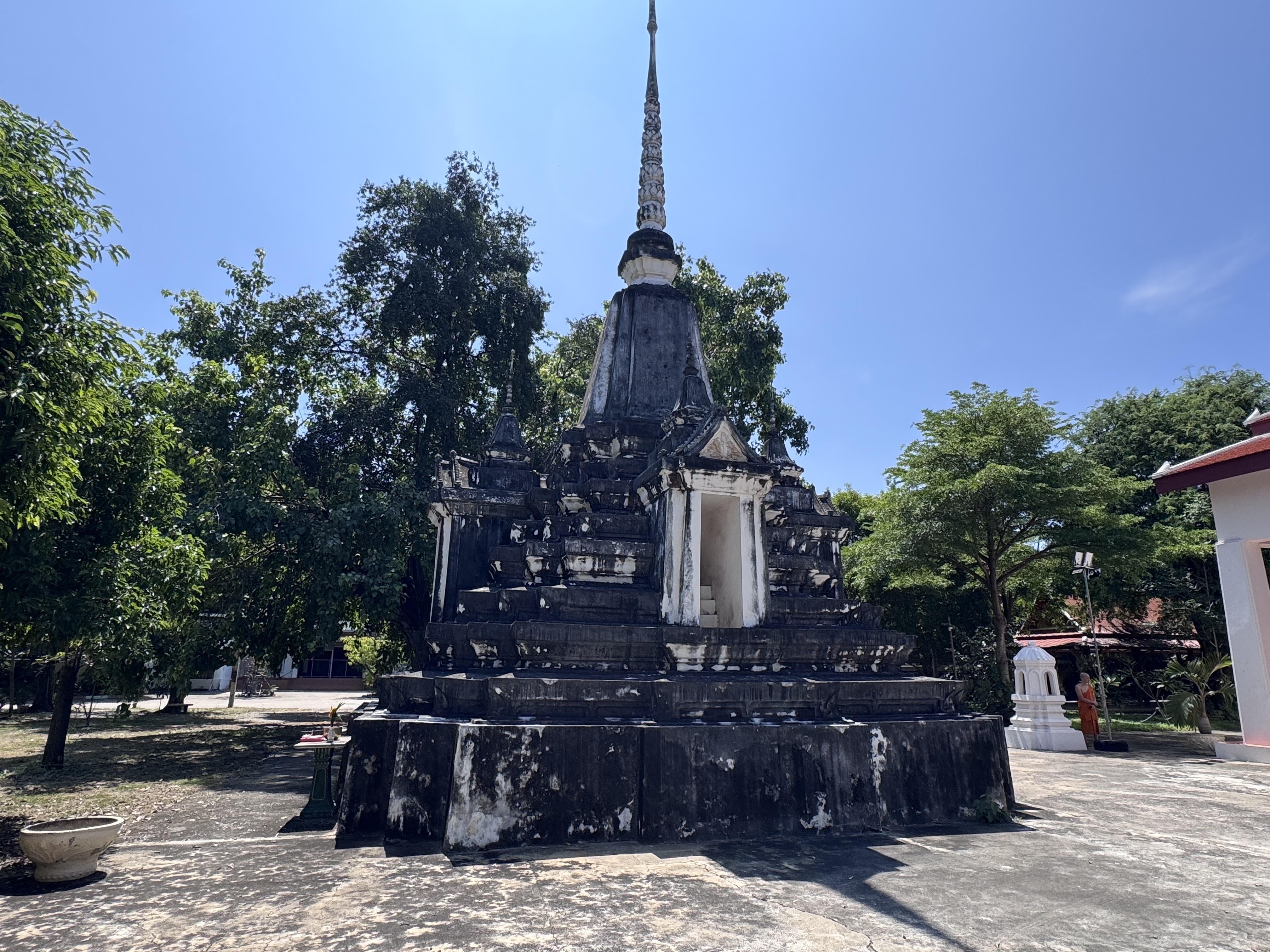
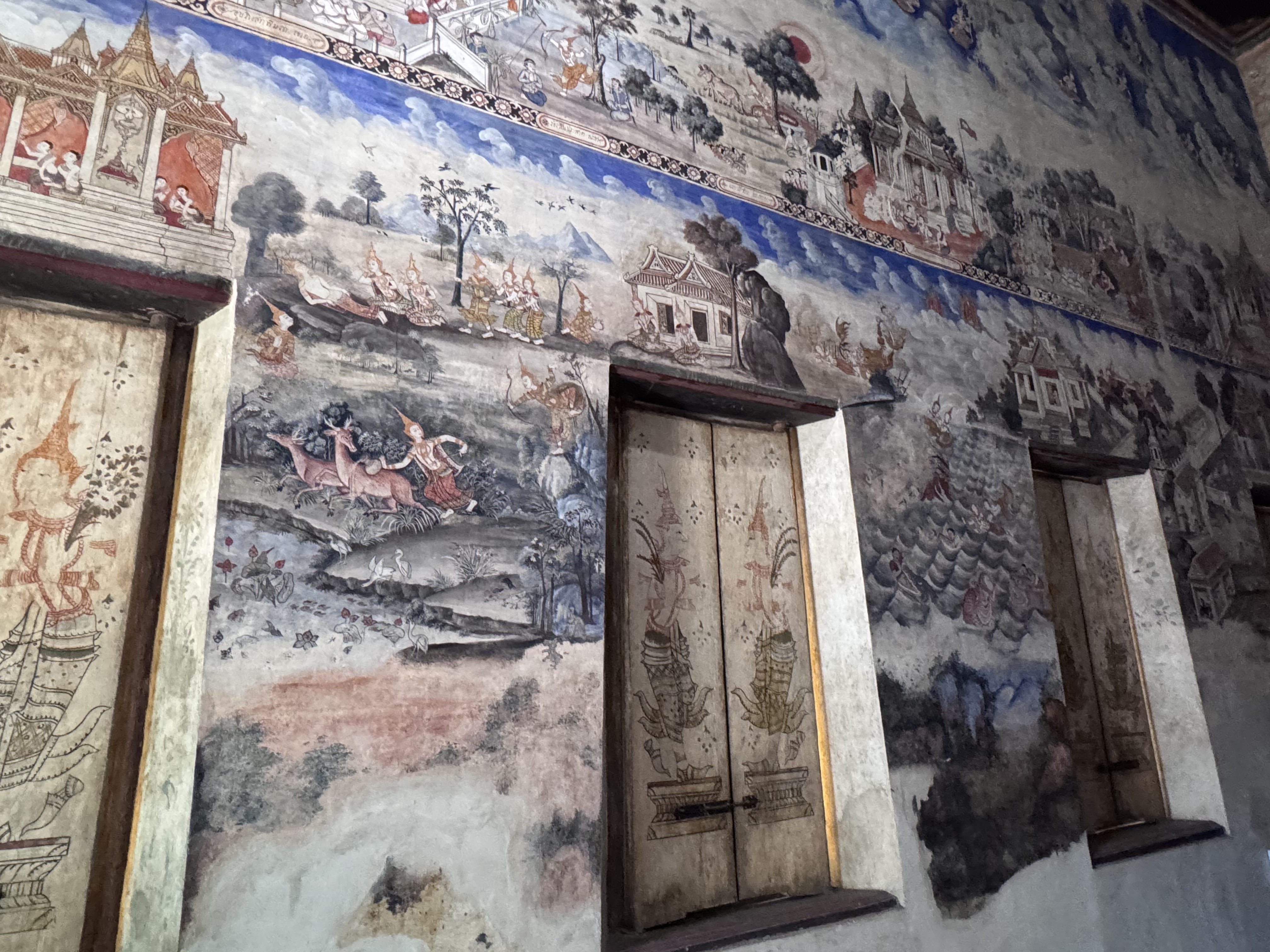
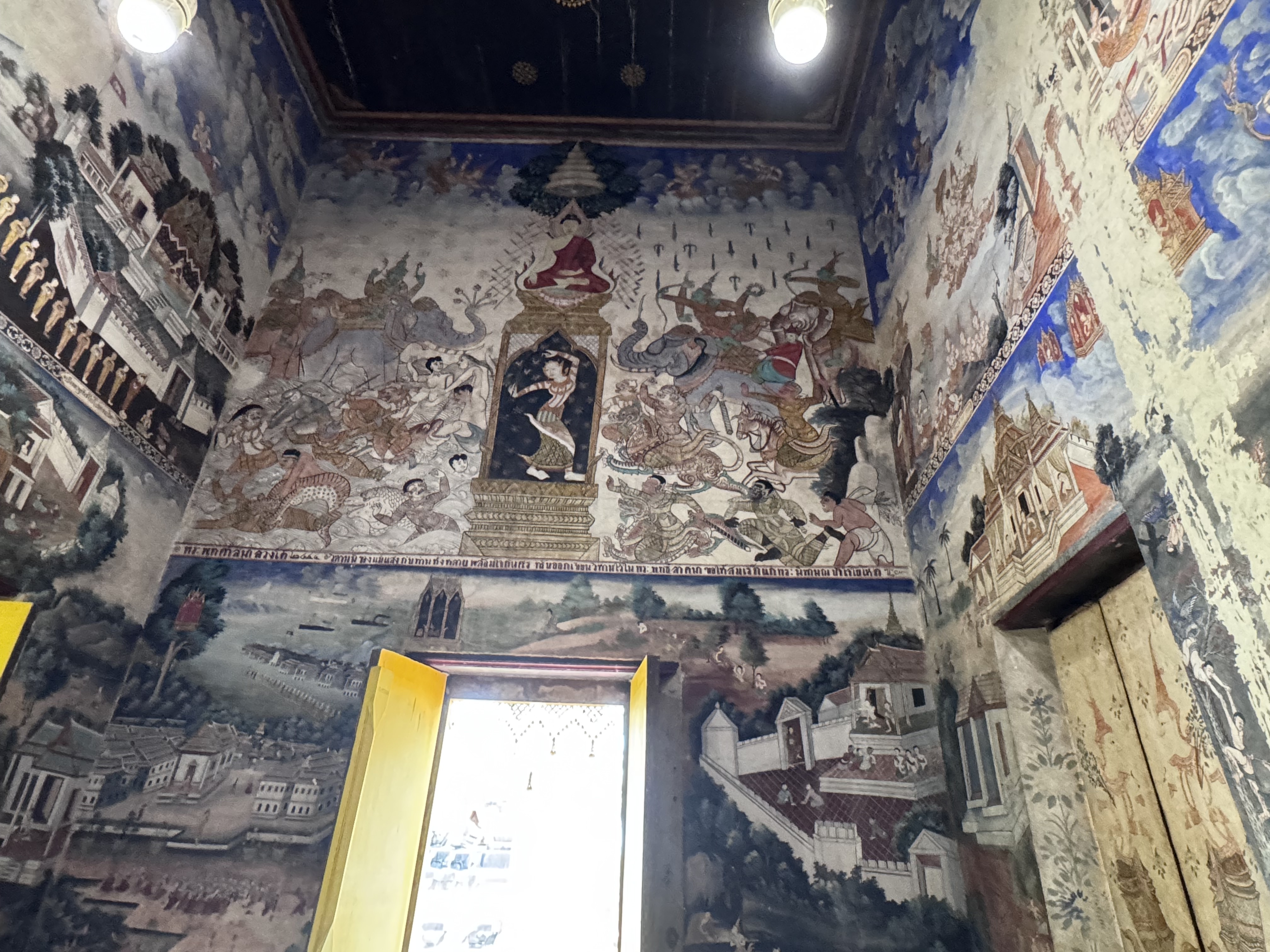
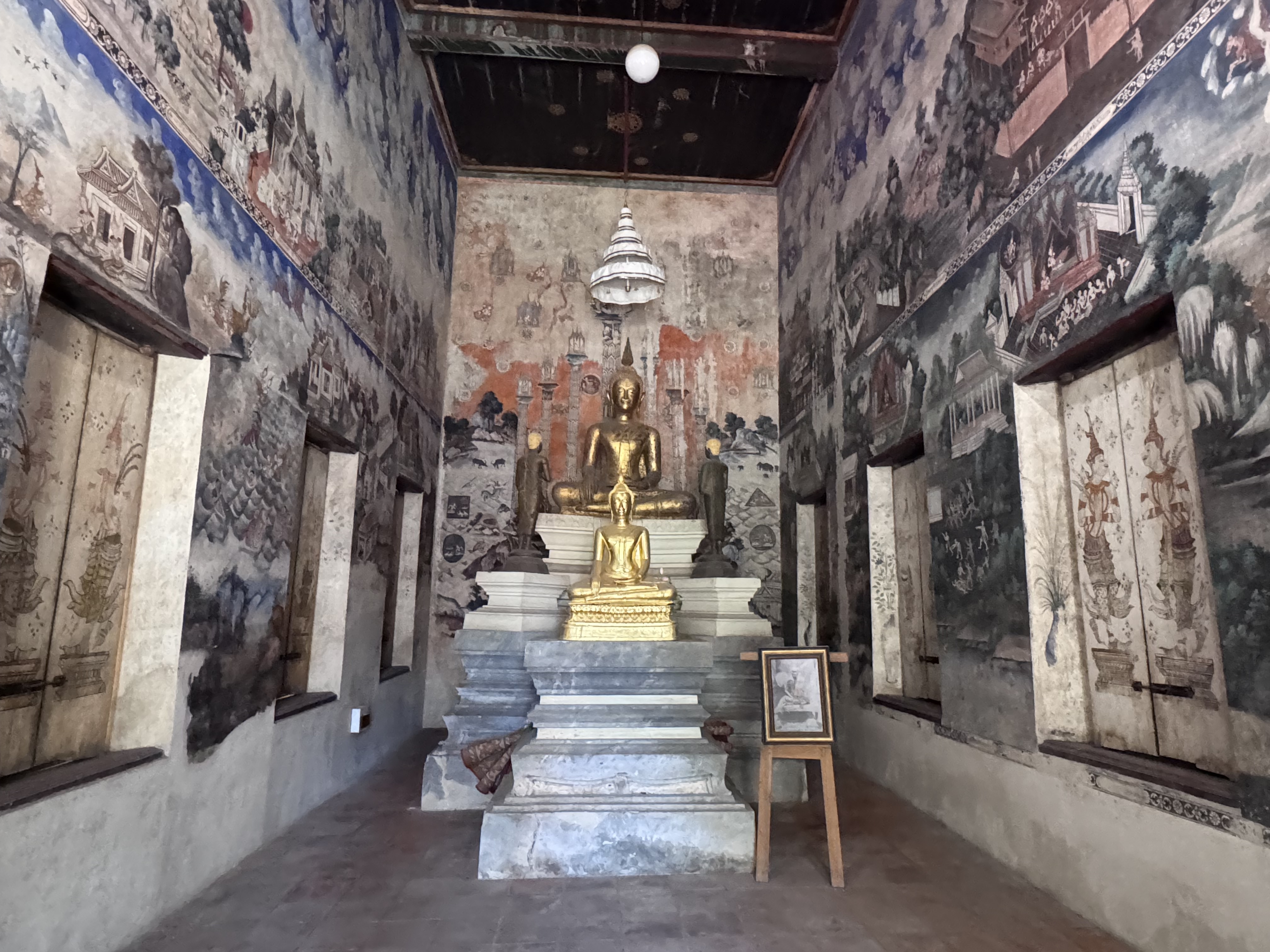
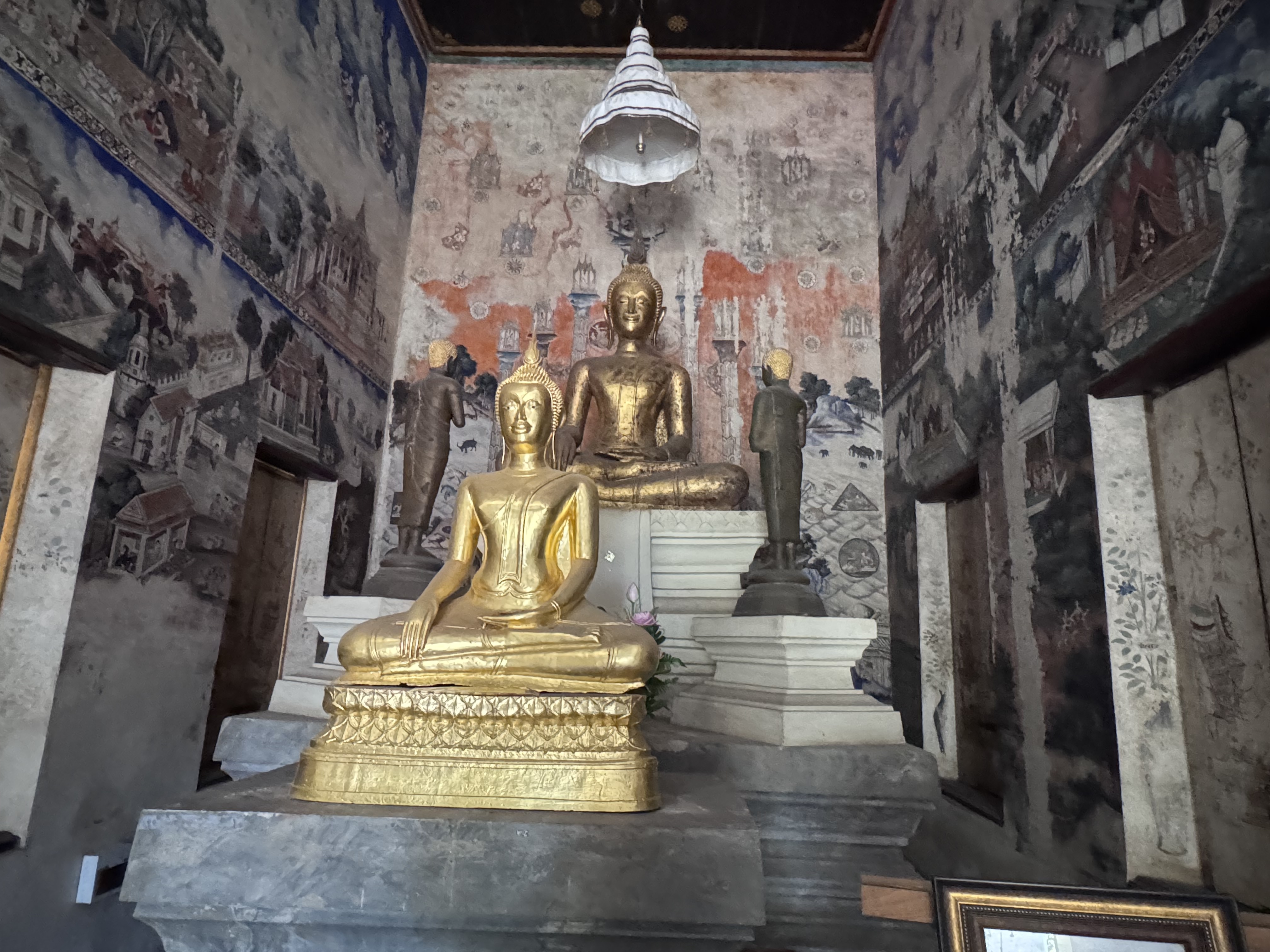
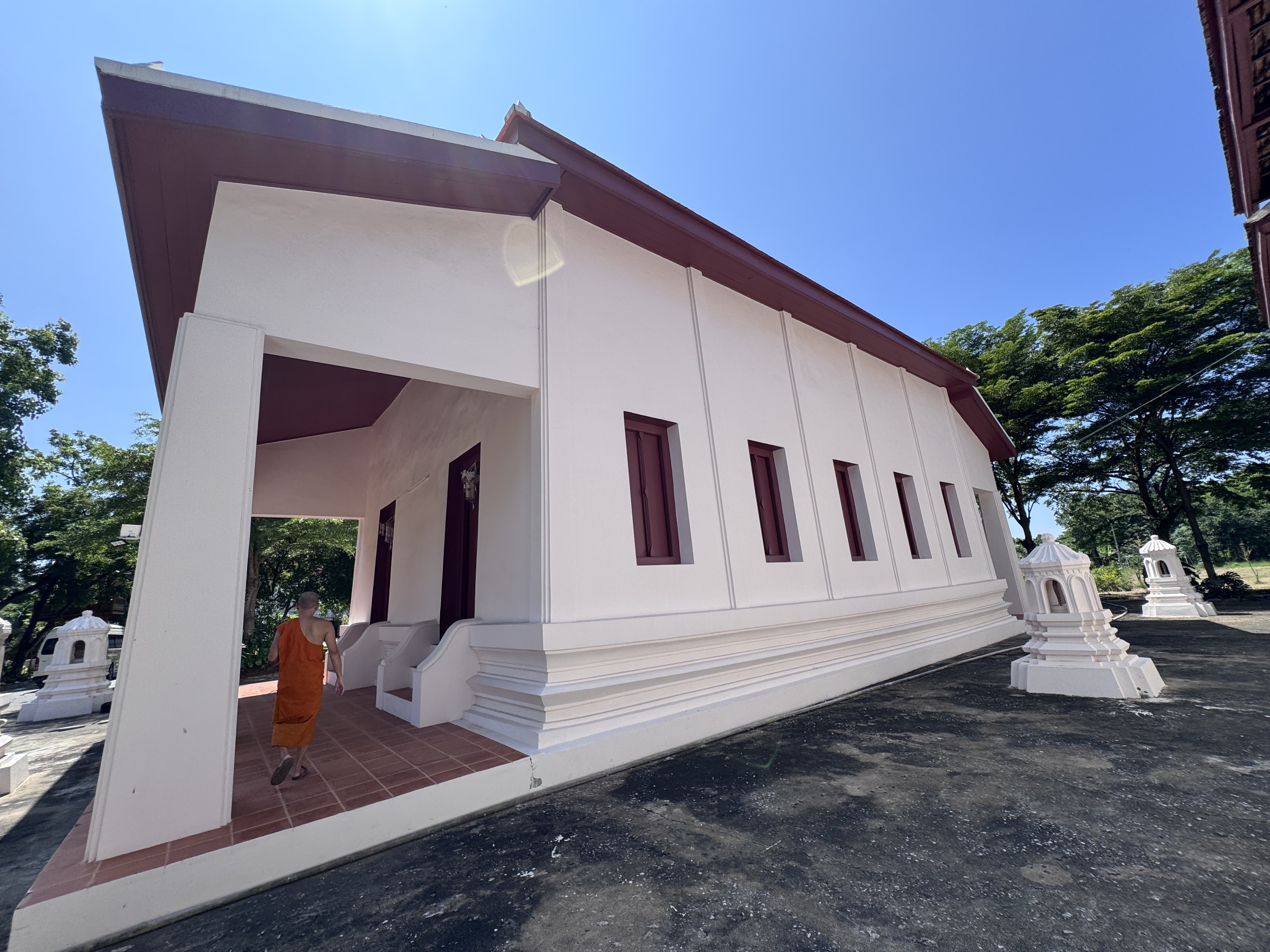
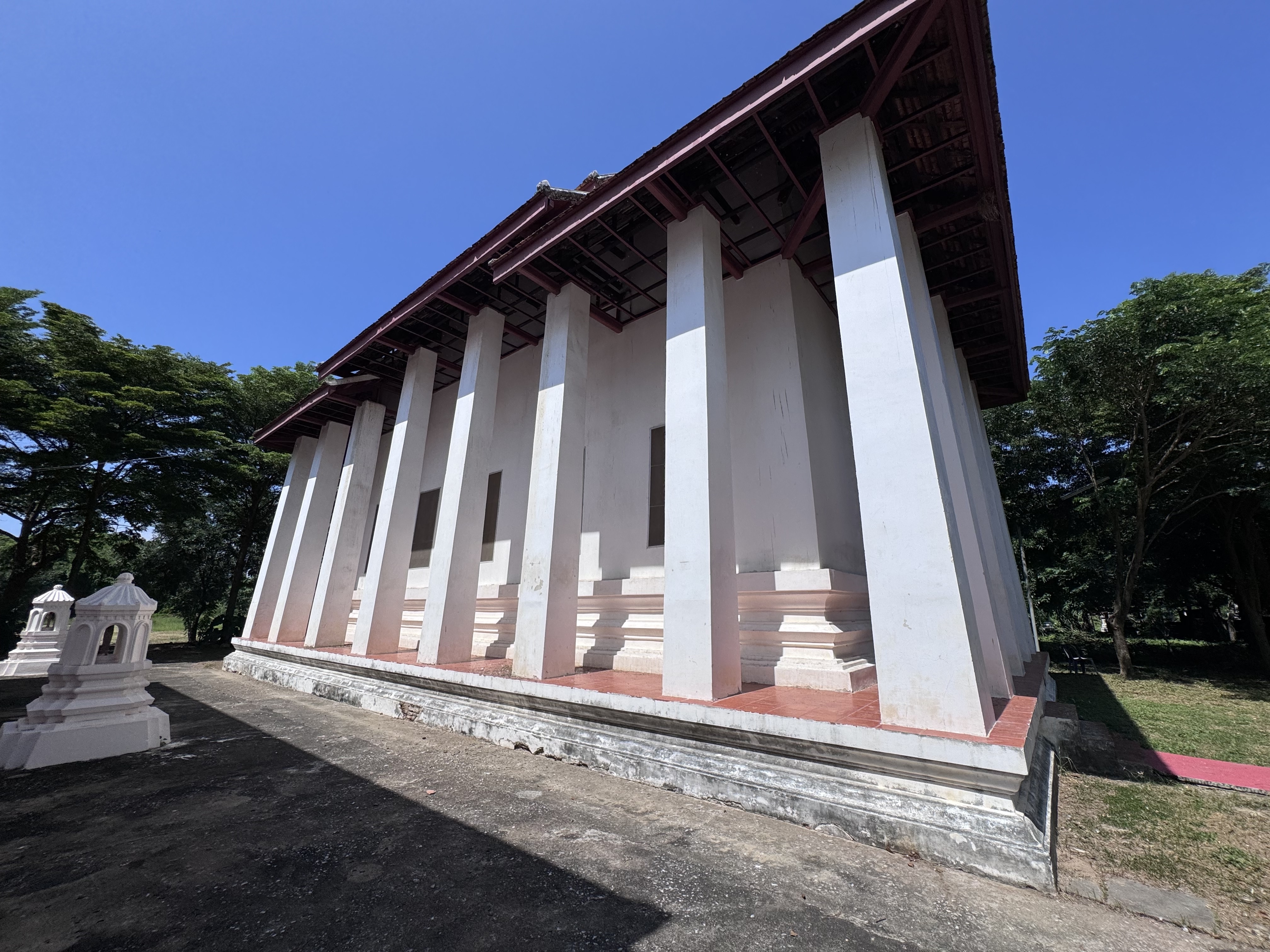
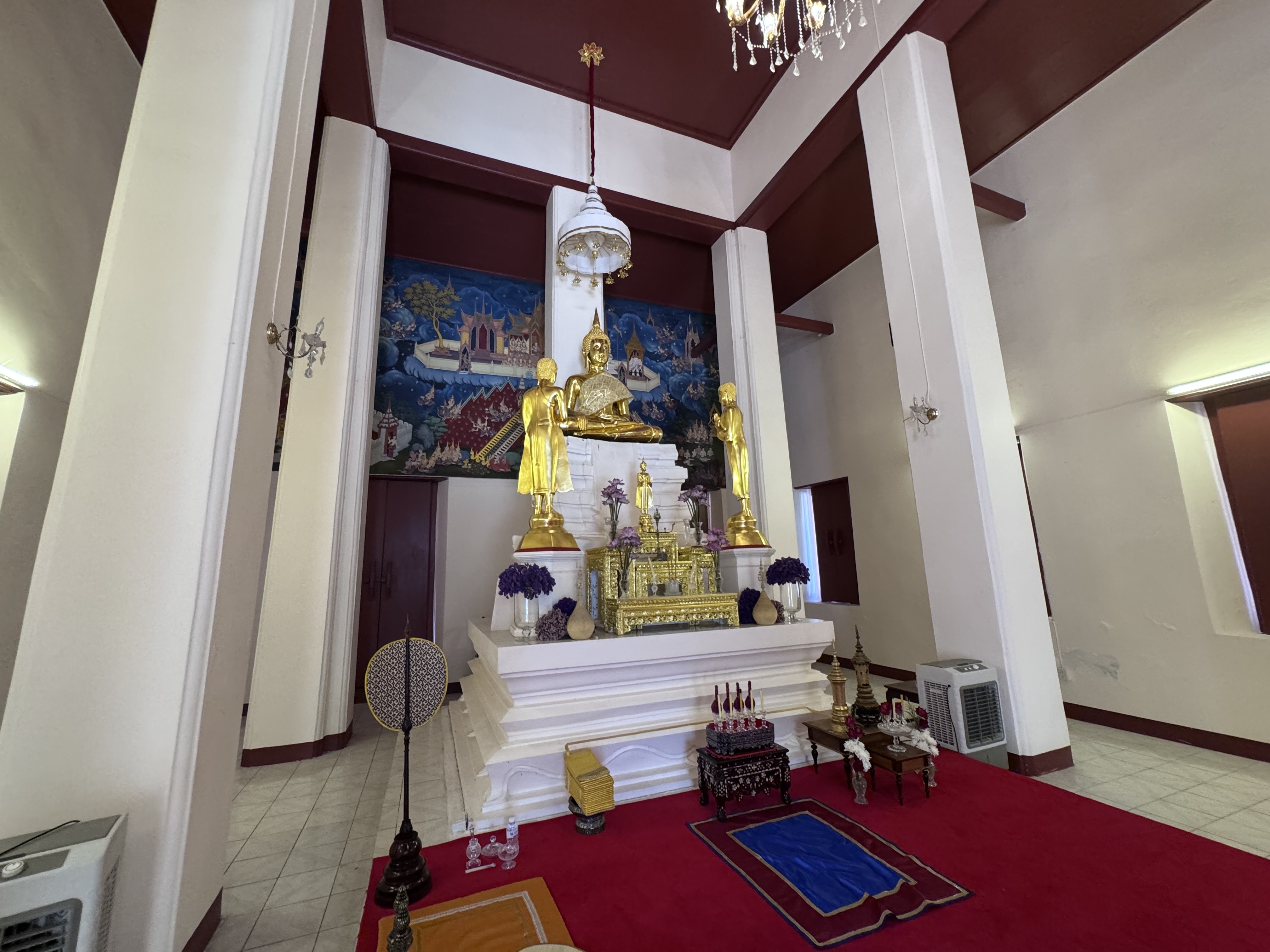
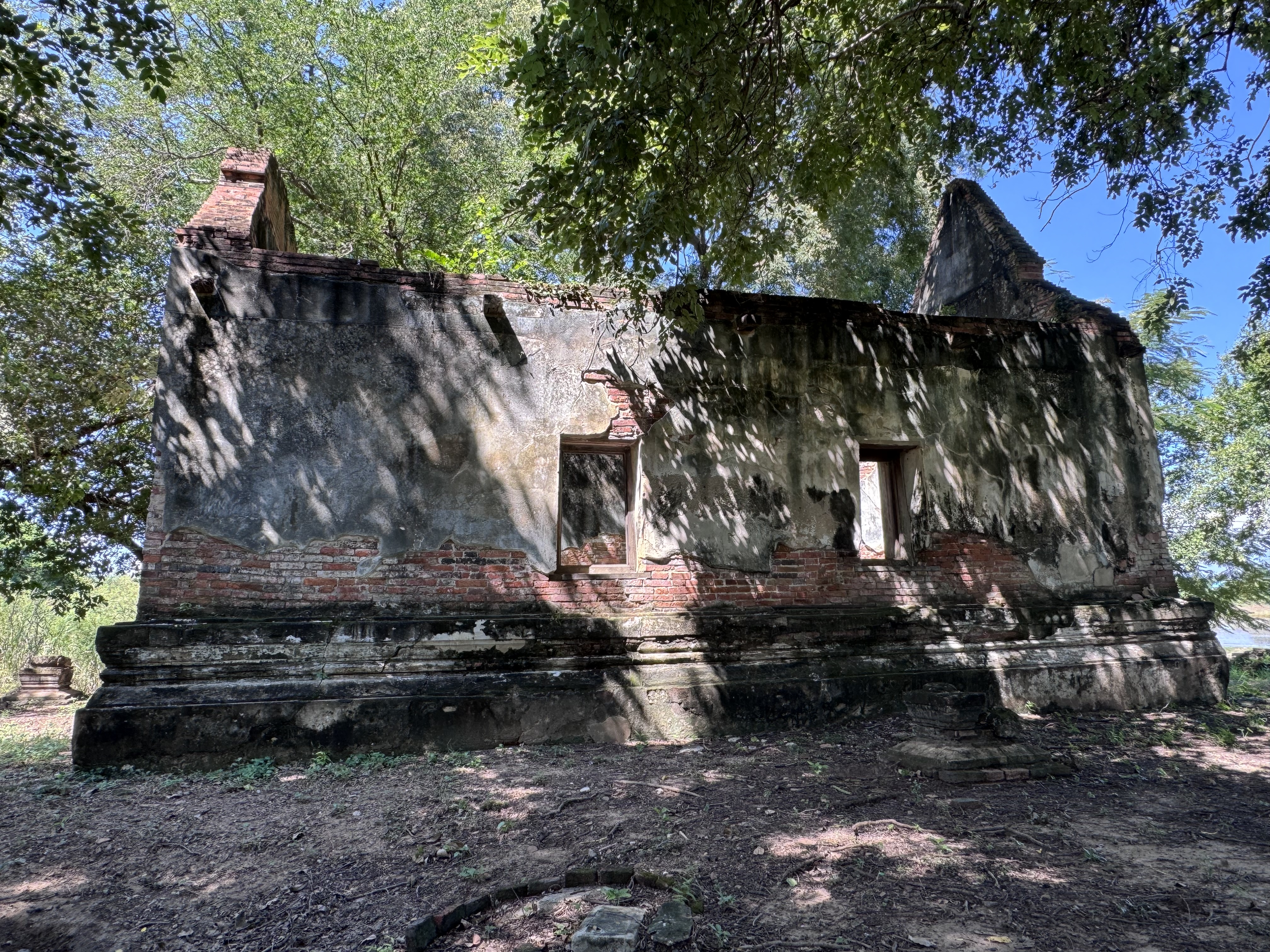
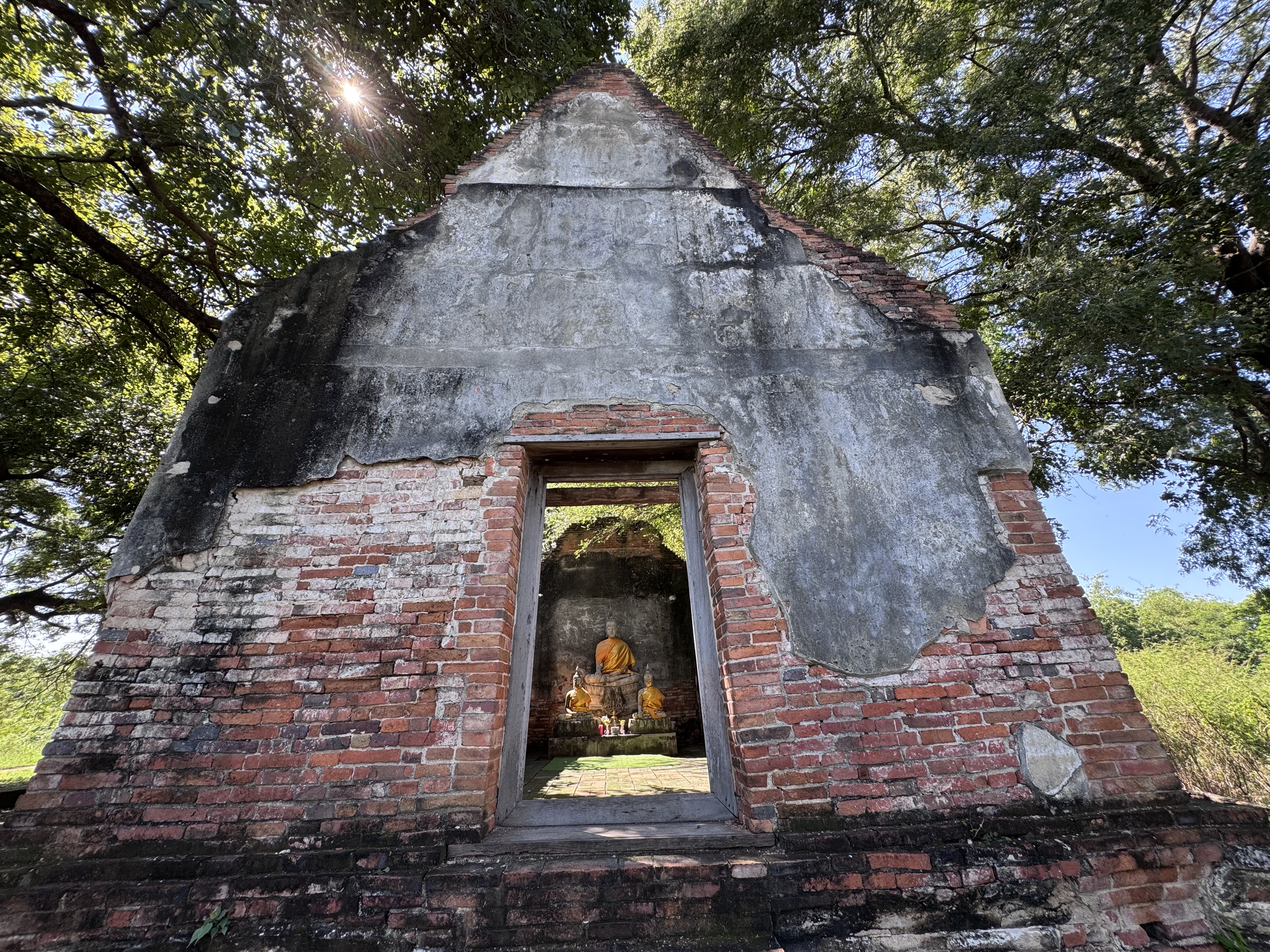
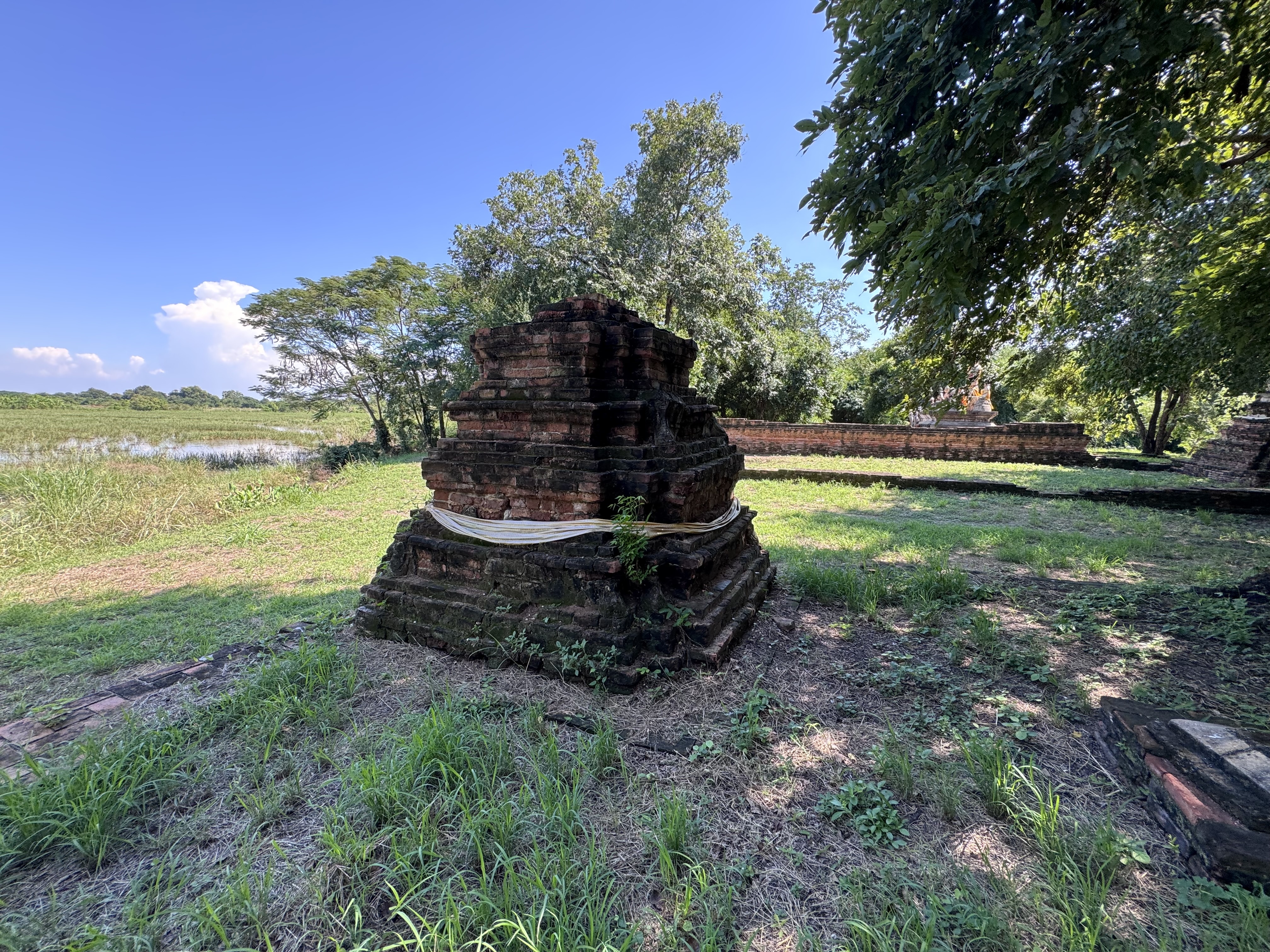
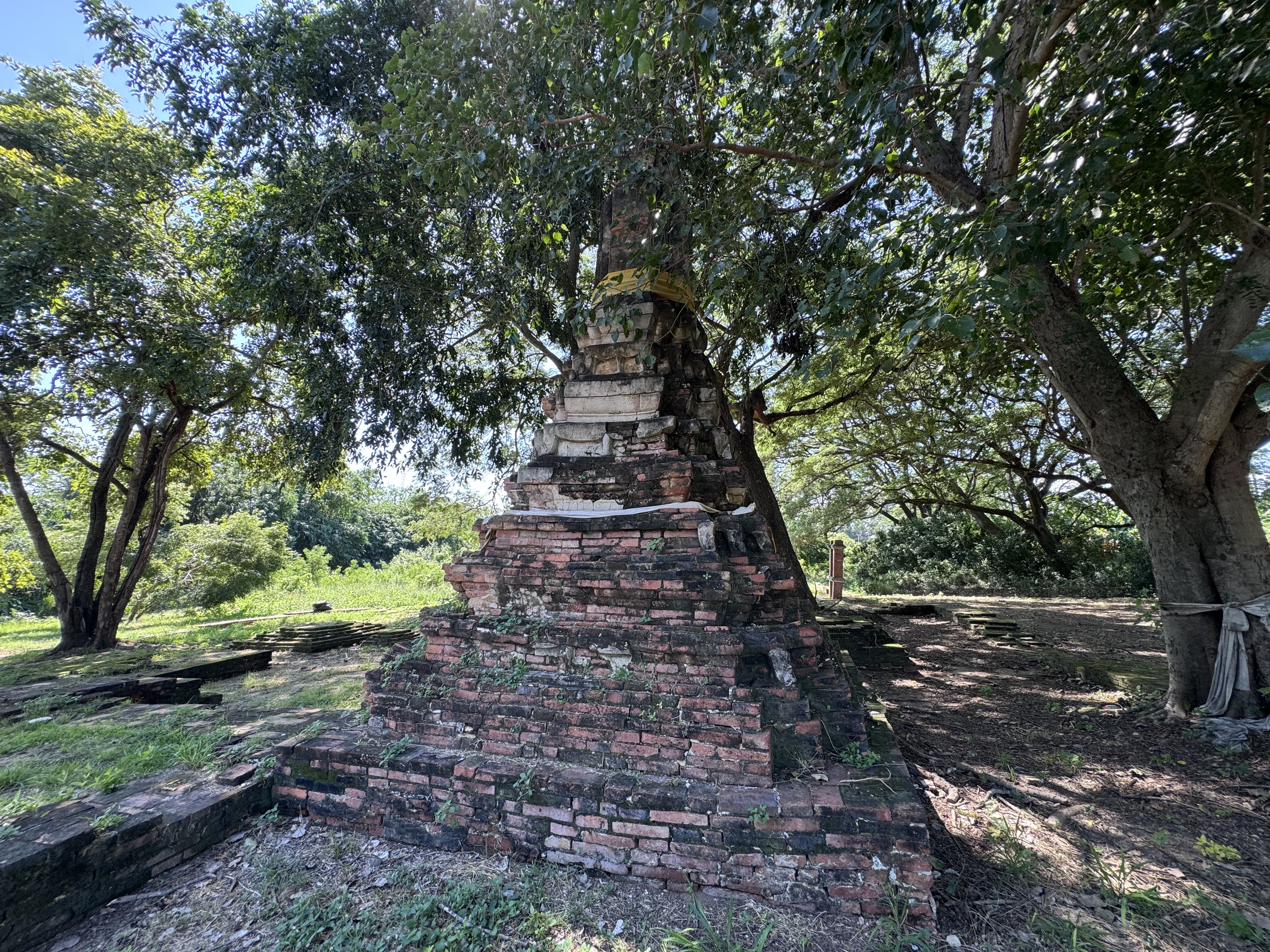
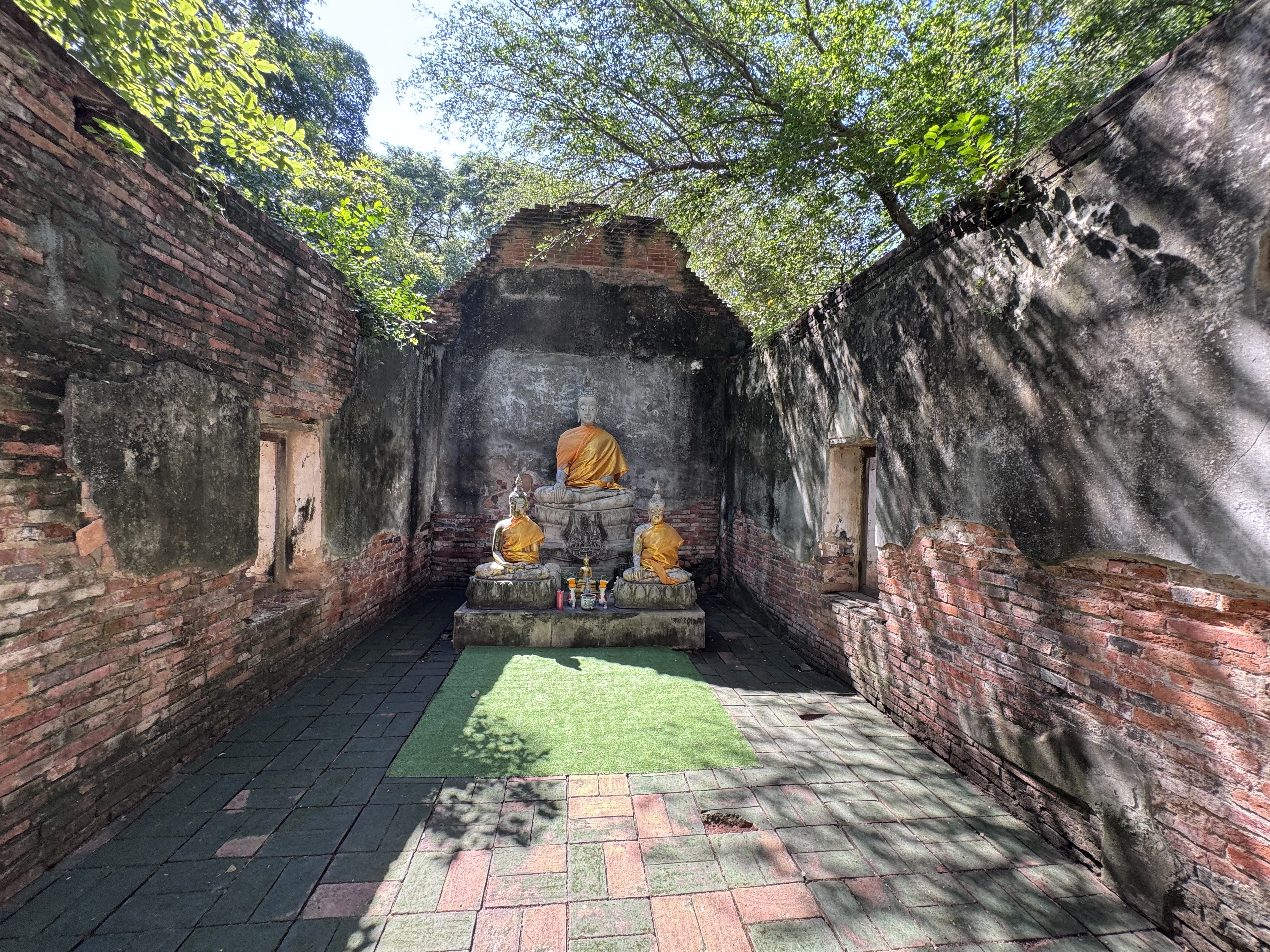
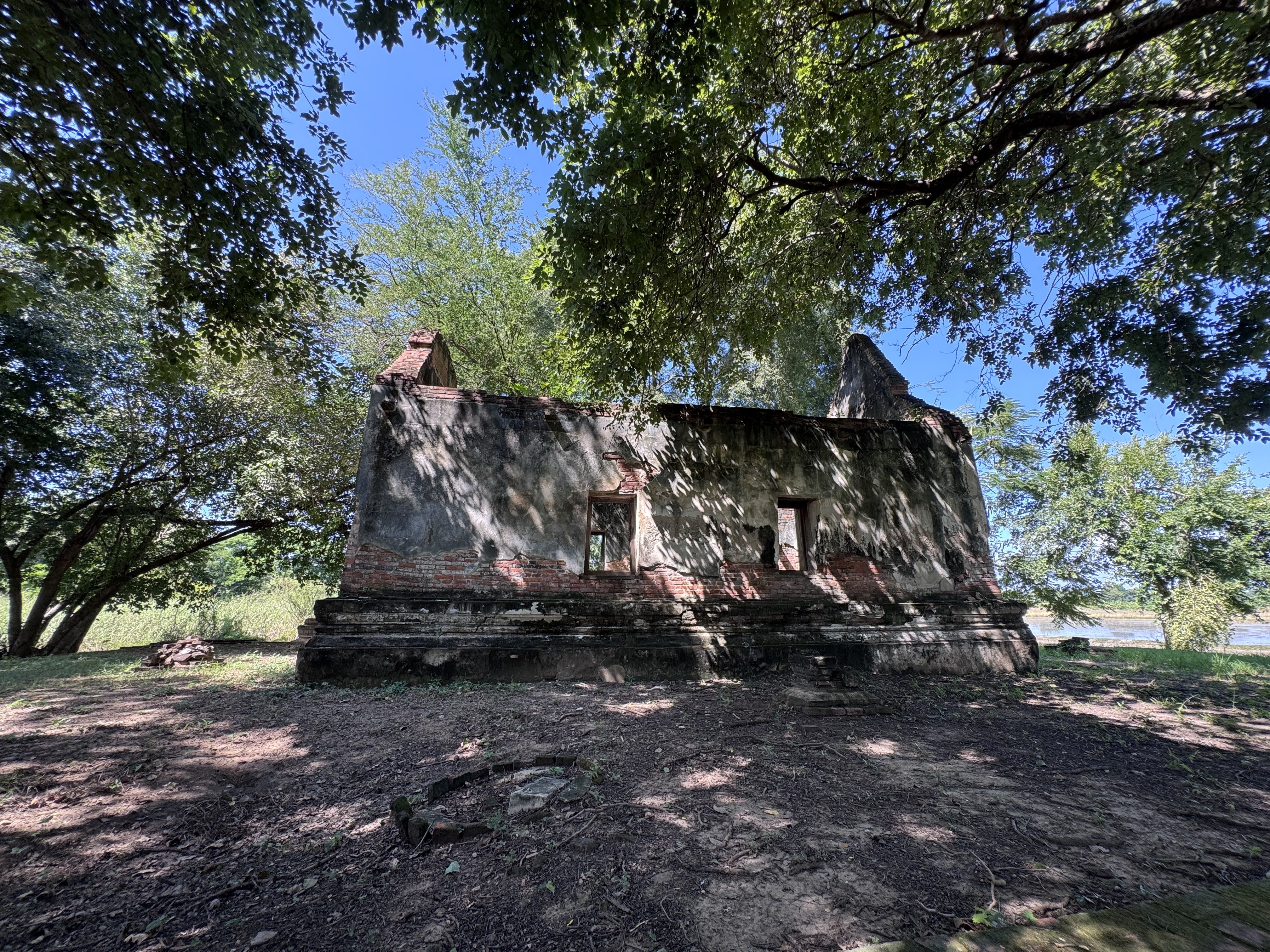
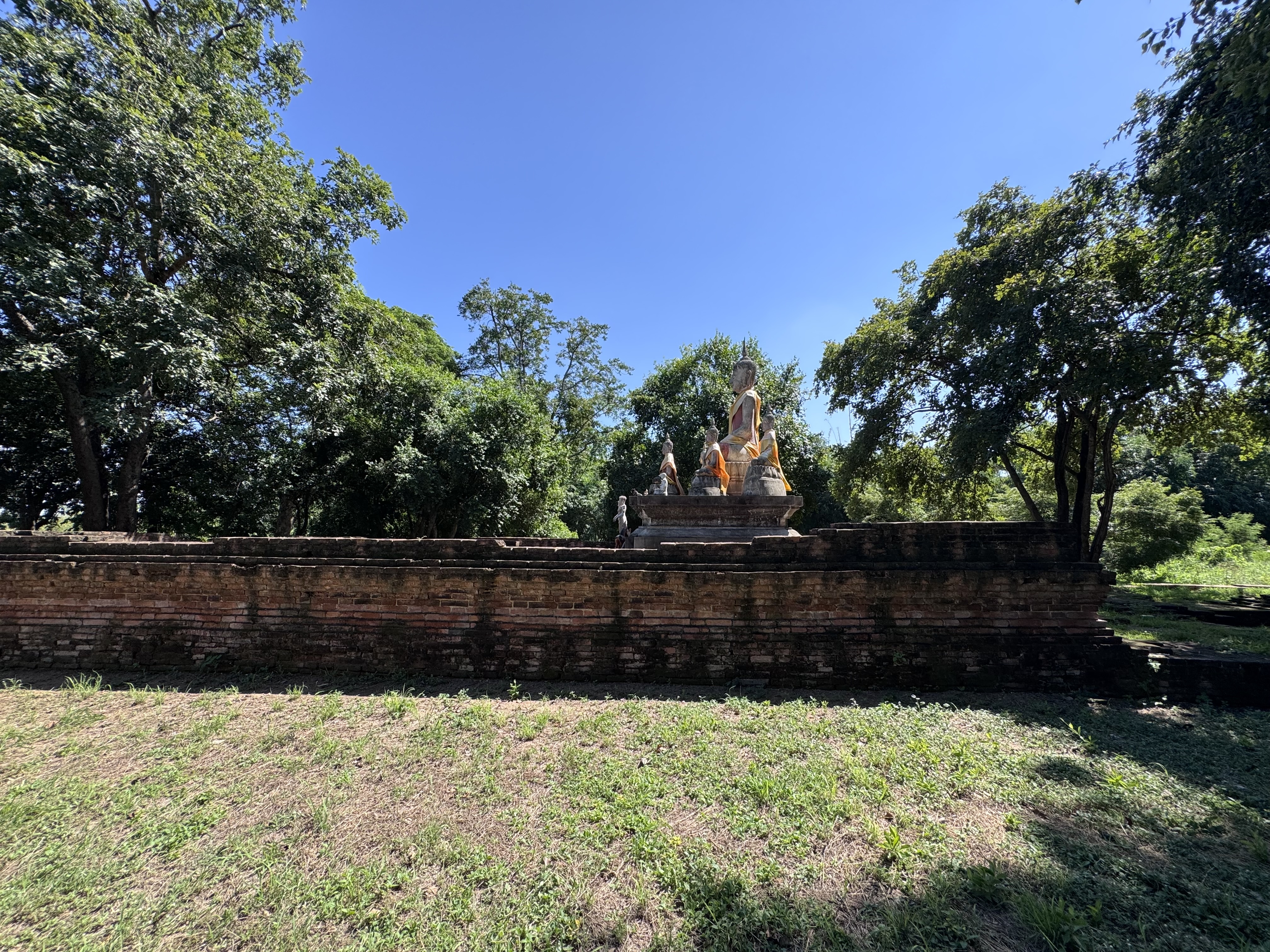
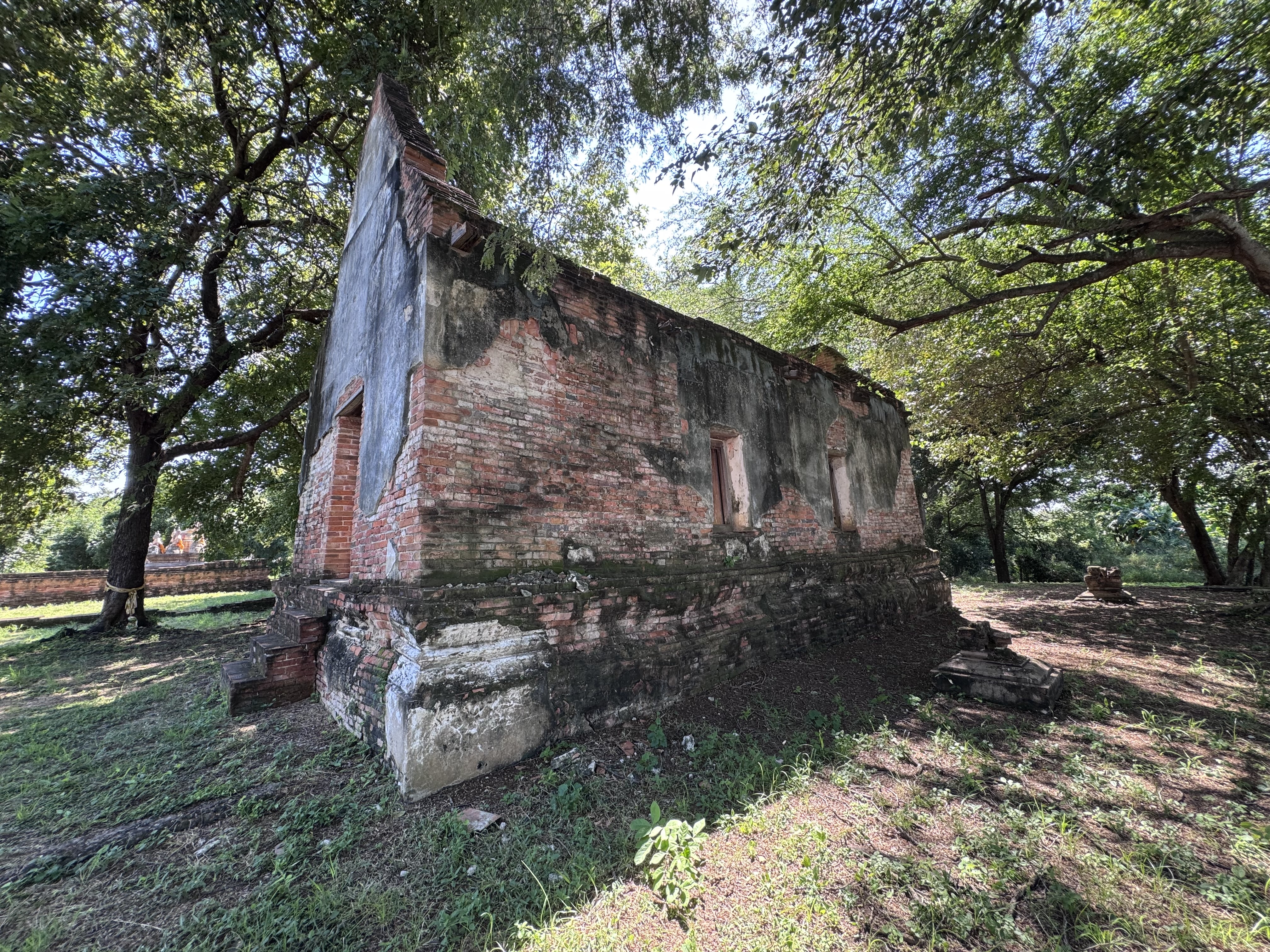
The temple ruin now commonly known in connection with Wat Talad (วัดตลาด) in Bang Pahan District, Phra Nakhon Si Ayutthaya Province, was originally called Wat Thai Talad or Wat Thaitalad.
The name reflected its location immediately behind a local market where residents traded vegetables, food, and other goods. Local tradition holds that this market continued to operate even during the final Burmese siege of Ayutthaya, supplying soldiers from the invading forces who had established a camp in the nearby Pho Sam Ton area. The site therefore sits at the intersection of ordinary village life and the turbulent closing years of the Ayutthaya kingdom.
Archaeological evidence places the original construction in the late Ayutthaya period, roughly the early decades of the 24th Buddhist century (mid-eighteenth century), shortly before the fall of the capital in 1767.
The earliest phase consisted of an ordination hall and a surrounding glass wall. After the destruction of the city, the monastery ...
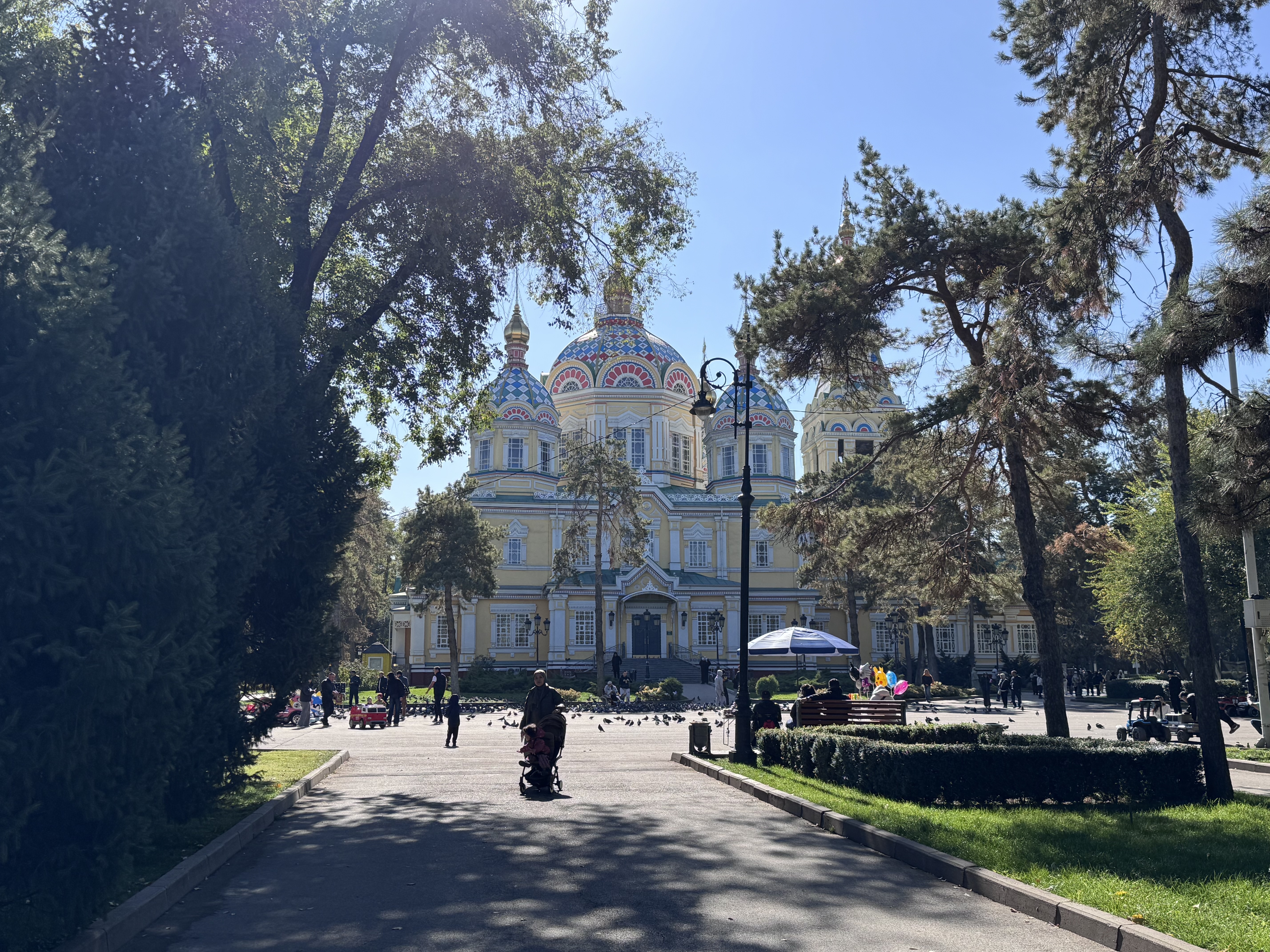
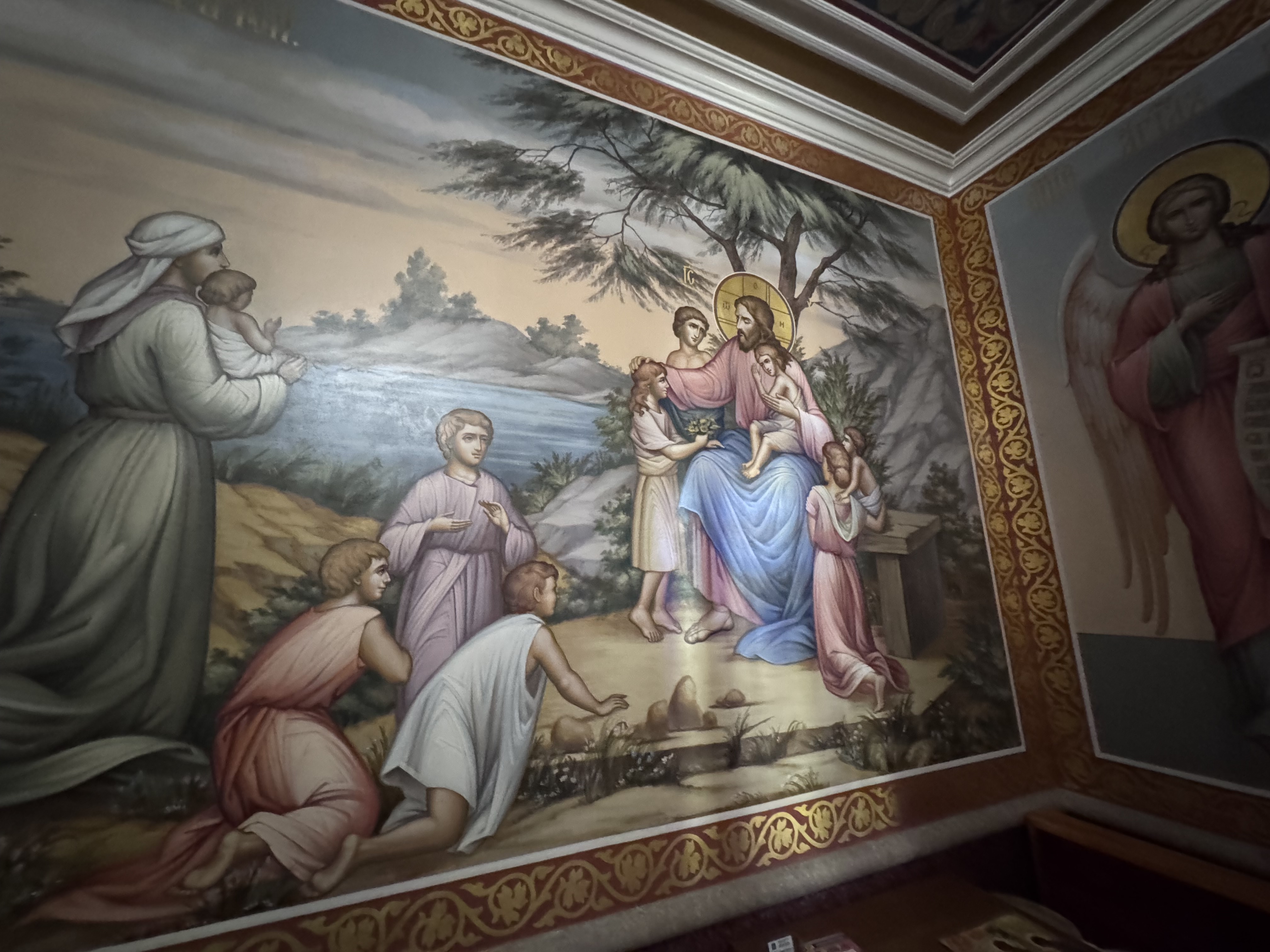
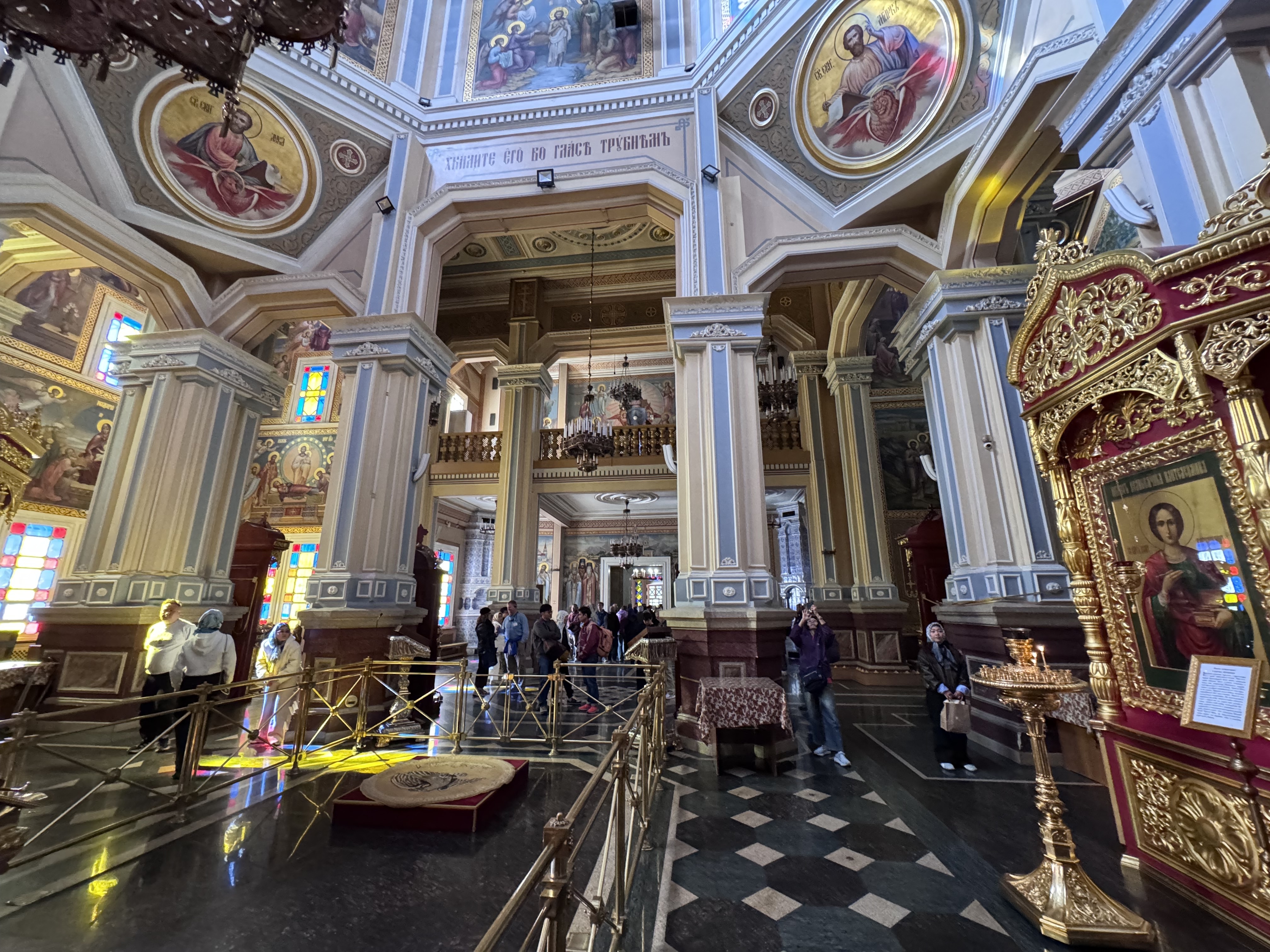
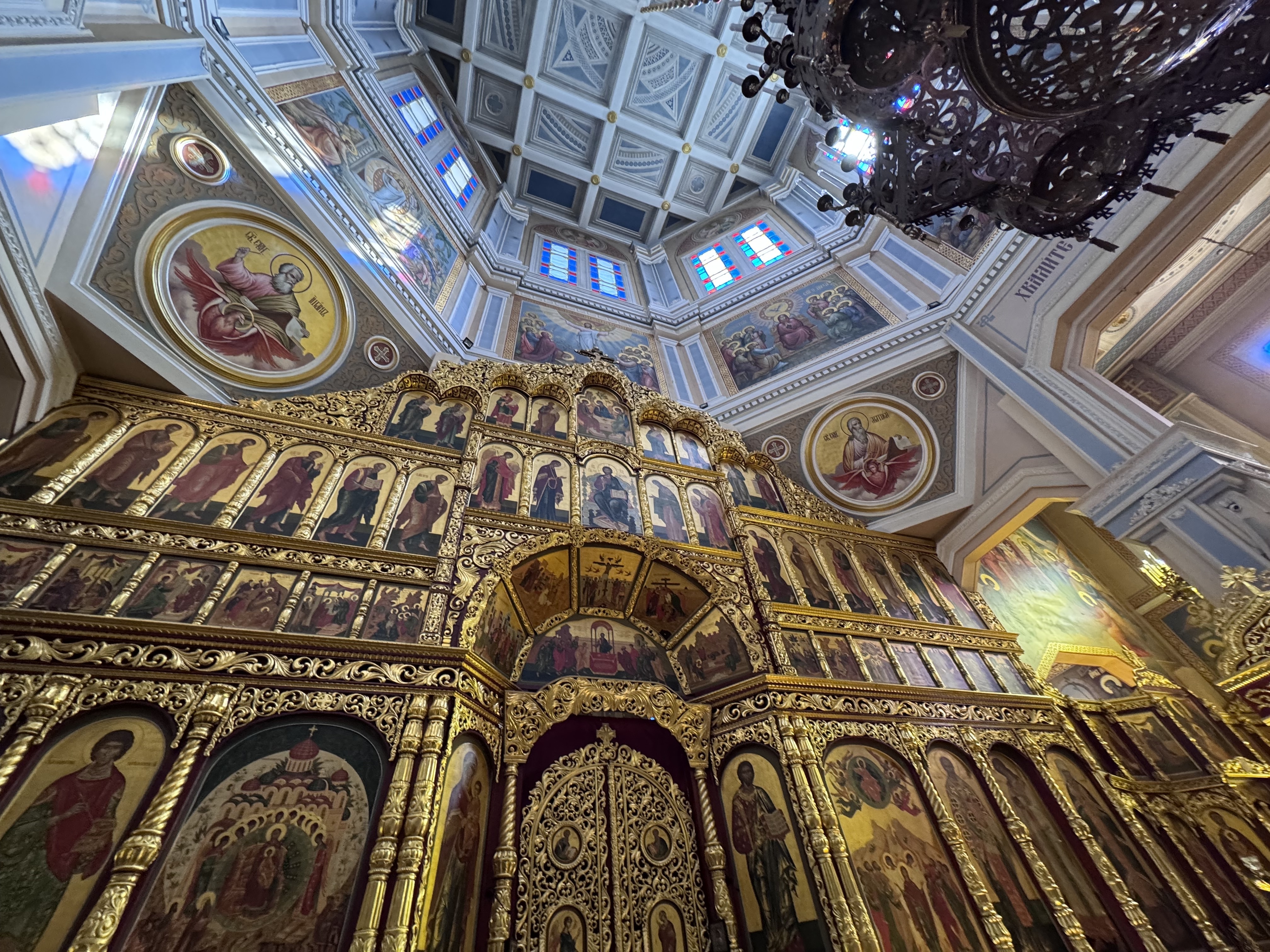
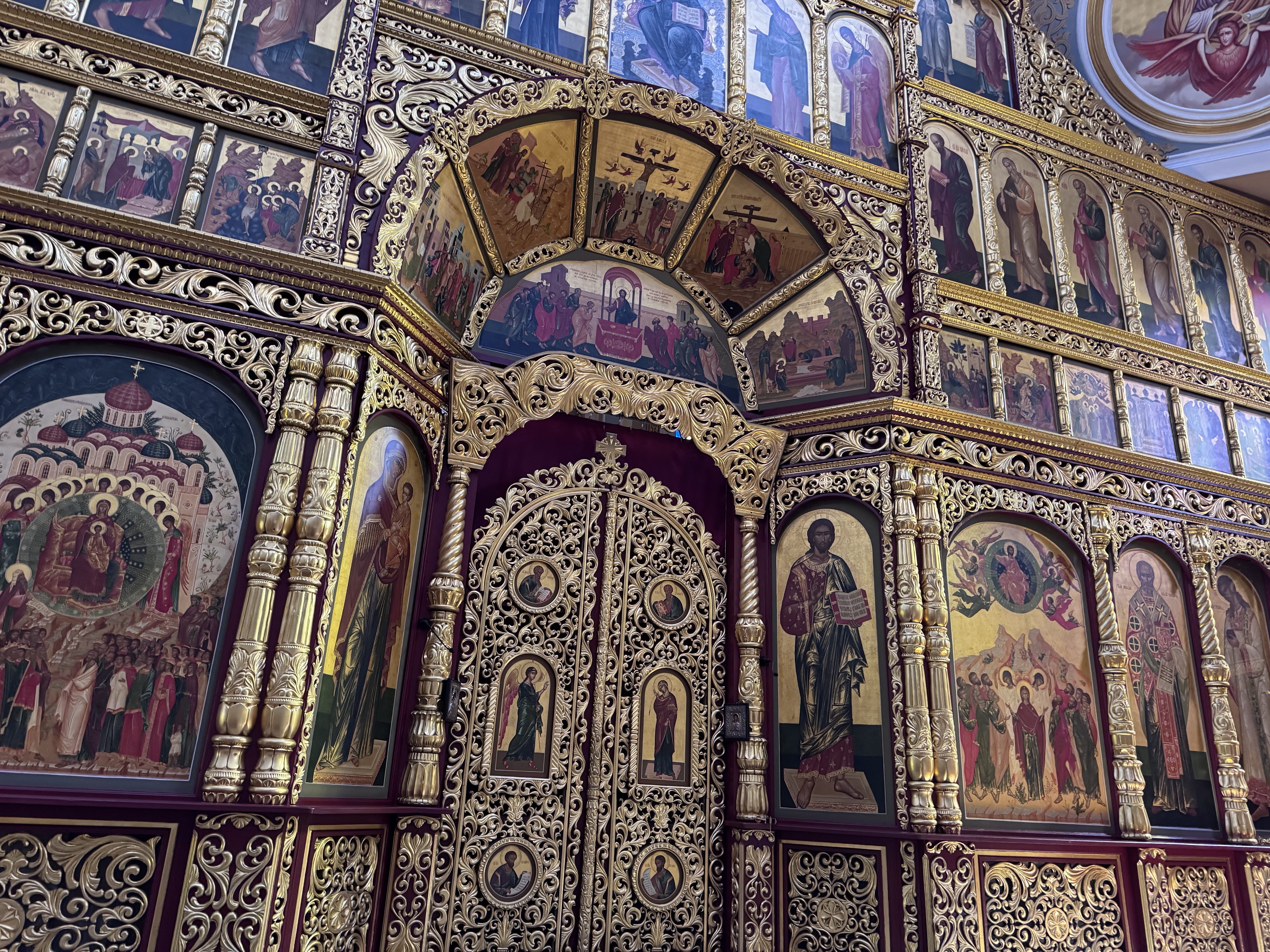
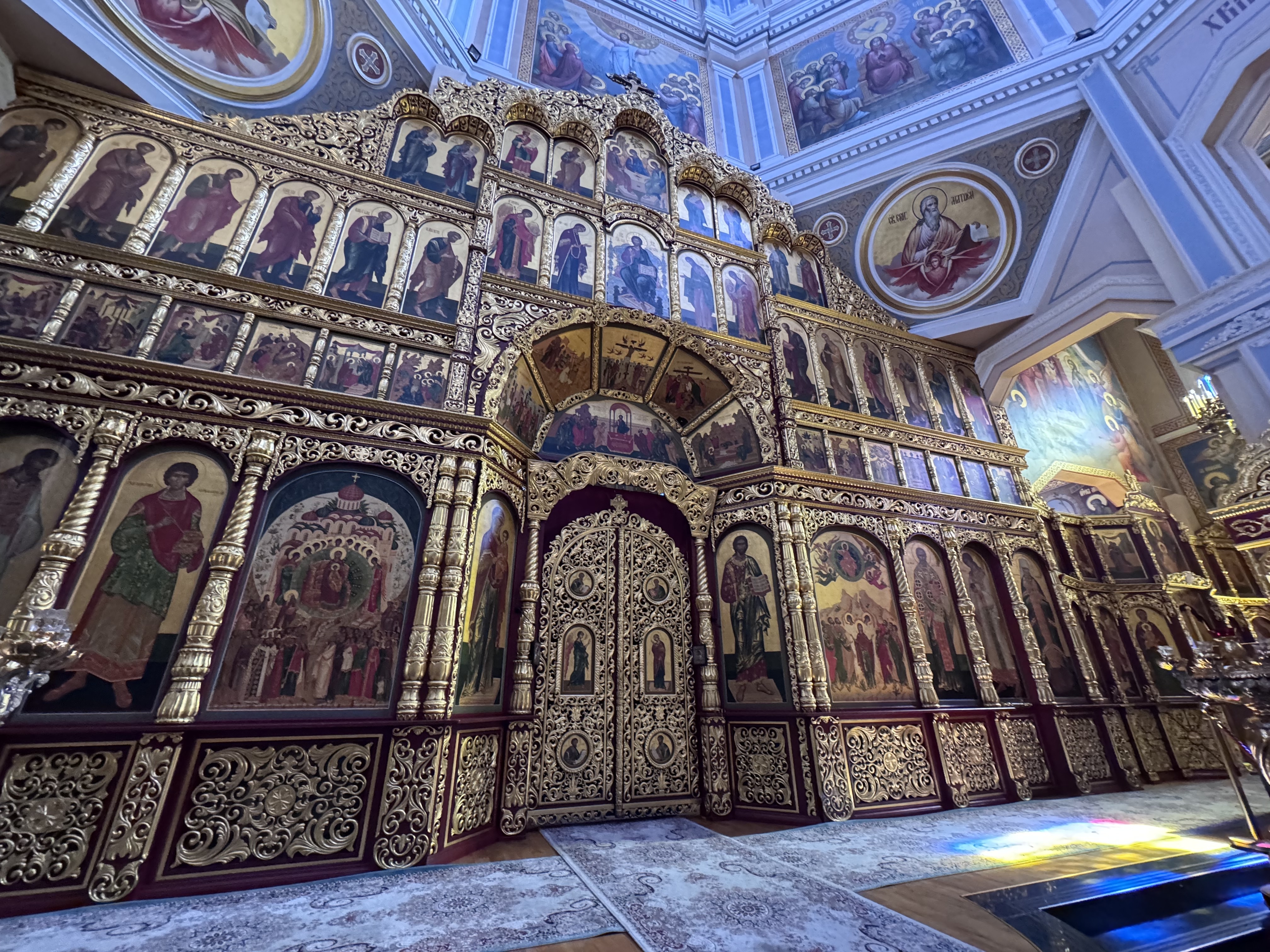
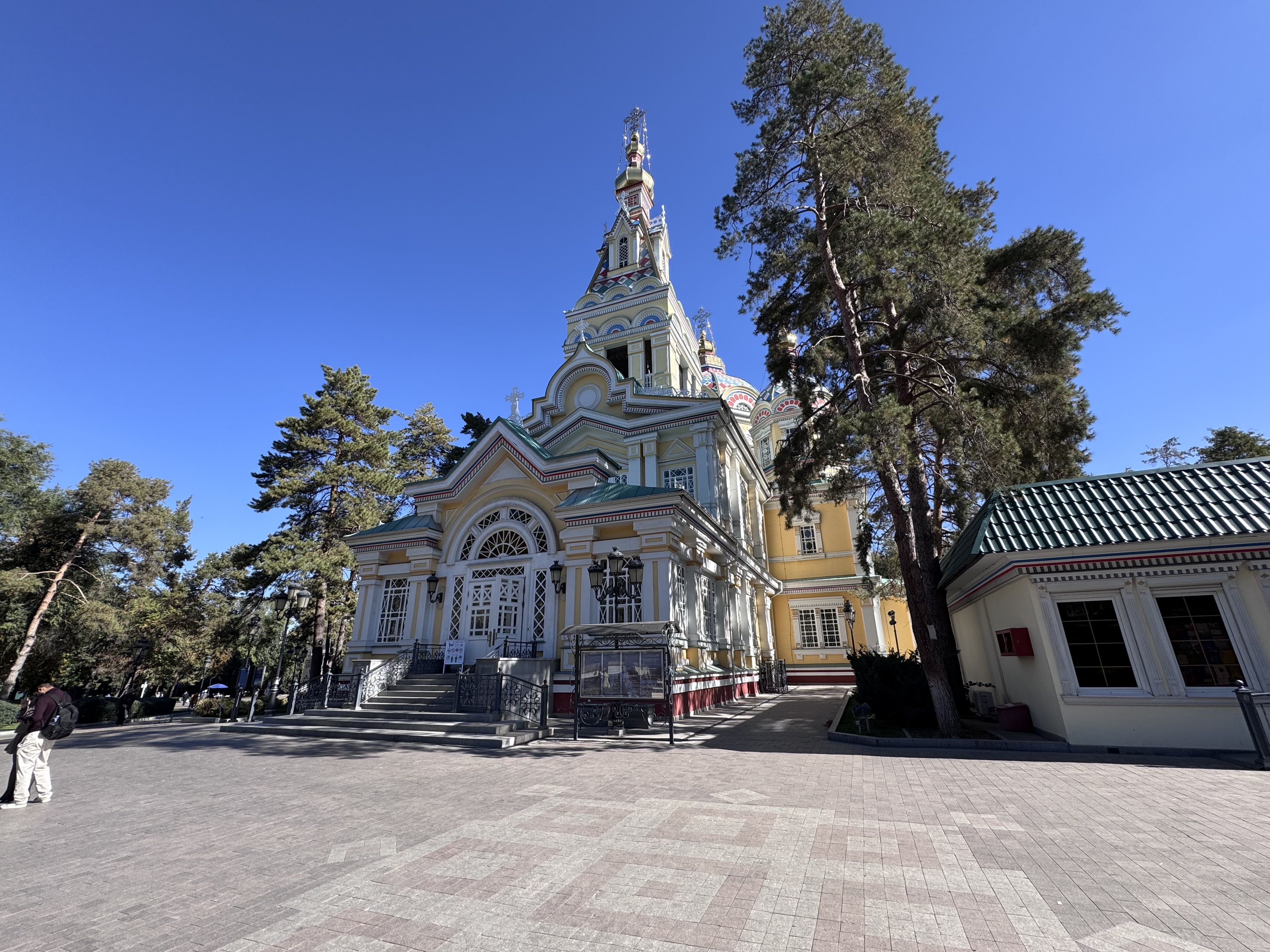
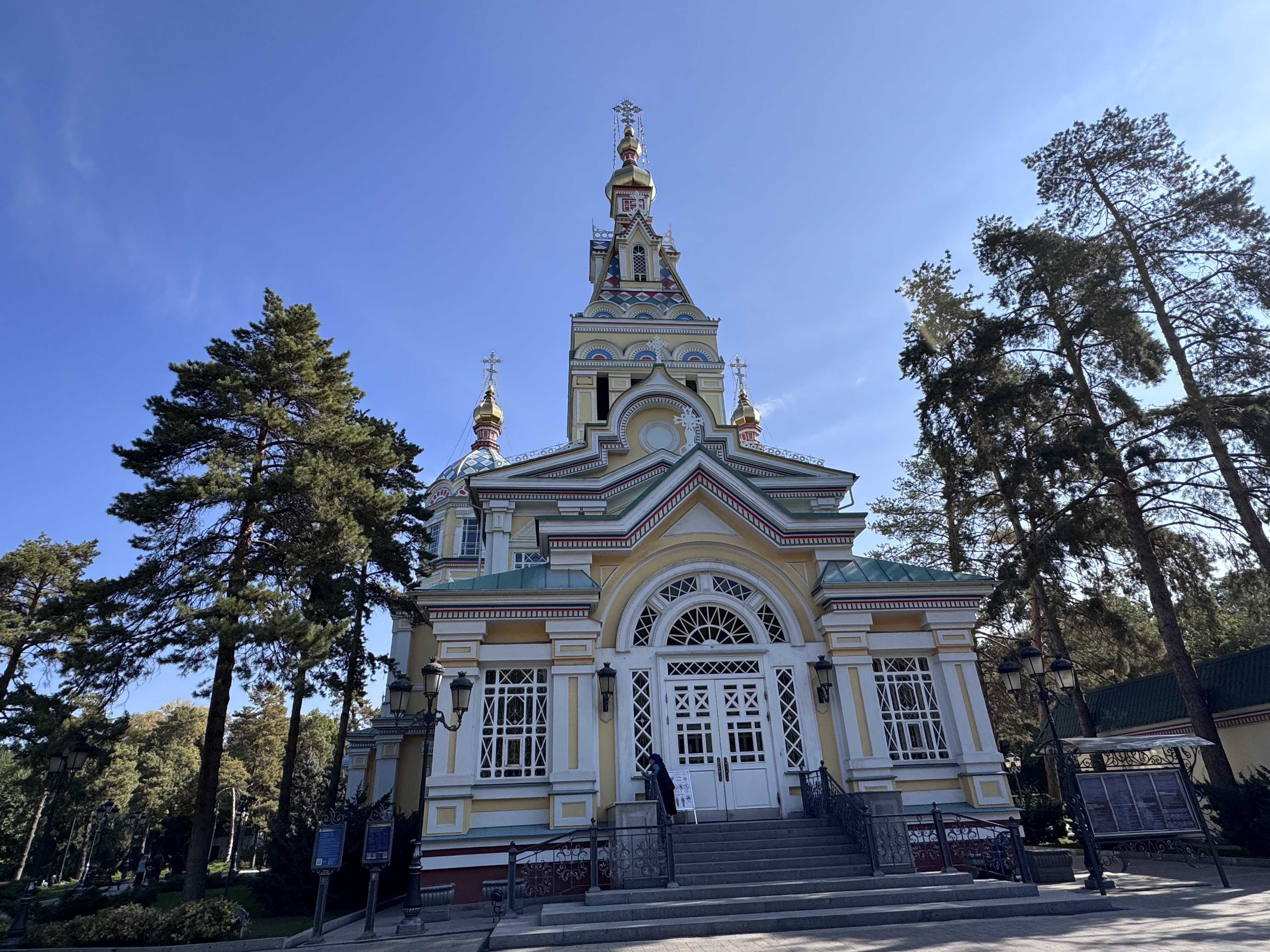
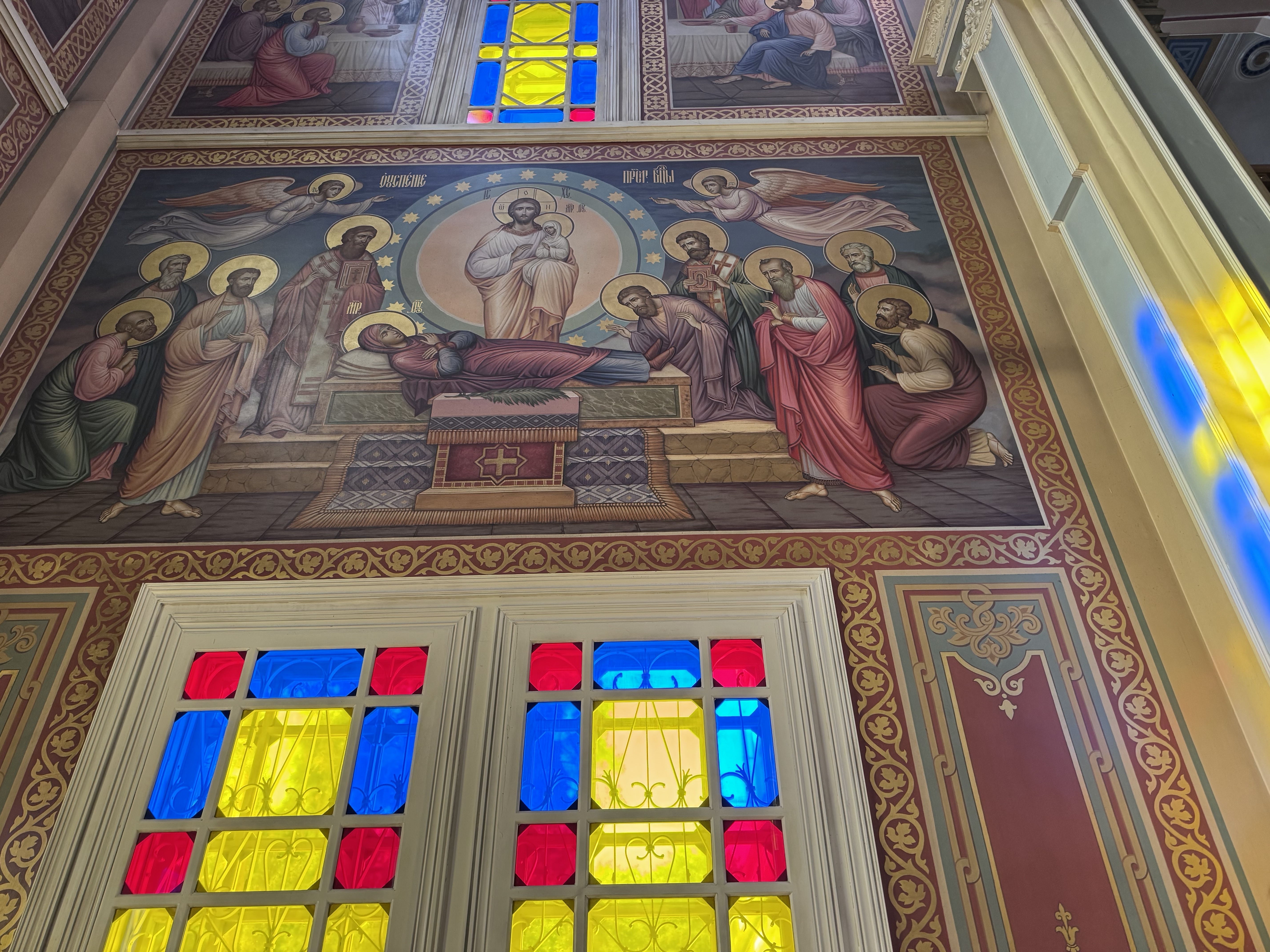
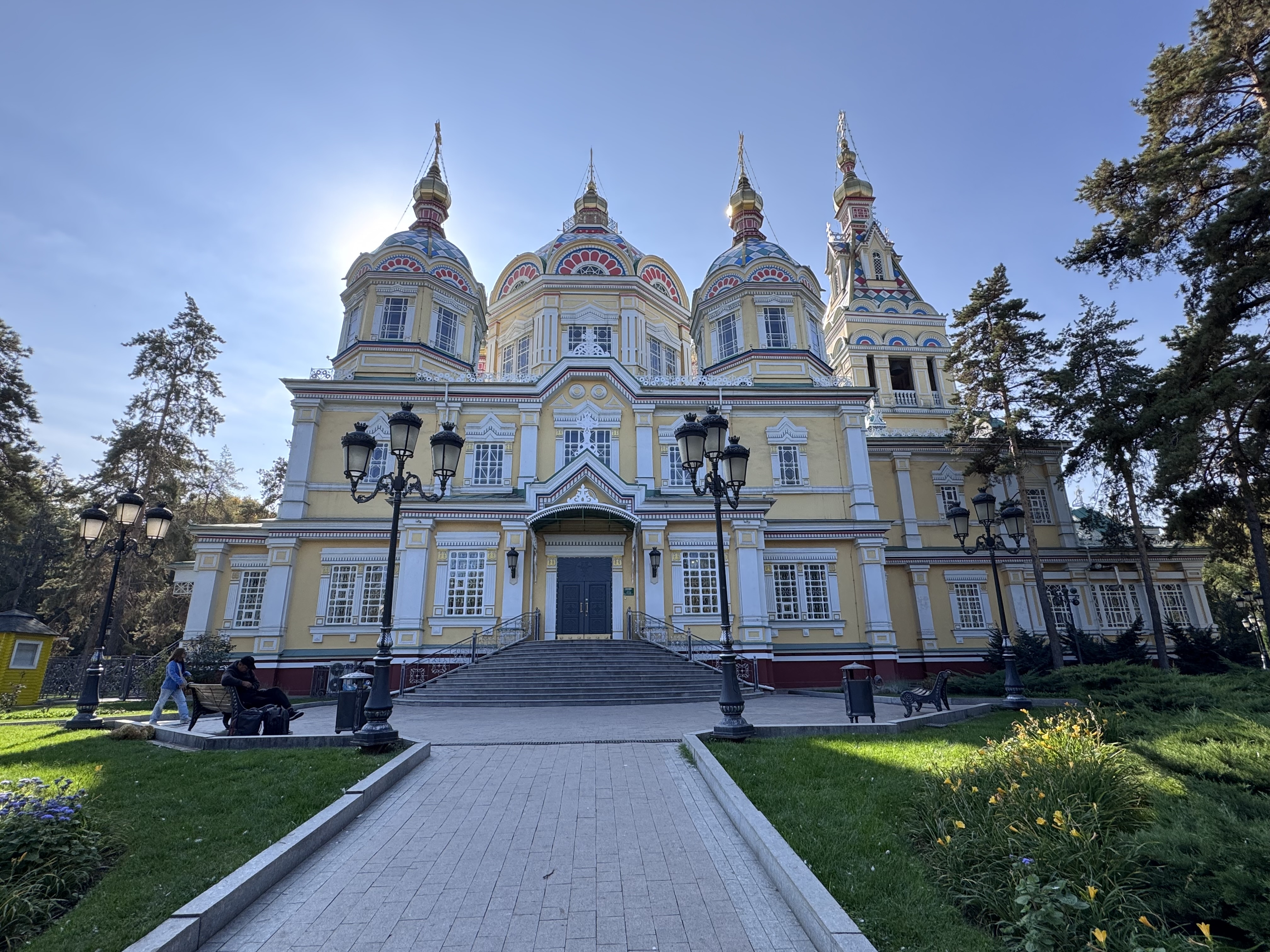
The Ascension Cathedral in Almaty, Kazakhstan, also known as Zenkov Cathedral, stands as a striking Russian Orthodox church and one of the most remarkable examples of wooden ecclesiastical architecture in the world.
Constructed entirely of wood between 1904 and 1907 under the guidance of engineer Andrei Pavlovich Zenkov, who refined earlier plans by architect Konstantin Borisoglebsky, the cathedral was built primarily from durable local Tian Shan spruce using traditional joinery techniques that relied on interlocking wooden elements rather than metal nails for its main structural frame.
This all wood construction reaches approximately 56 meters in height to the tip of its central dome and cross, earning it widespread recognition as the second tallest wooden church on the planet.
Its five onion domes, vibrant pastel exterior of blues, greens, and whites accented with gold, and cruciform plan embody classic Russian Orthodox design adapted to the seismic realities of the region. The flexible wooden ...