

Tha Din Daeng is one of the oldest traditional market in Bangkok, Thailand. It has no clear evidence to show when it was established. It is believed to have been established during the early Ayutthaya period. This is a famous market because of the location of it which the Thais call “the golden place”.
Tha Din Daeng is located at Tha din dang Rd, Khet Khlong San, Bangkok. It is on the bank of the Chao Phraya River. This area are connect to Yarawit (China town), Sampeng and Pahurat which are important markets on the other side of the river.
In this Ayutthaya era, this area used to be breakpoint for cargo transport before sailing to Ayutthaya. The river route was long with many curves so this was an important location to switch boats from sea faring to river boats to make the rest of the journey.
During the early Bangkok era up to King Rama IV’s reign this area was an important industrial and shipping region.
Industry like rice mills, sawmills, warehouses and shipyards were all ...


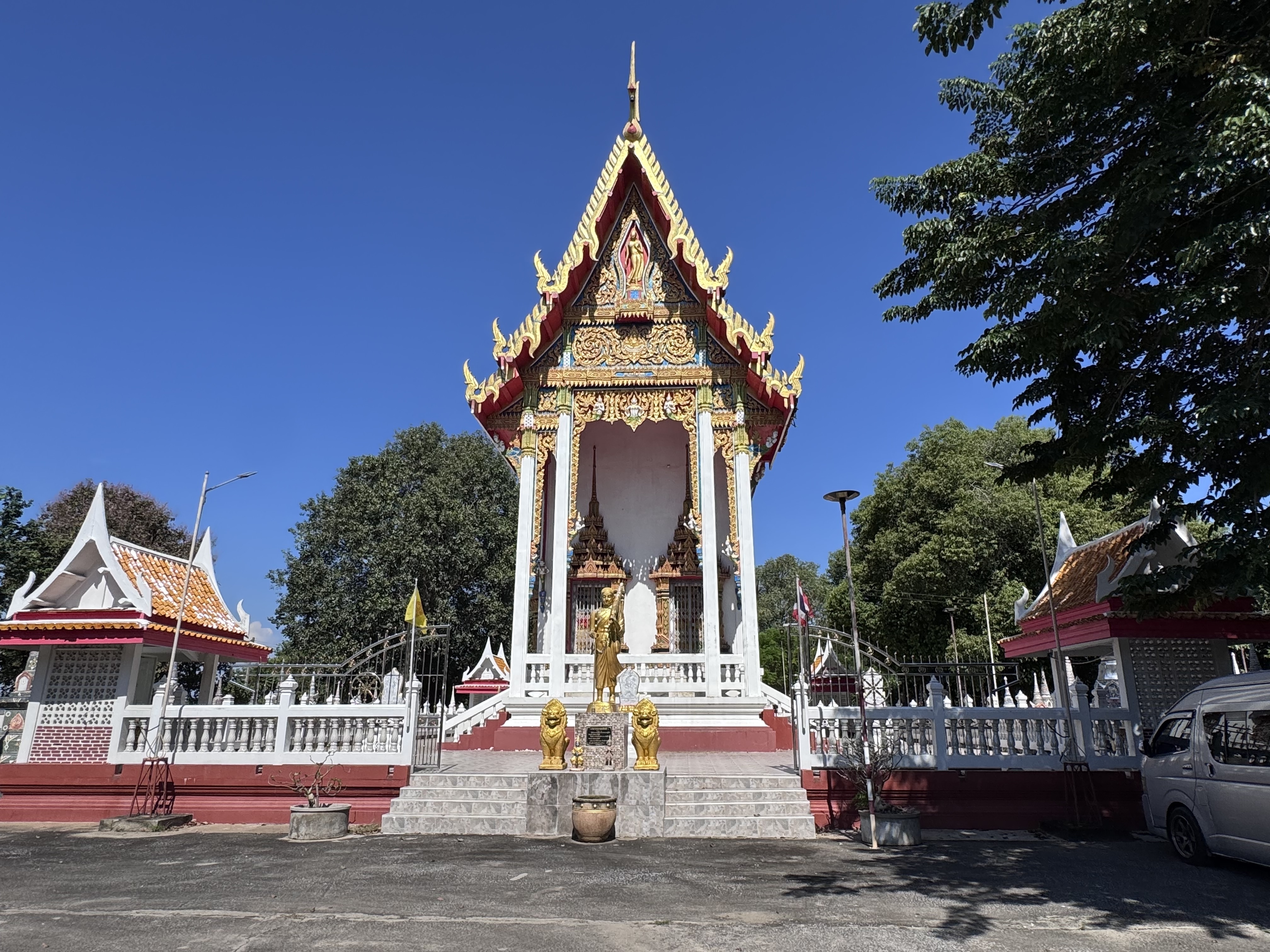
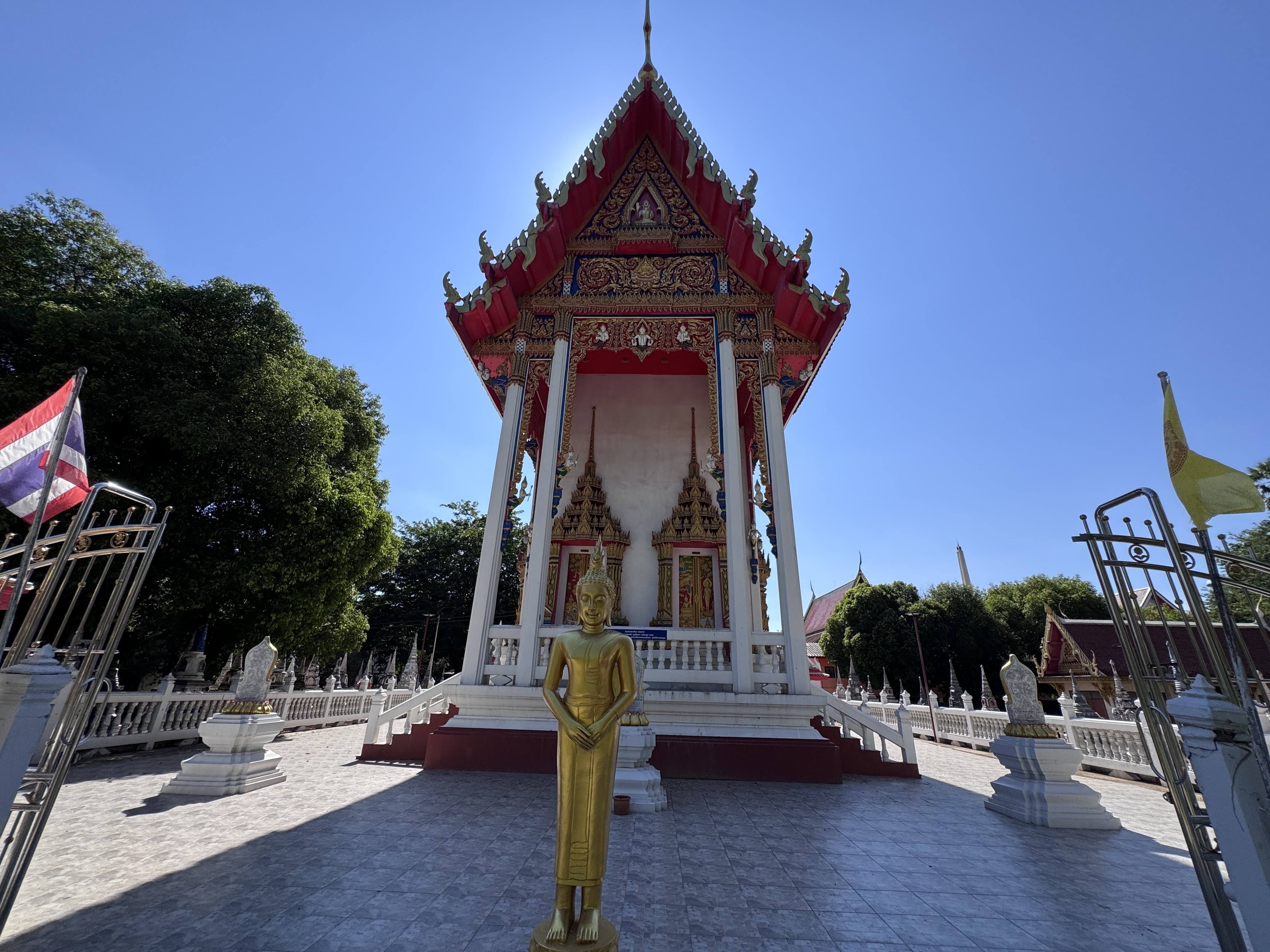
Wat Muang, the Purple Monastery, stands as an active community temple north of the old city island. Its name derives from the earlier village of Ban Muang that occupied the same ground, a common pattern in Thai rural naming where the local monastery takes its identity from the settlement it serves.
The temple sits on land that once lay on the right bank of a meandering stretch of the old Lopburi River. In earlier centuries that waterway curved past the site and continued toward Hua Ro; later road construction severed and silted the channel, though remnants of the former course and the short surviving canal known as Khlong Ban Muang can still be traced in the landscape.
Historical records of the temple’s foundation are sparse and rest largely on oral tradition rather than contemporary documents. The most widely accepted account places its establishment in the early Rattanakosin period, around 1812, with the formal granting of boundary stones two years later in 1814. The ordination hall itself is ...
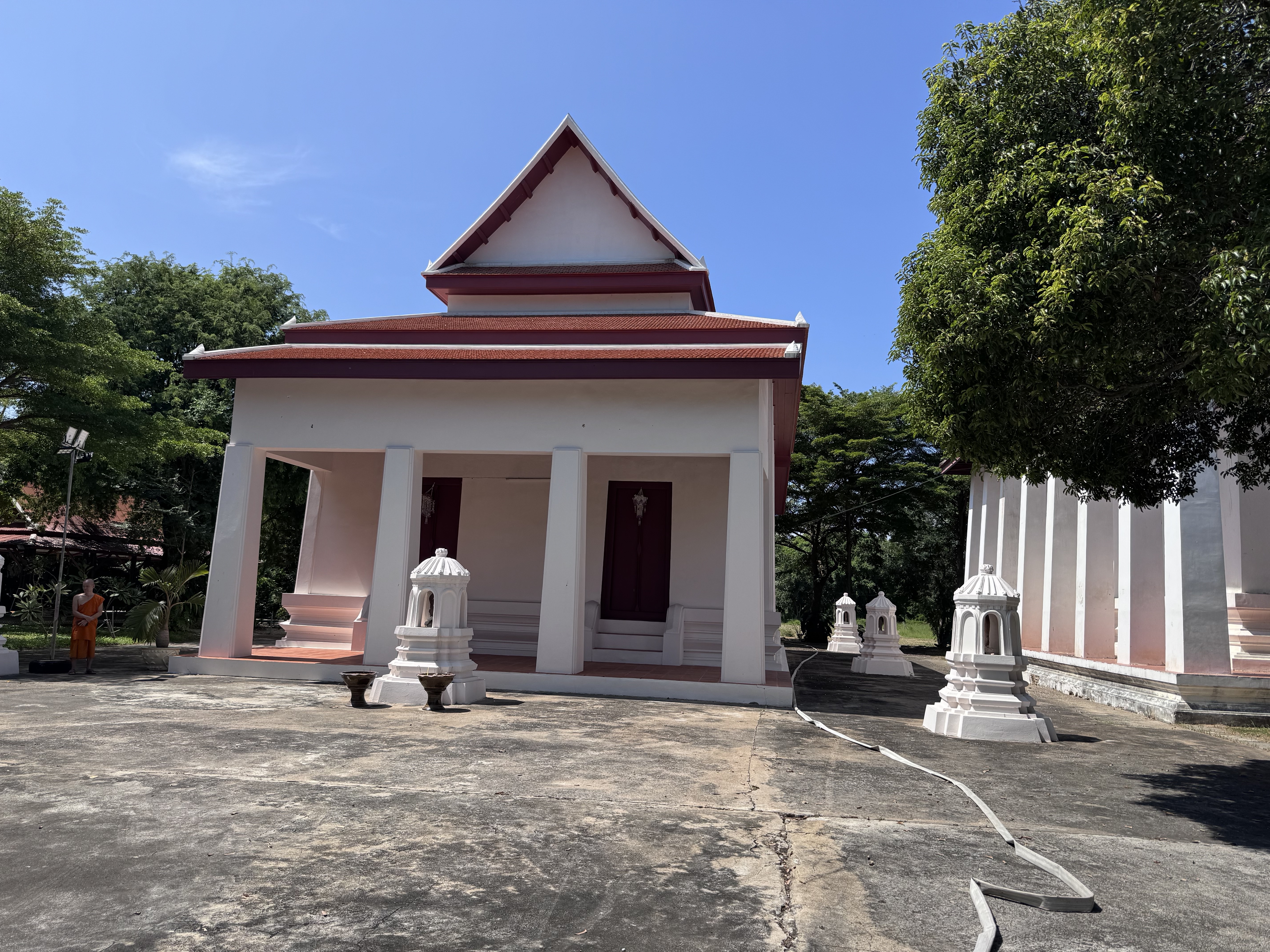
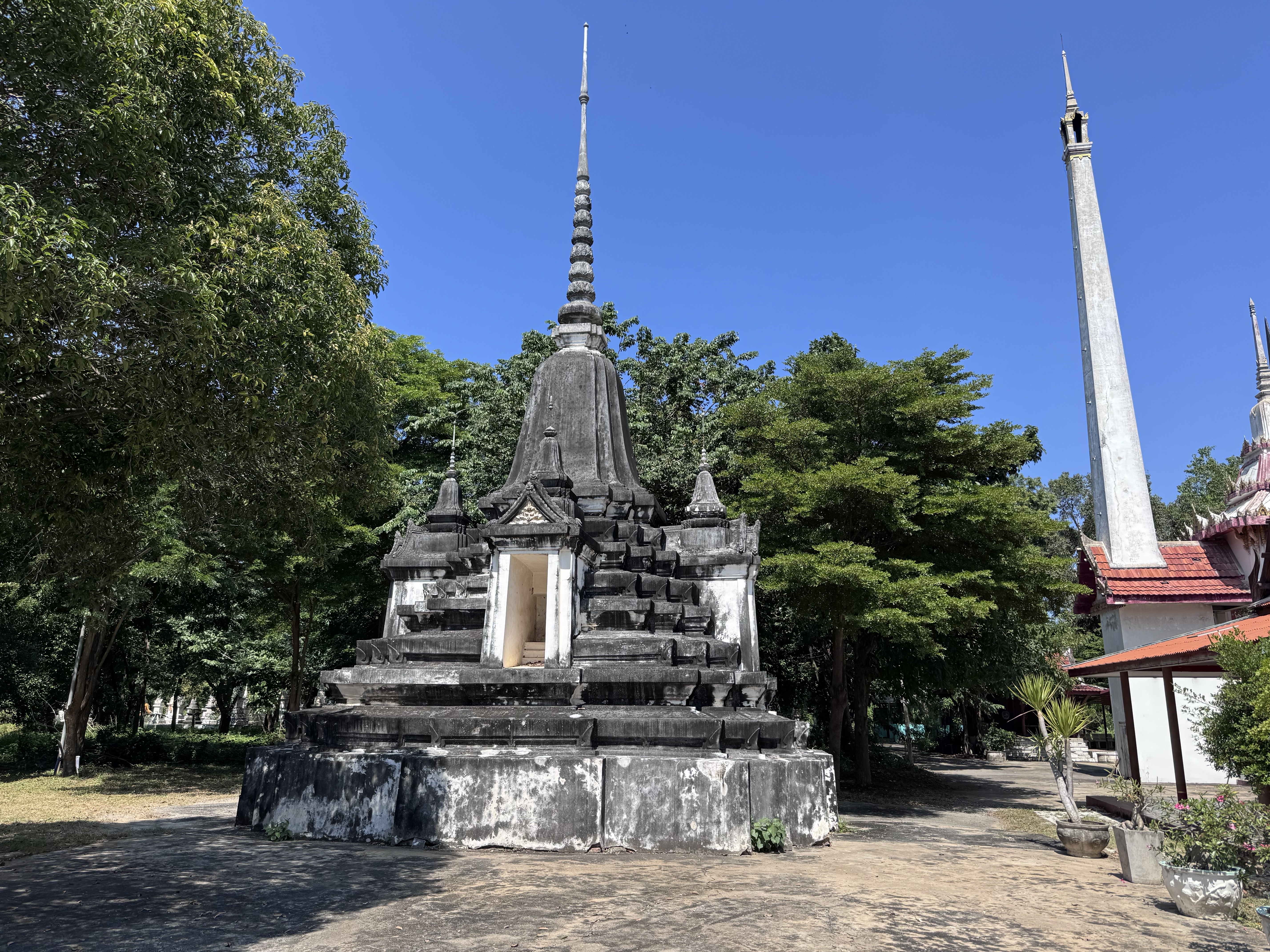
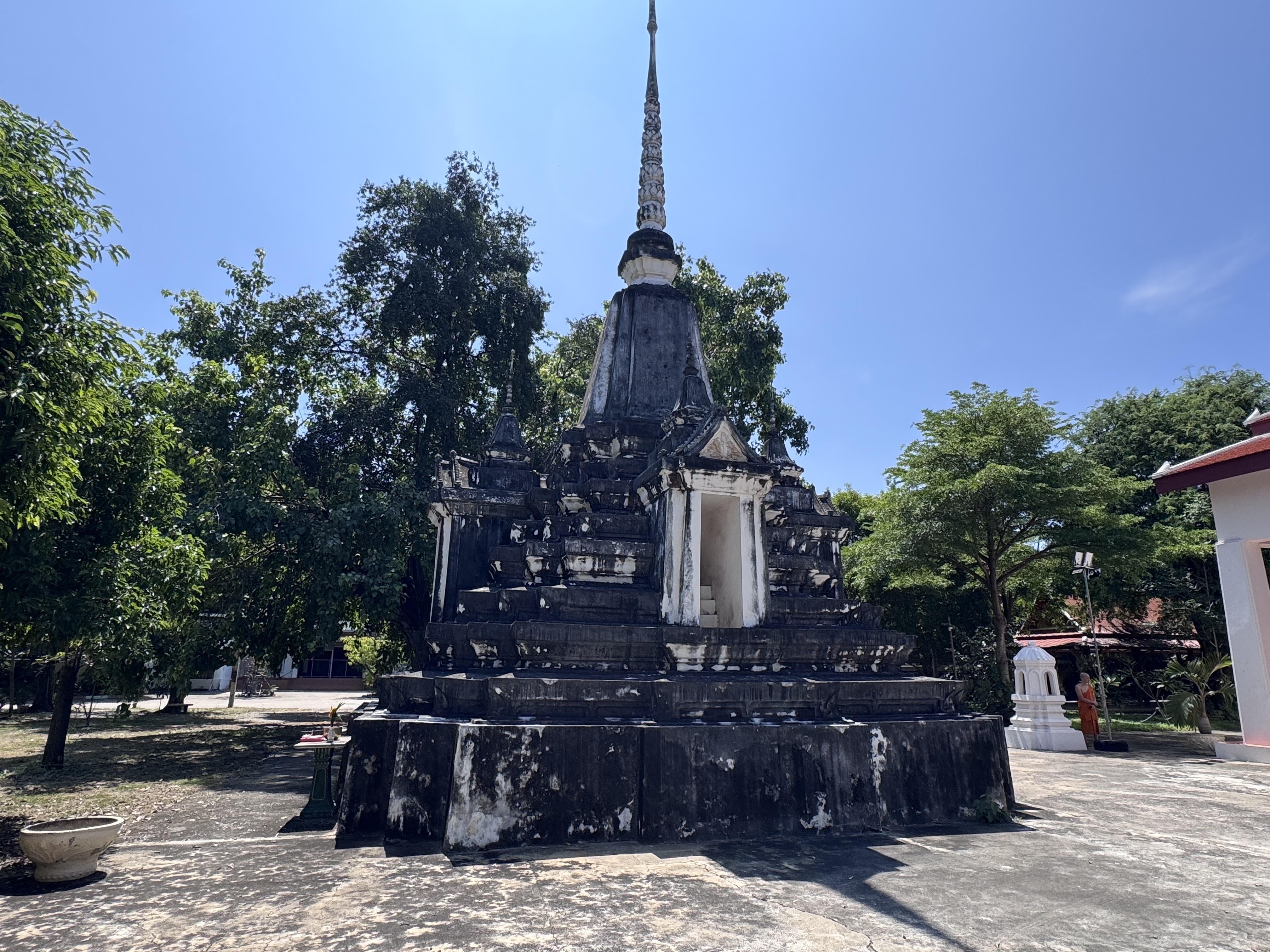
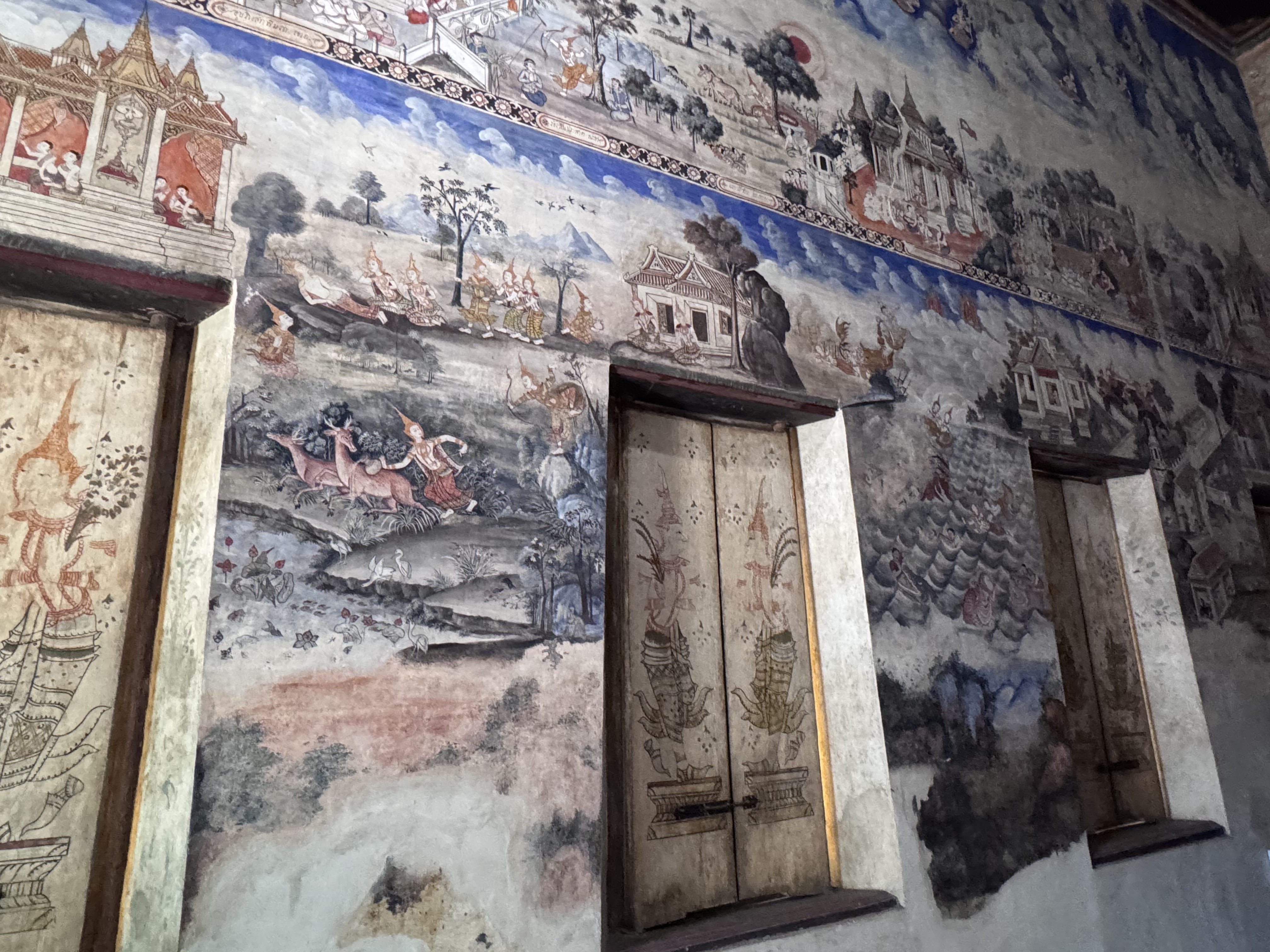
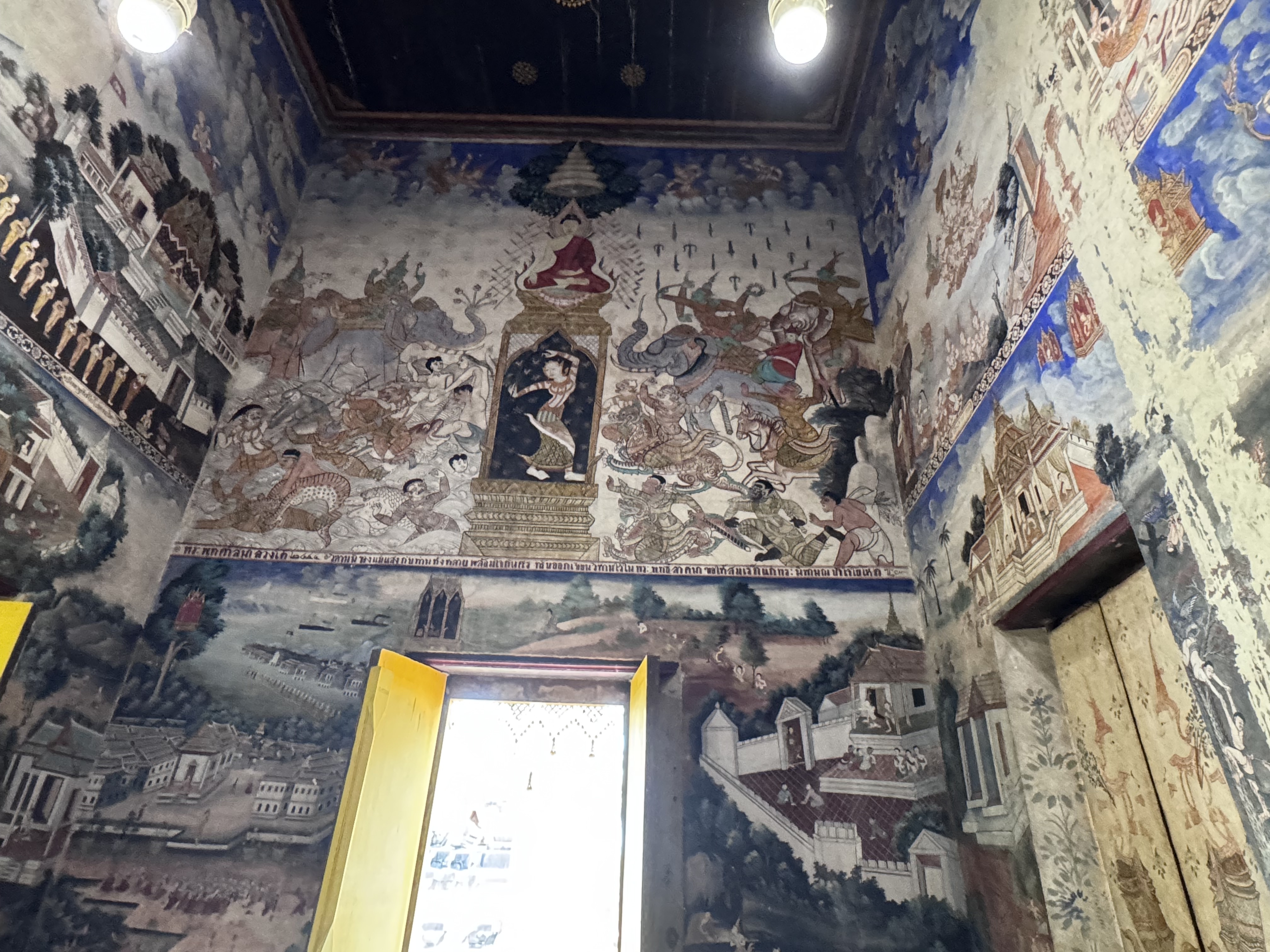
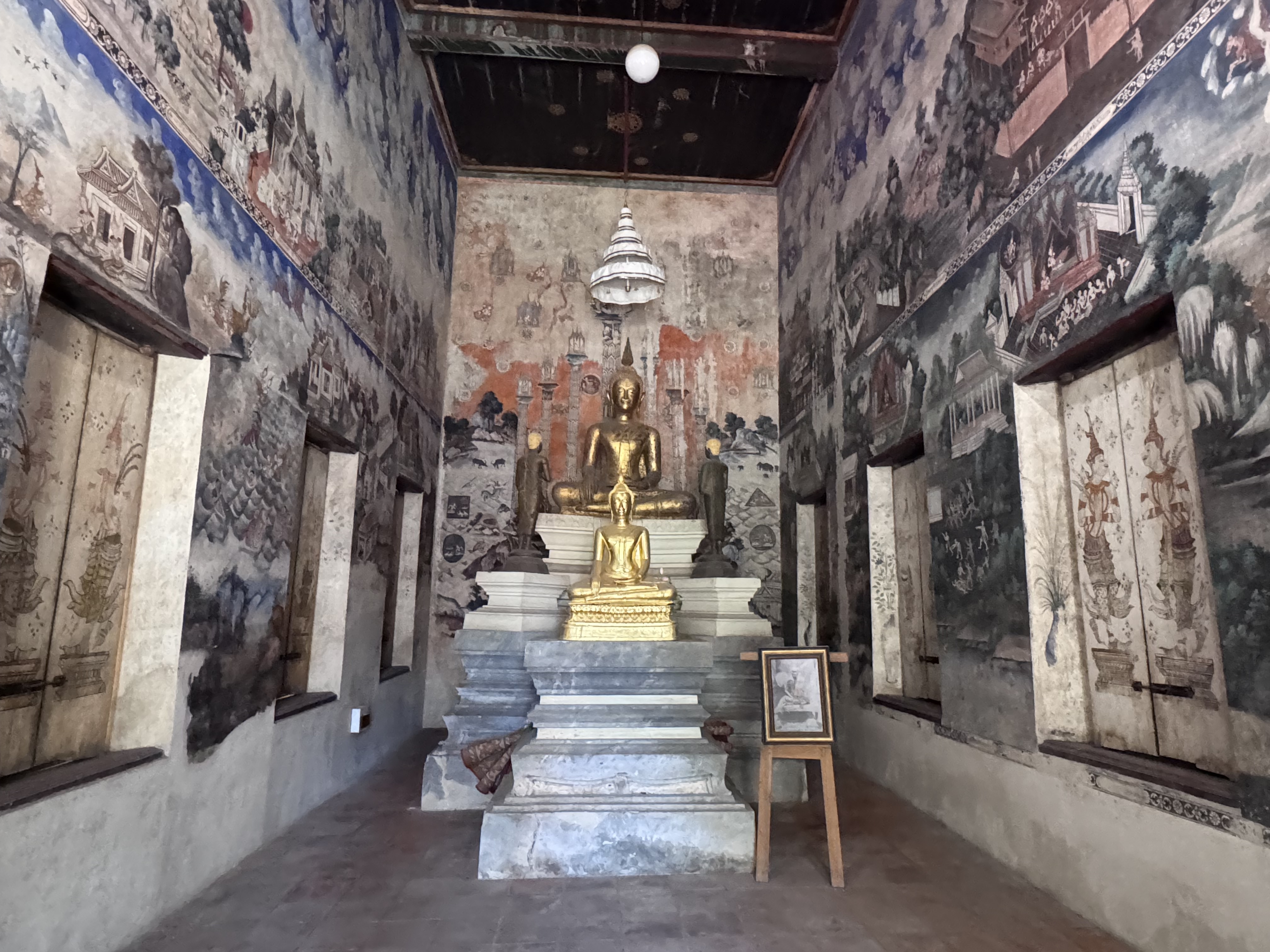
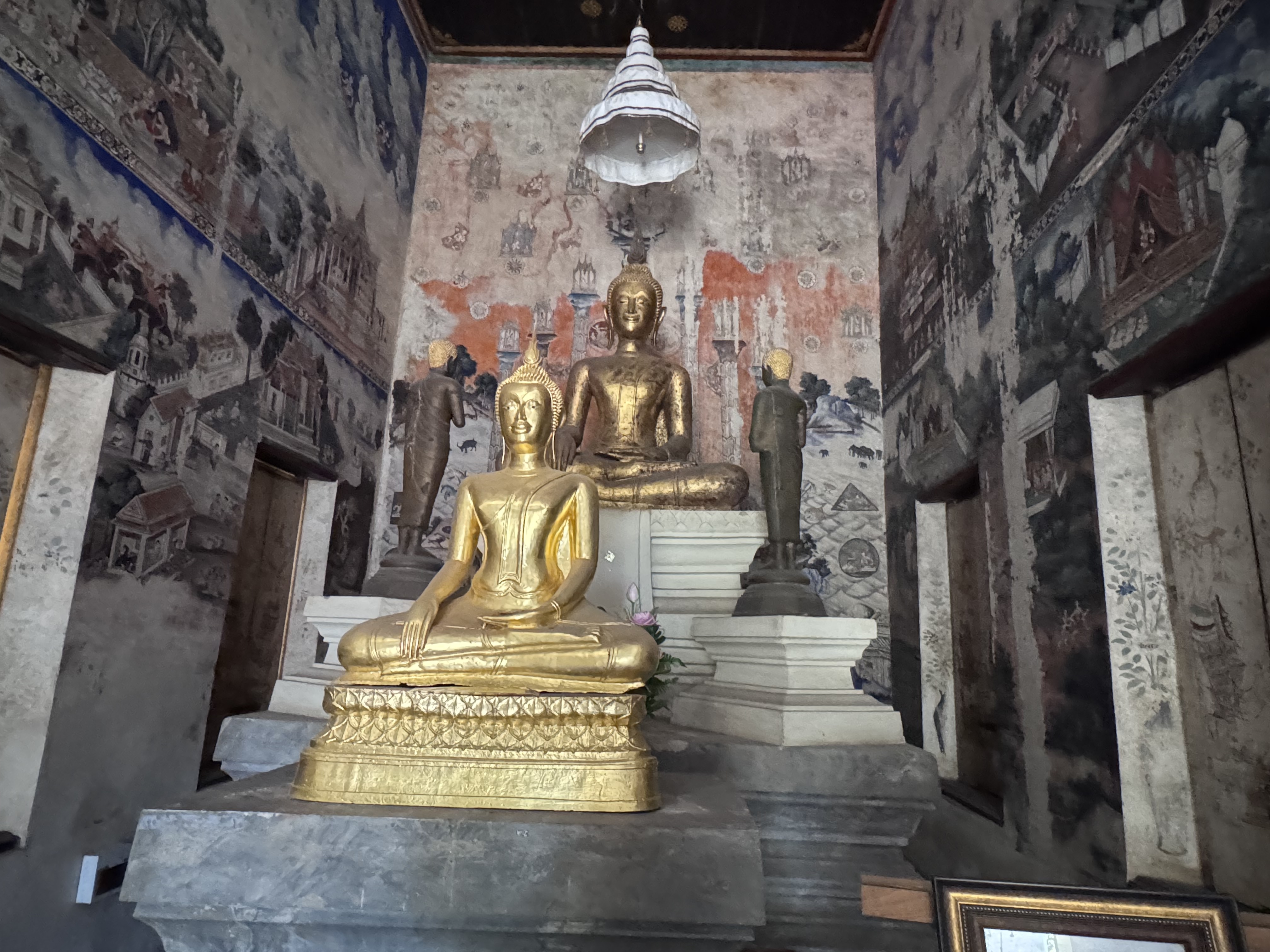
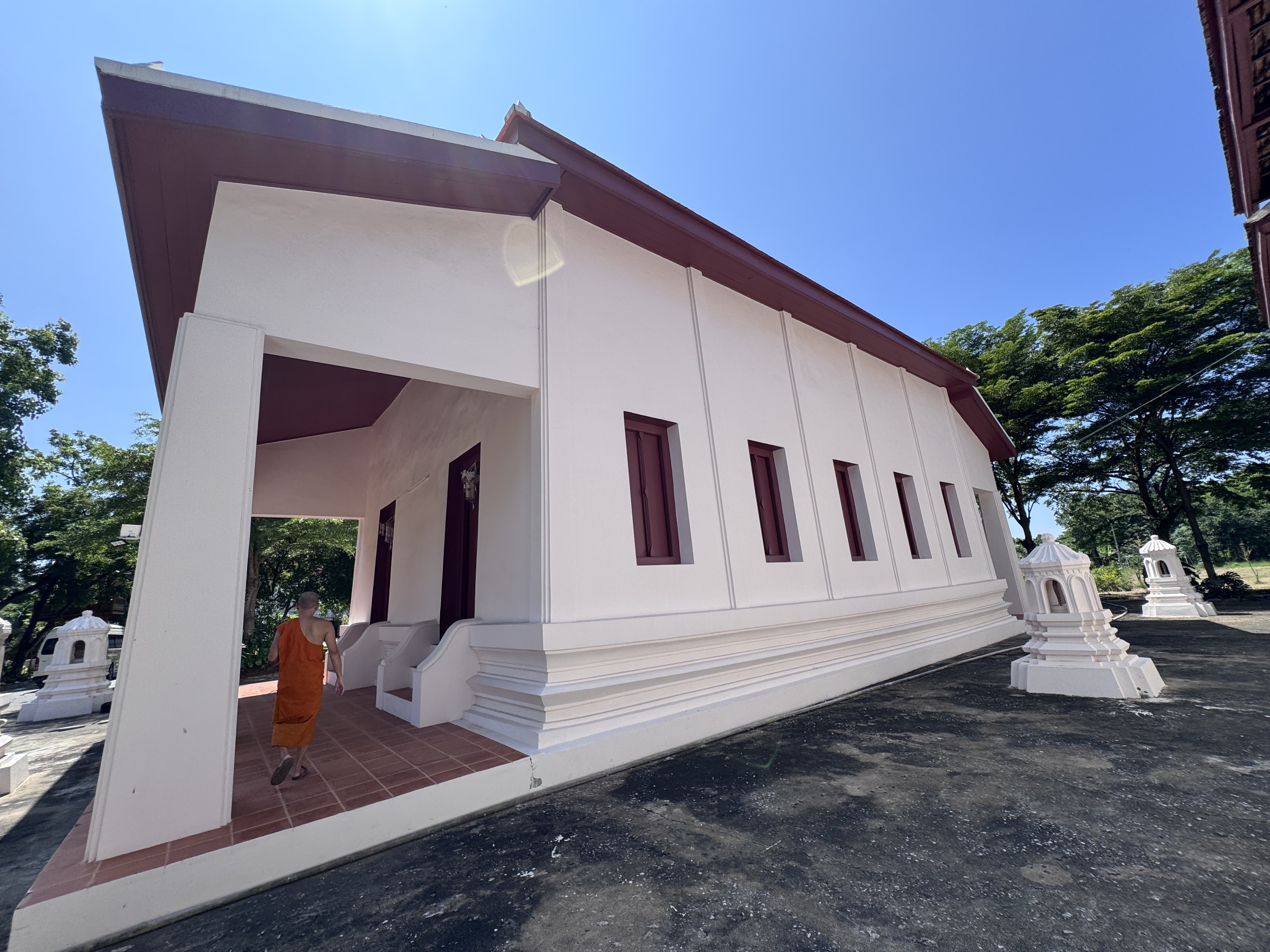
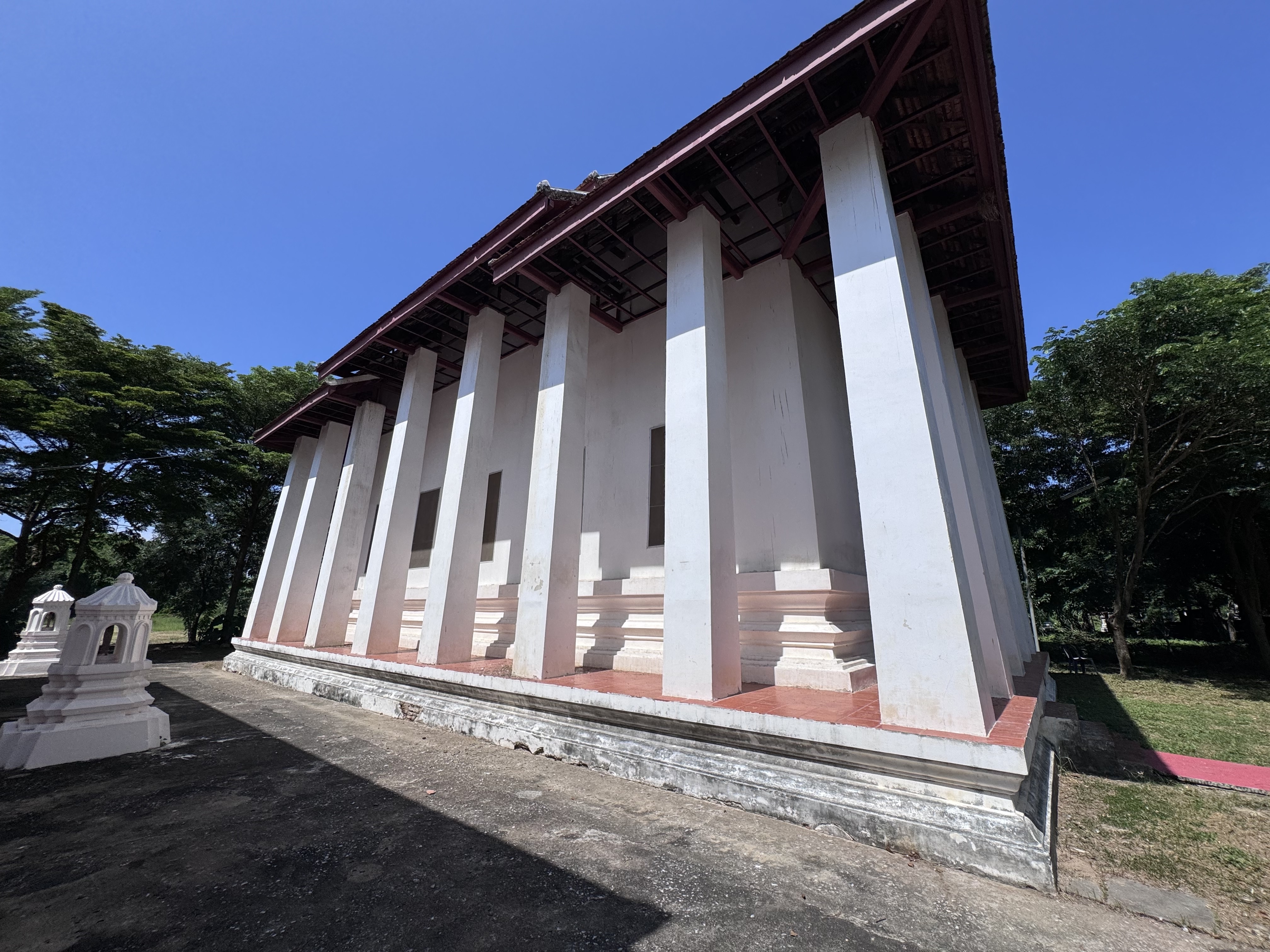
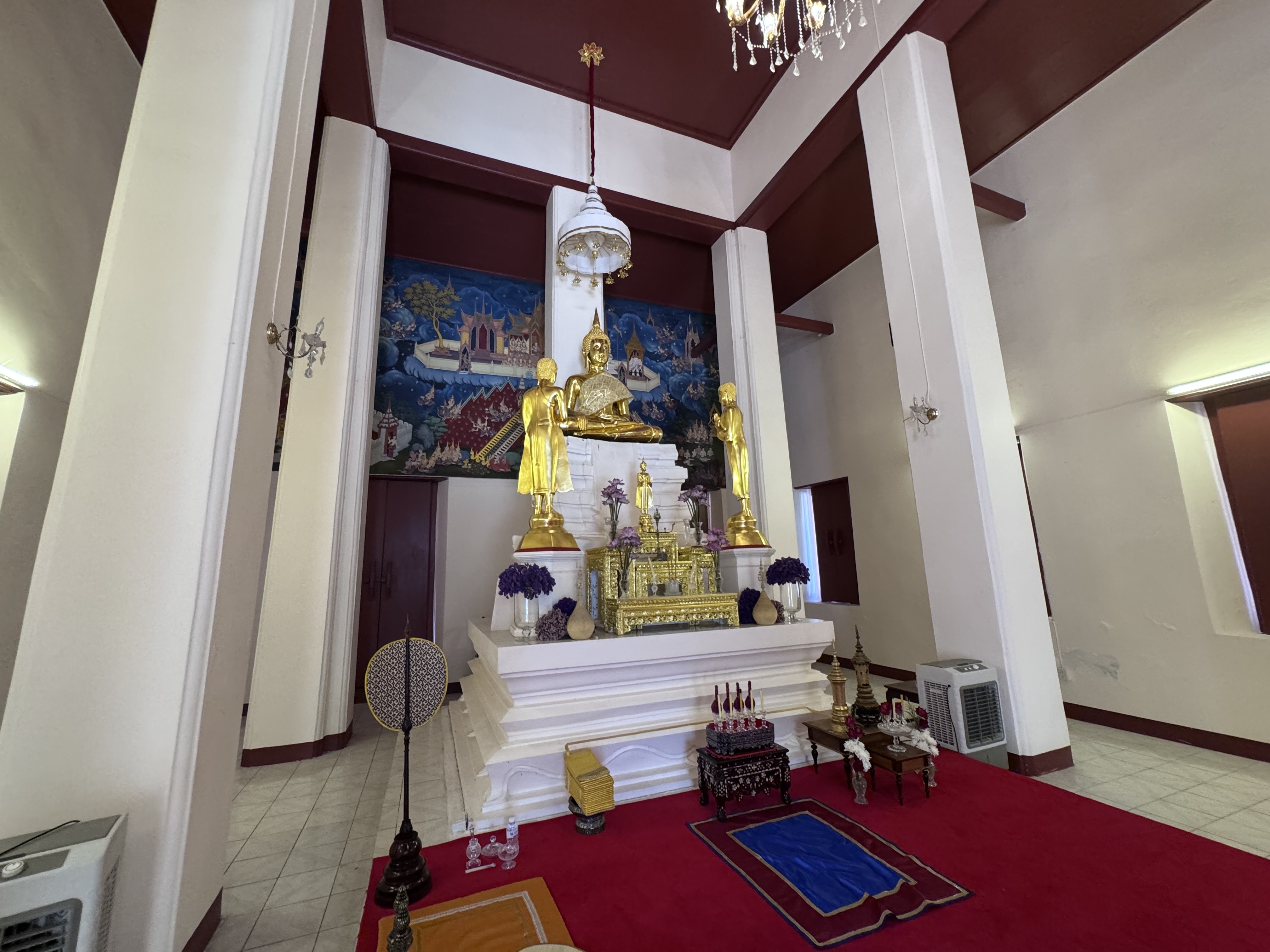
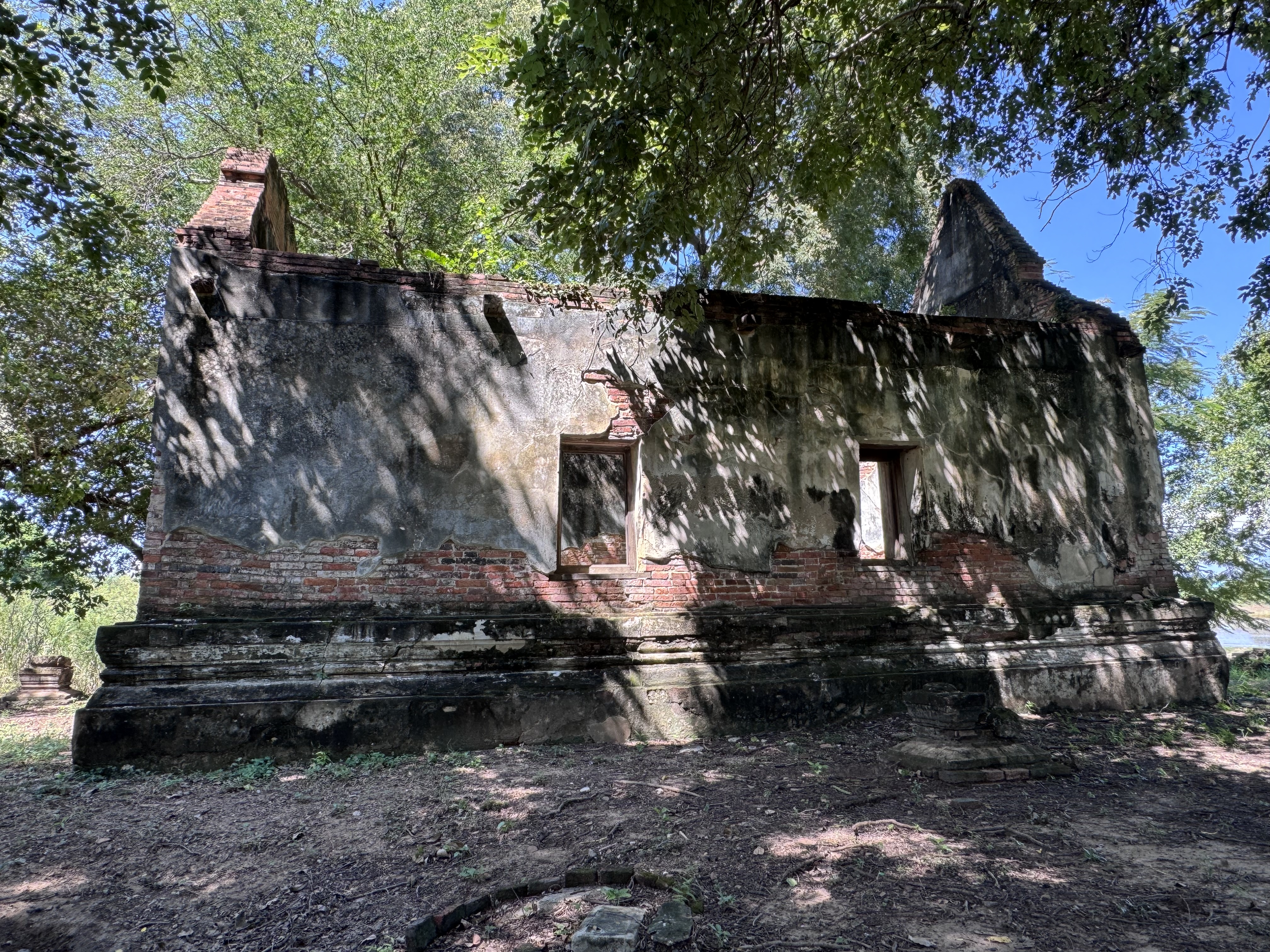
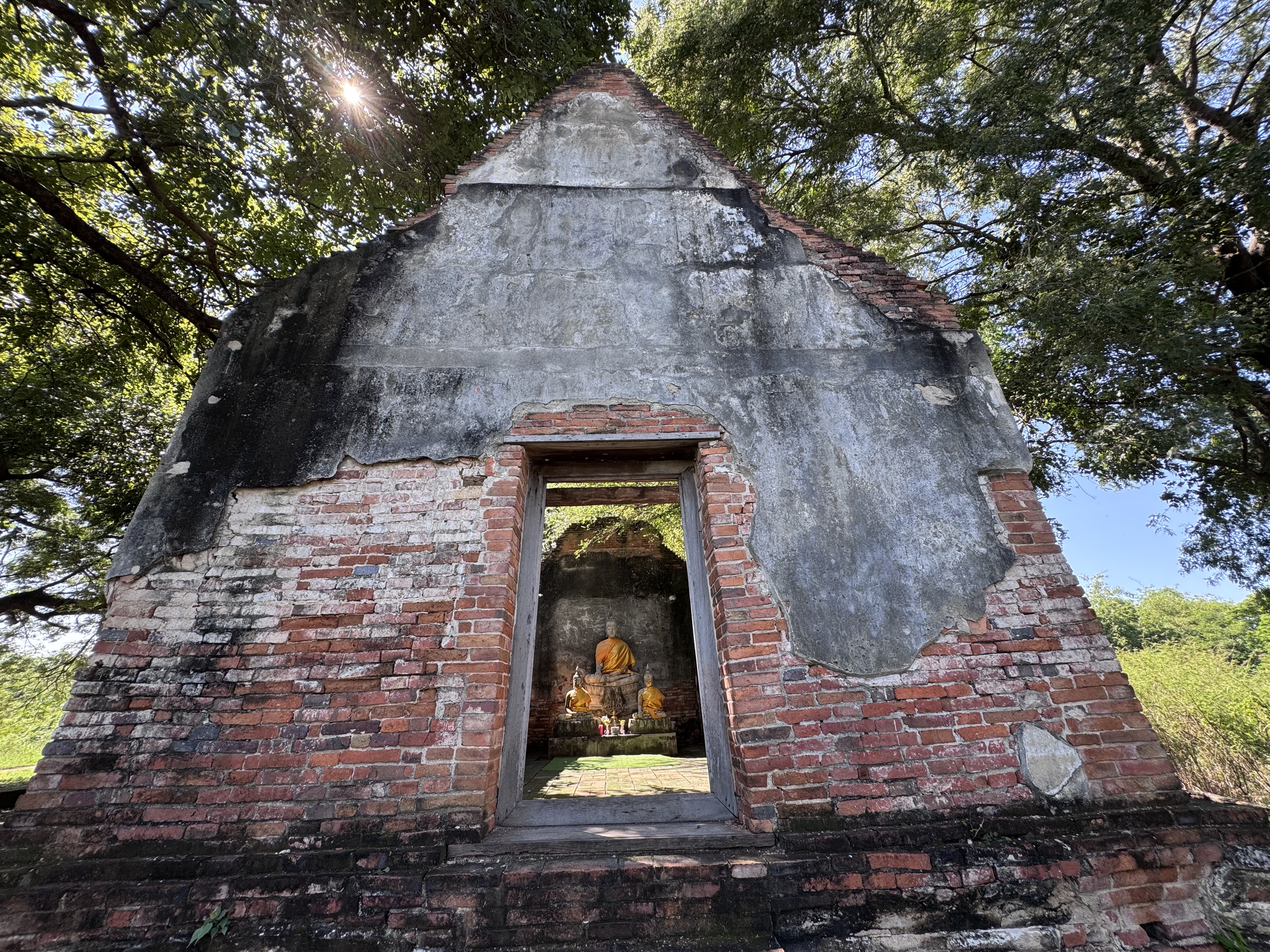
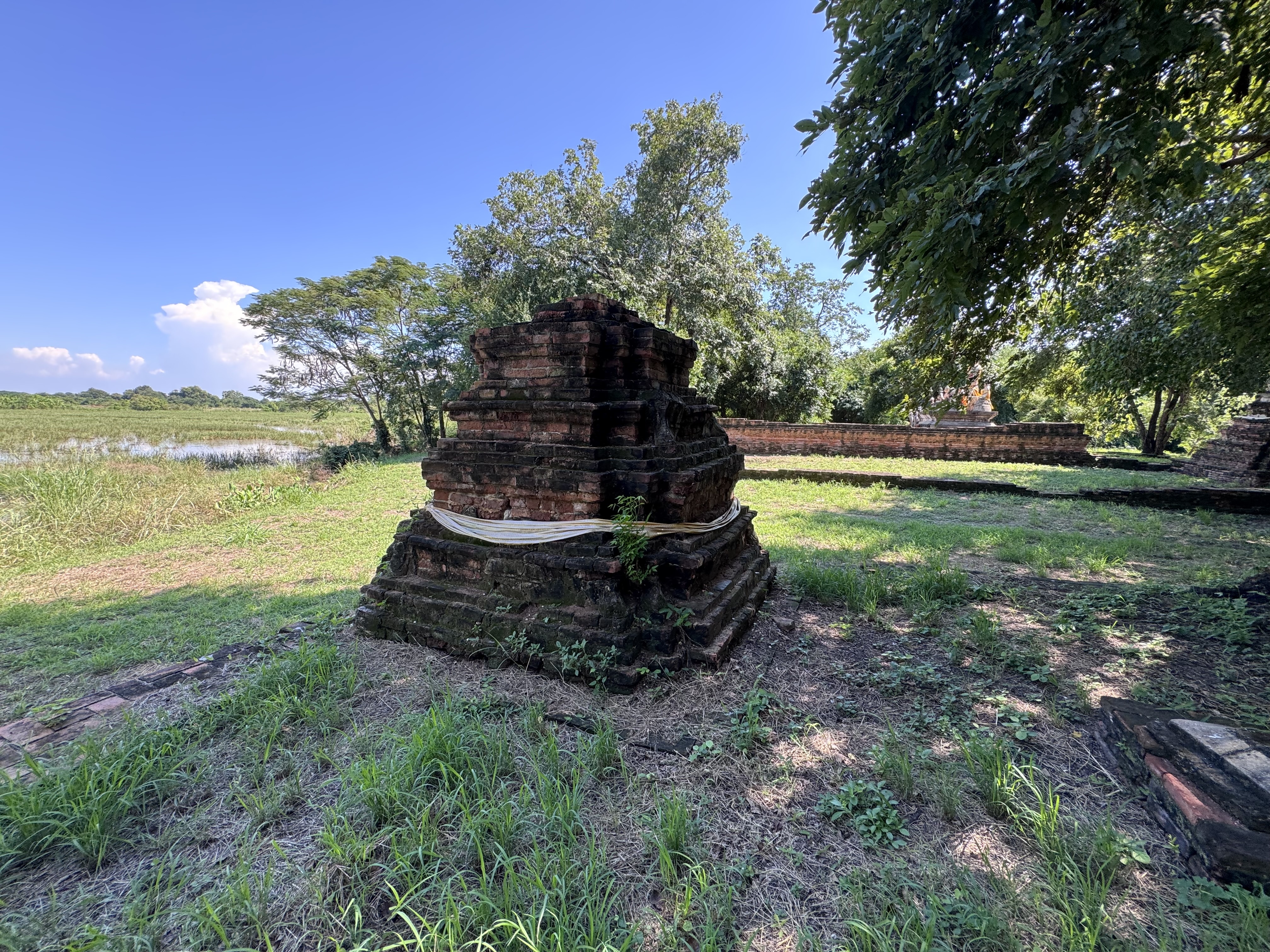
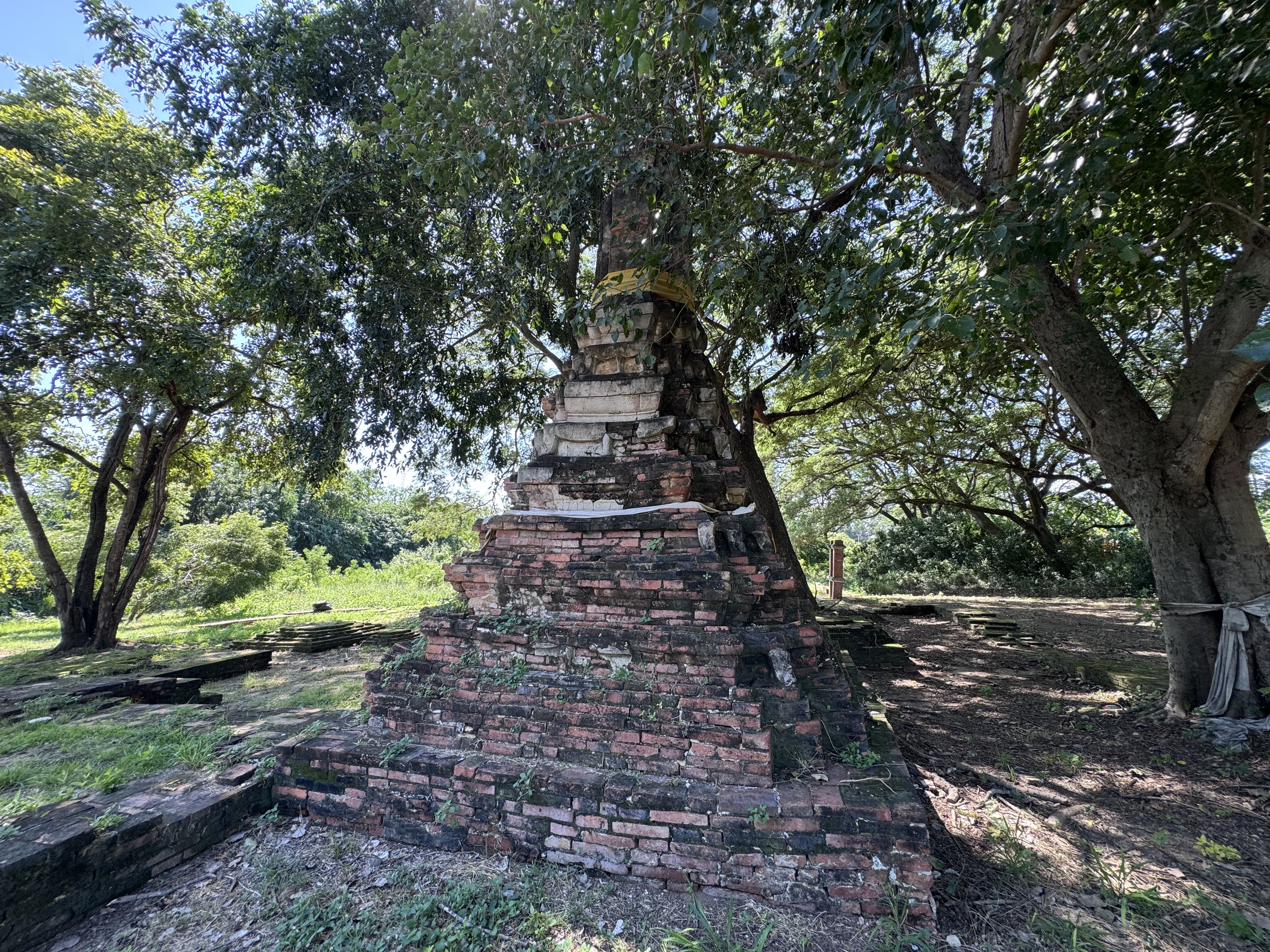
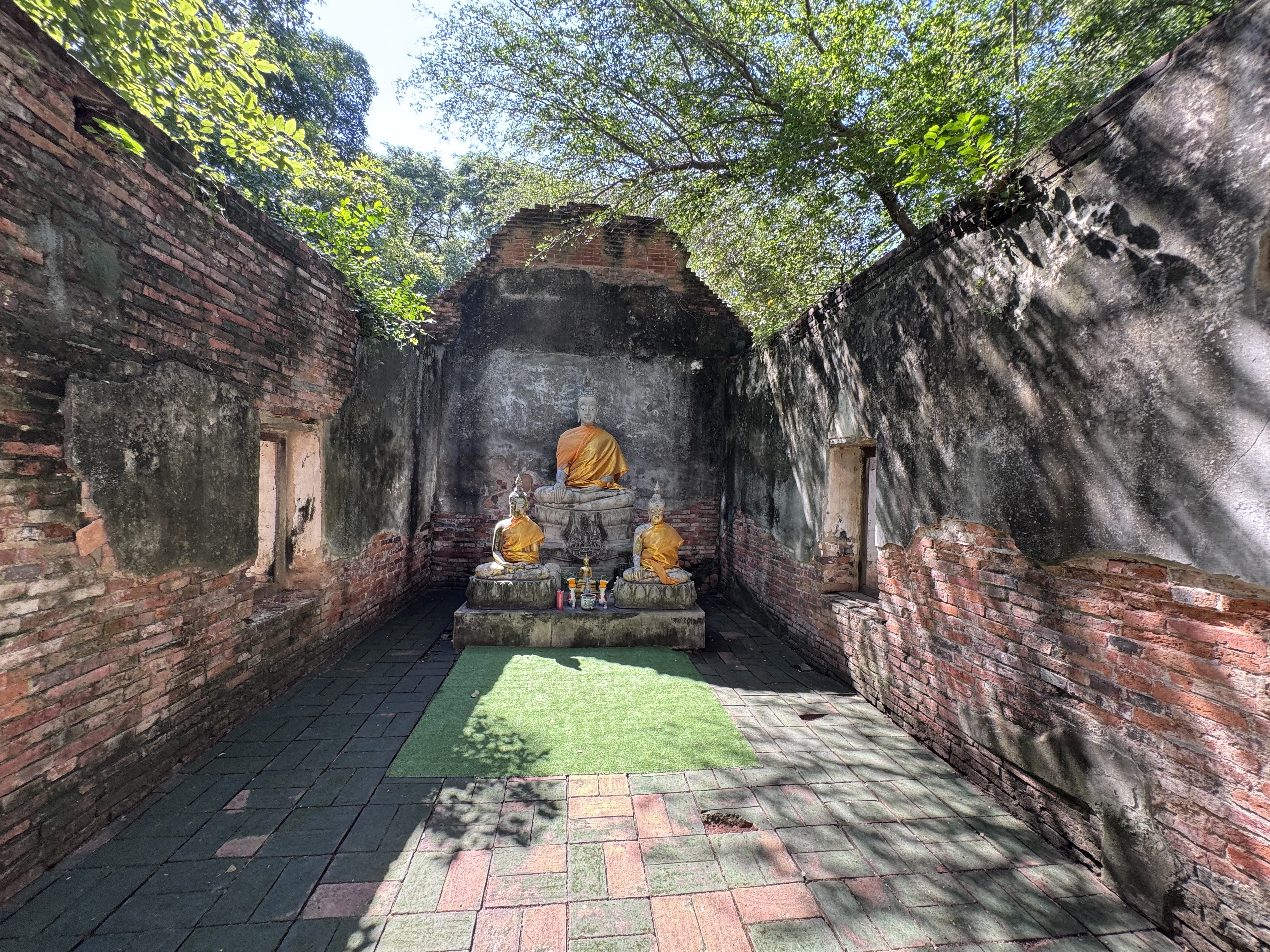
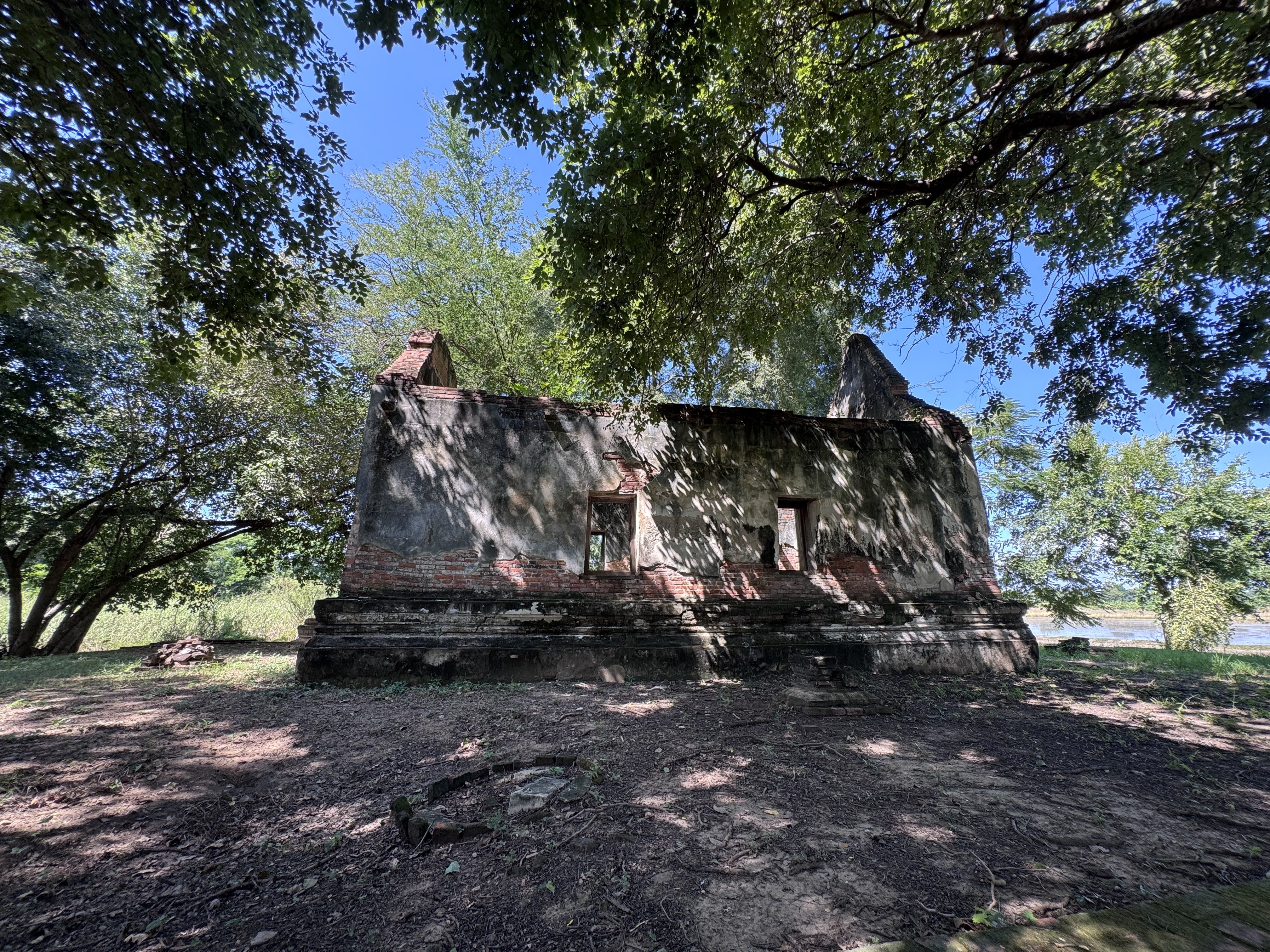
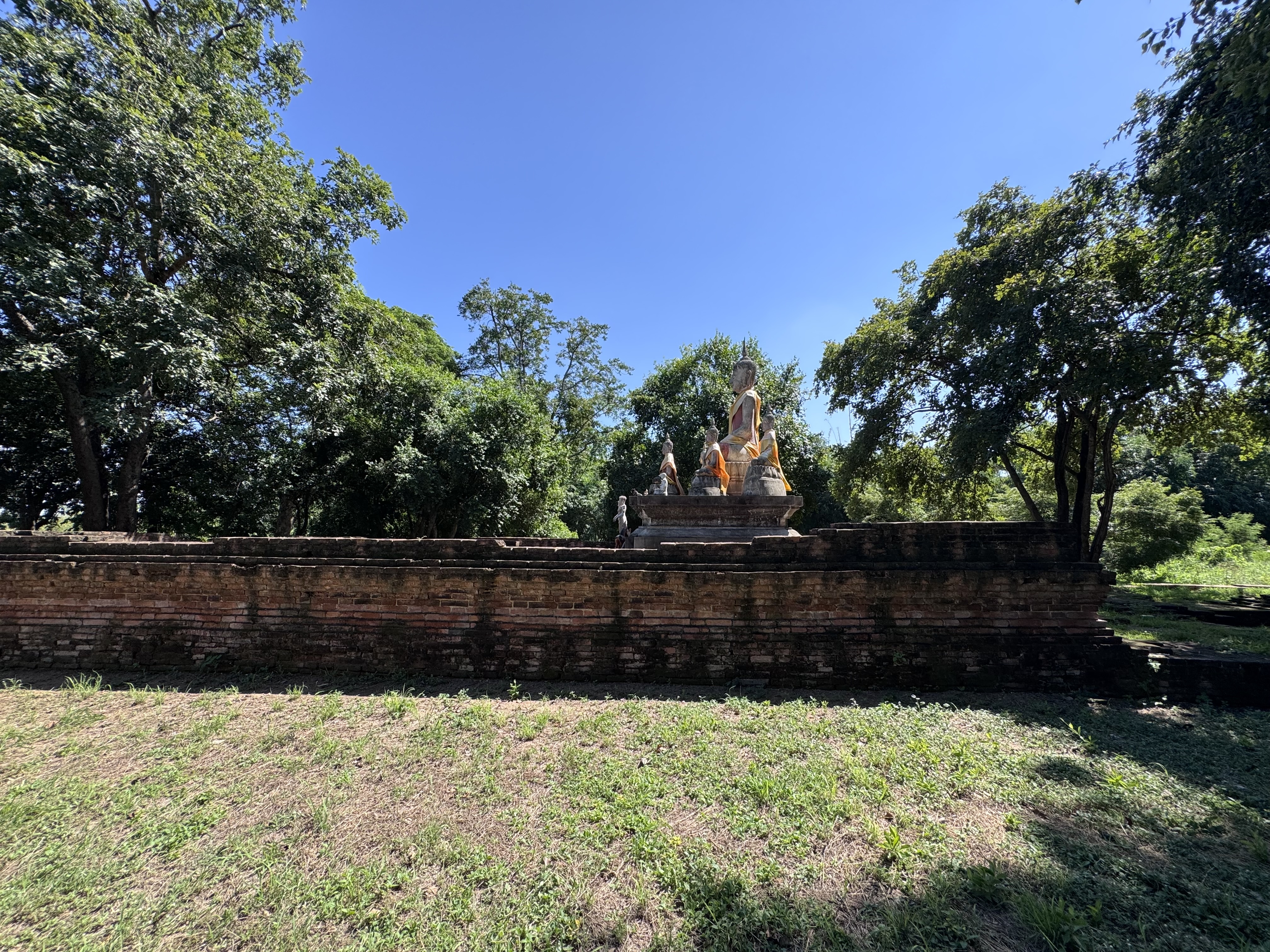
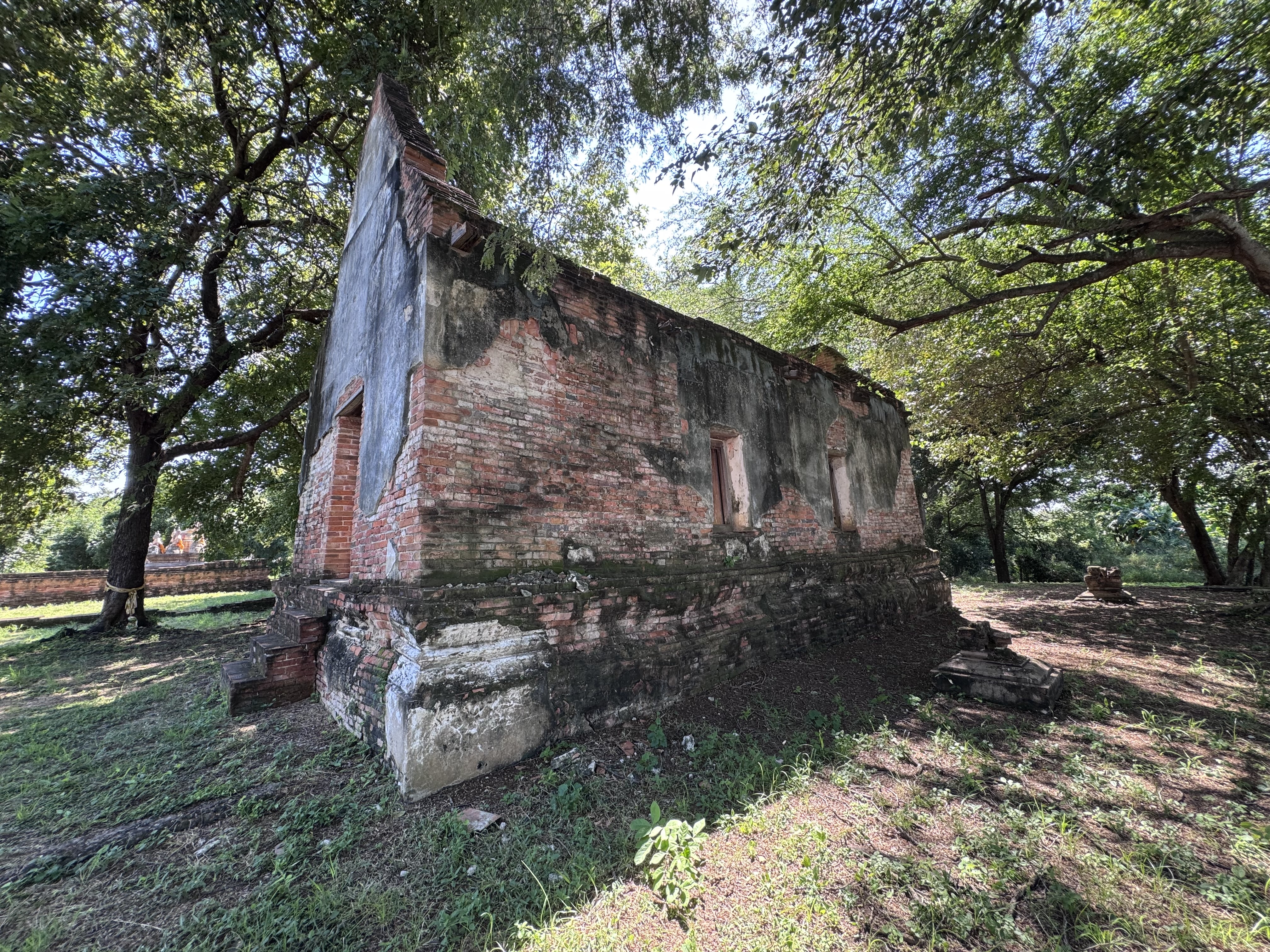
The temple ruin now commonly known in connection with Wat Talad (วัดตลาด) in Bang Pahan District, Phra Nakhon Si Ayutthaya Province, was originally called Wat Thai Talad or Wat Thaitalad.
The name reflected its location immediately behind a local market where residents traded vegetables, food, and other goods. Local tradition holds that this market continued to operate even during the final Burmese siege of Ayutthaya, supplying soldiers from the invading forces who had established a camp in the nearby Pho Sam Ton area. The site therefore sits at the intersection of ordinary village life and the turbulent closing years of the Ayutthaya kingdom.
Archaeological evidence places the original construction in the late Ayutthaya period, roughly the early decades of the 24th Buddhist century (mid-eighteenth century), shortly before the fall of the capital in 1767.
The earliest phase consisted of an ordination hall and a surrounding glass wall. After the destruction of the city, the monastery ...
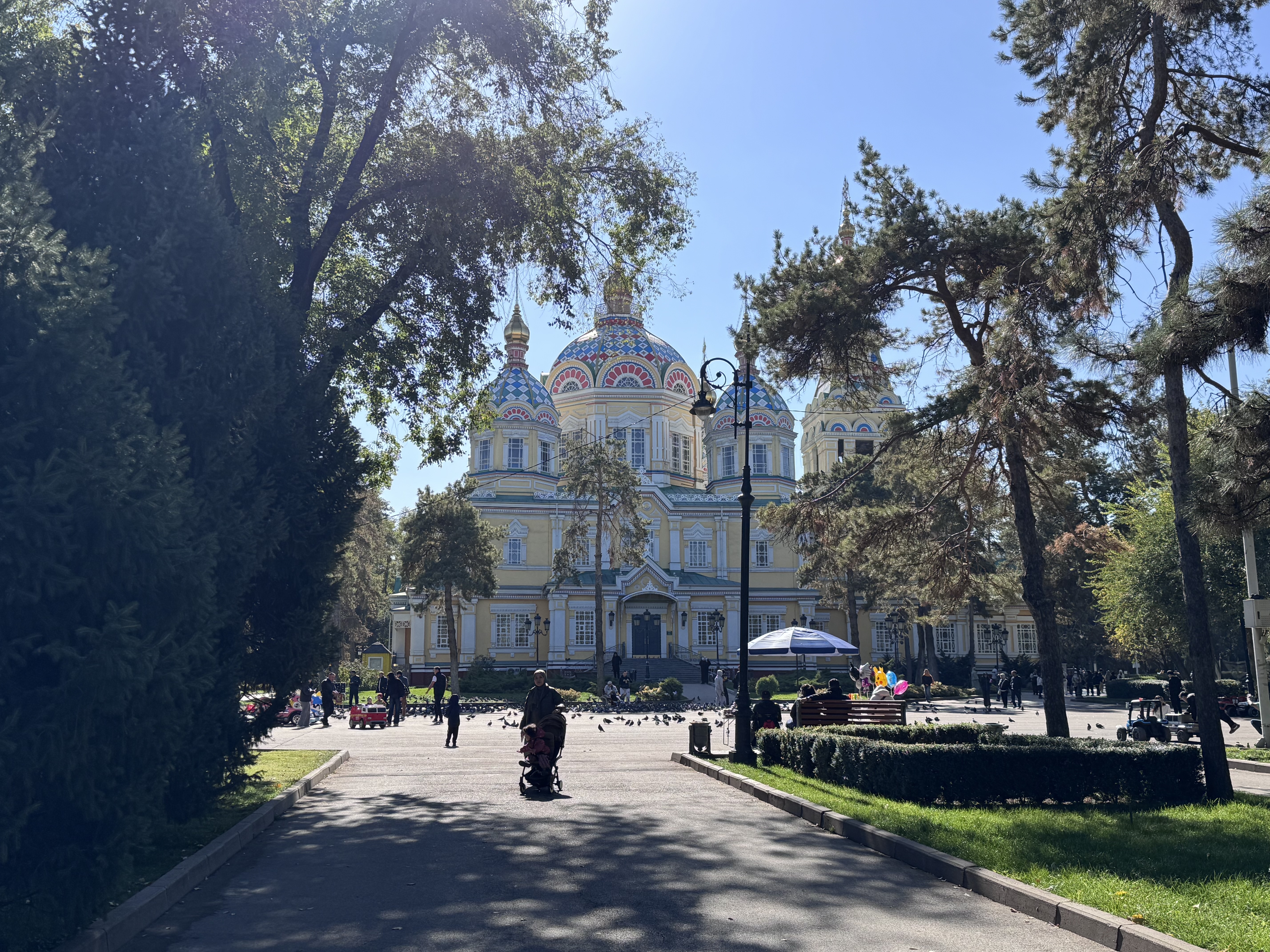
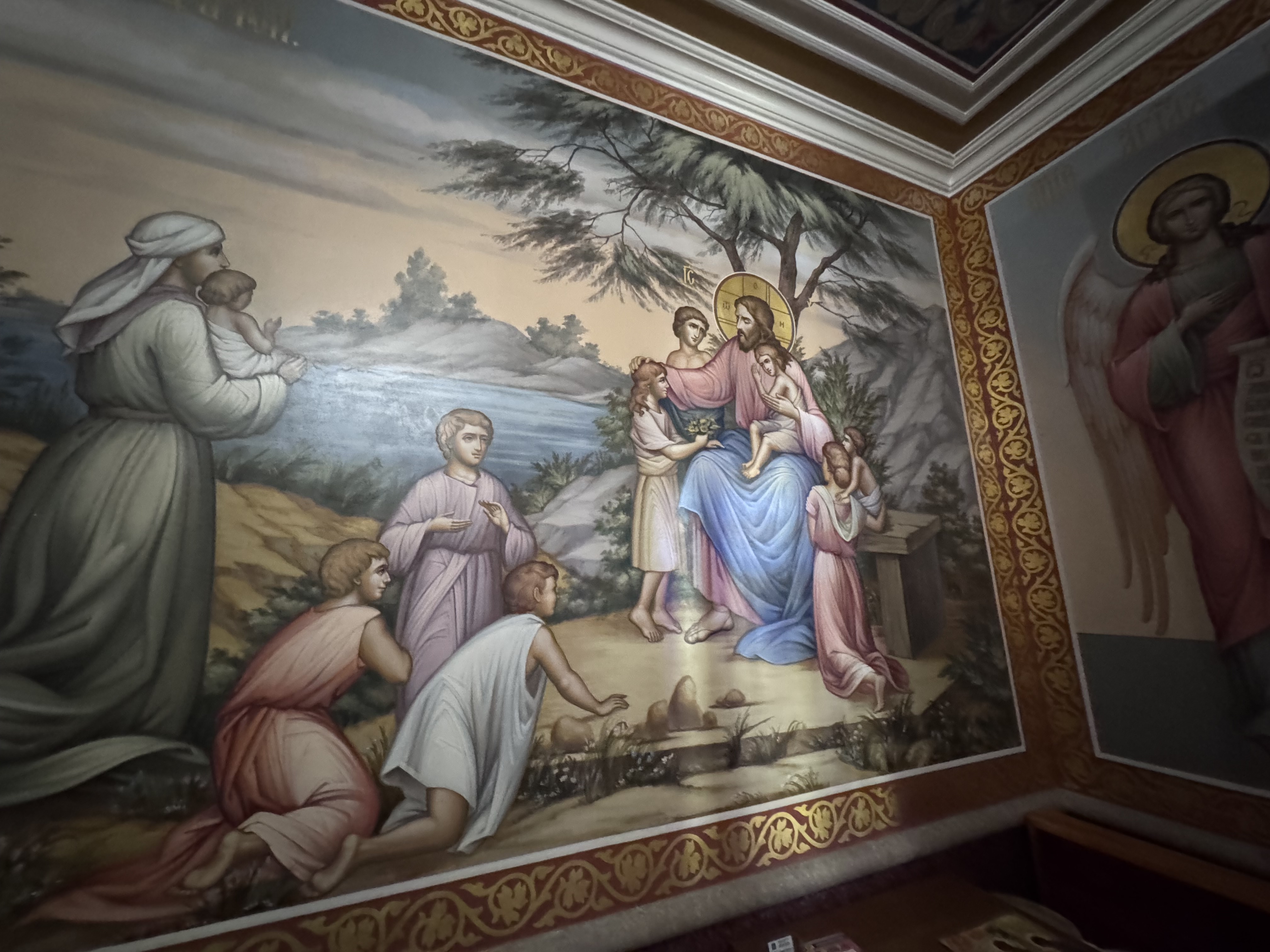
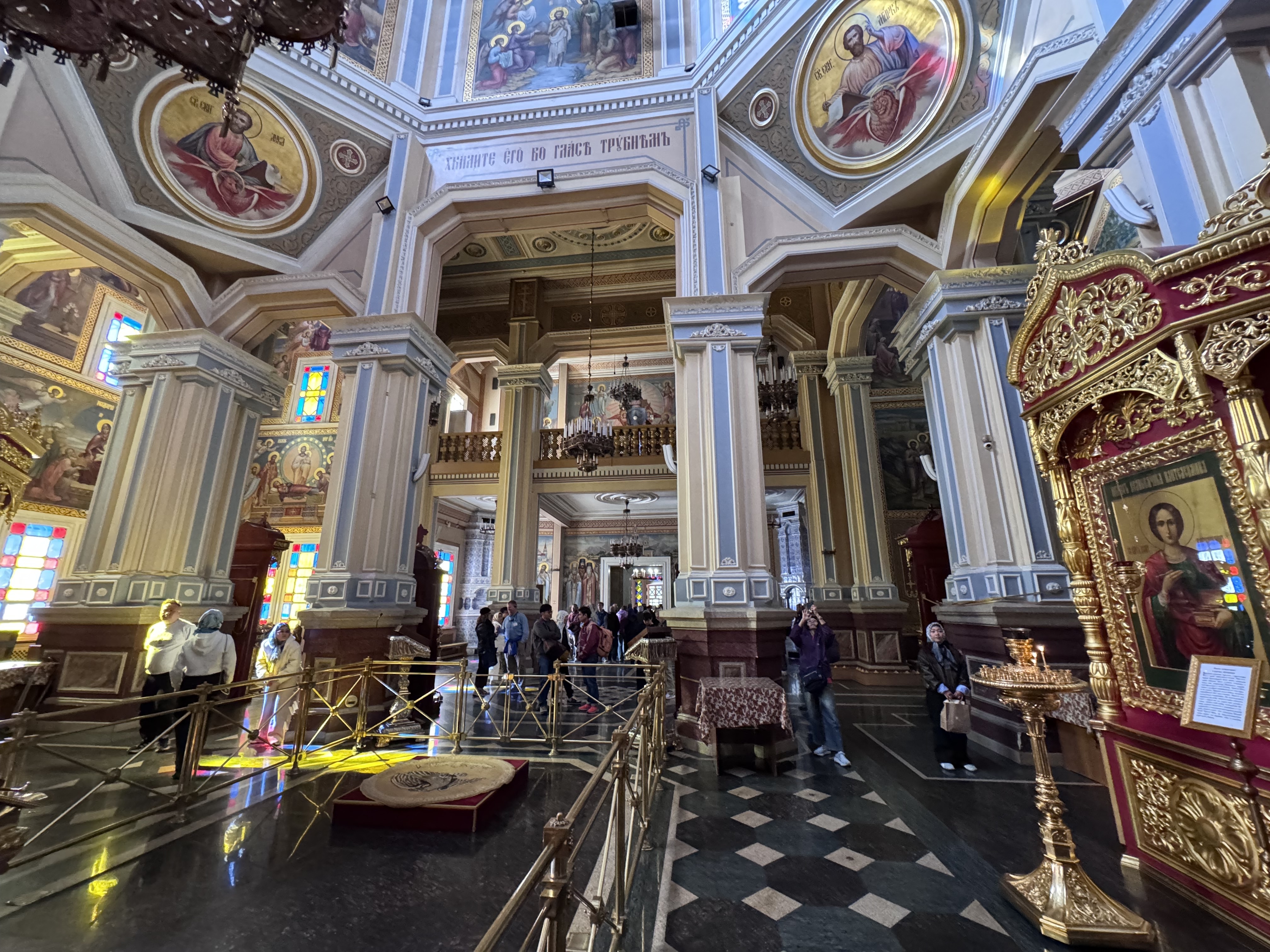
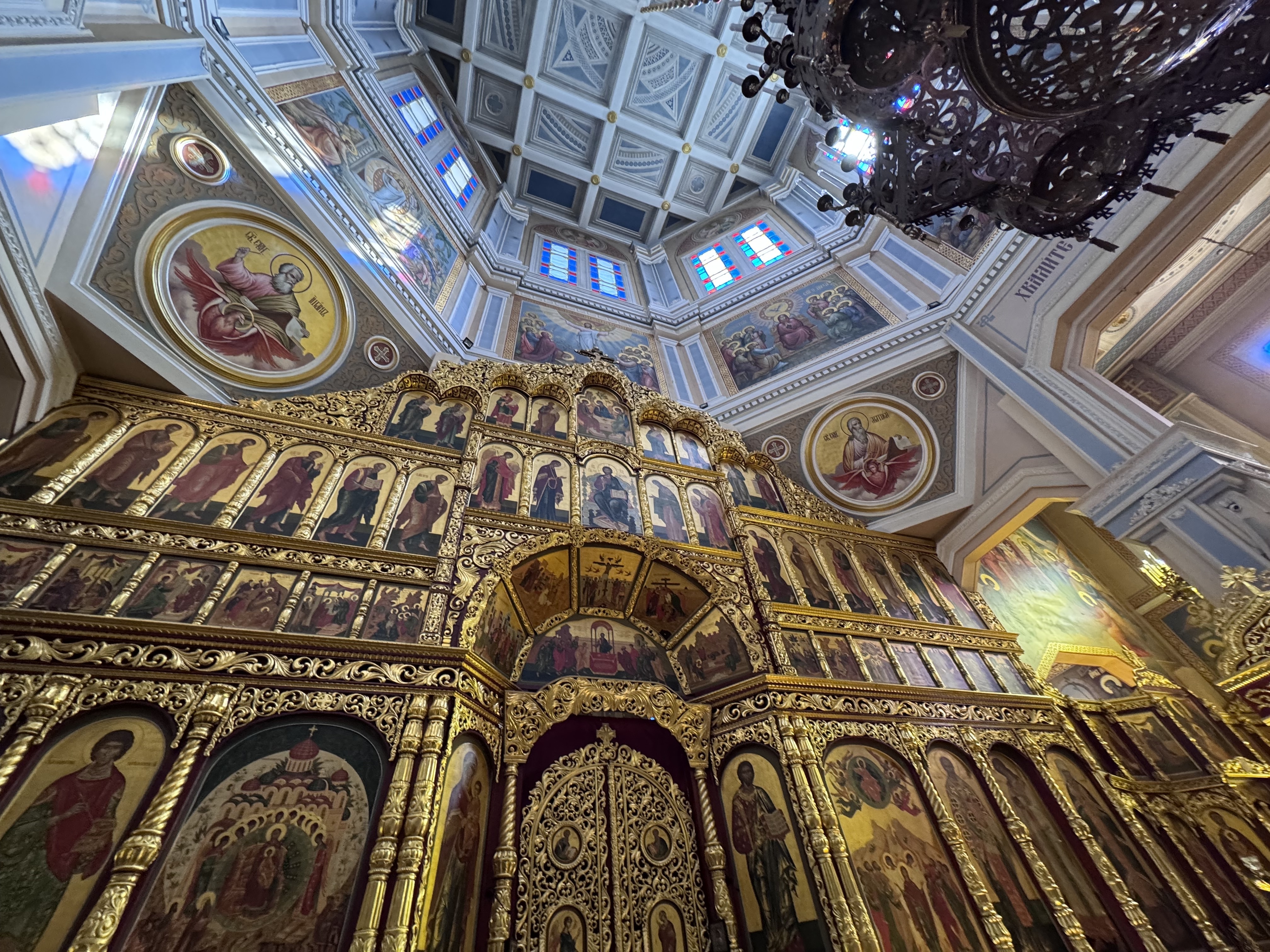
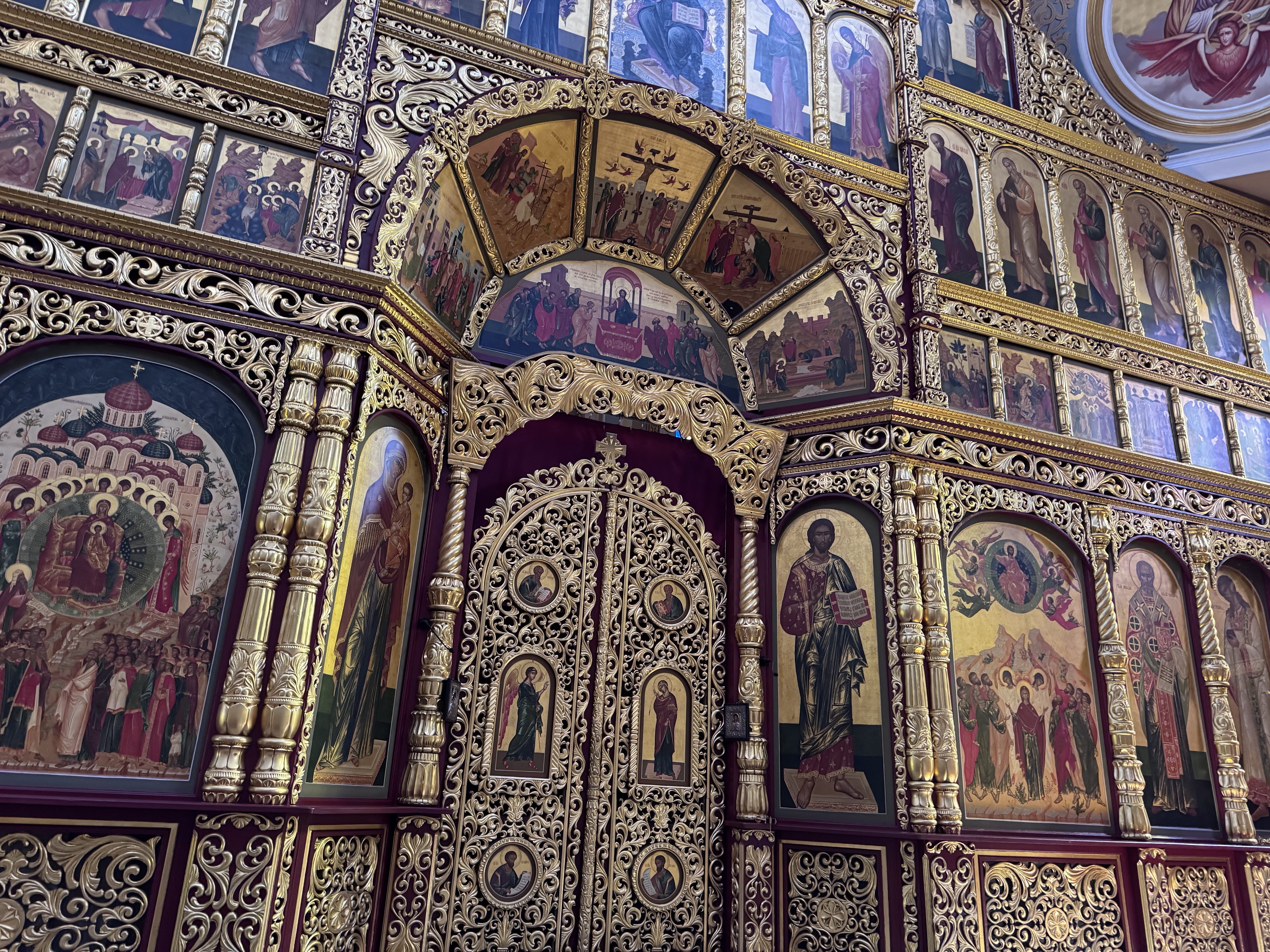
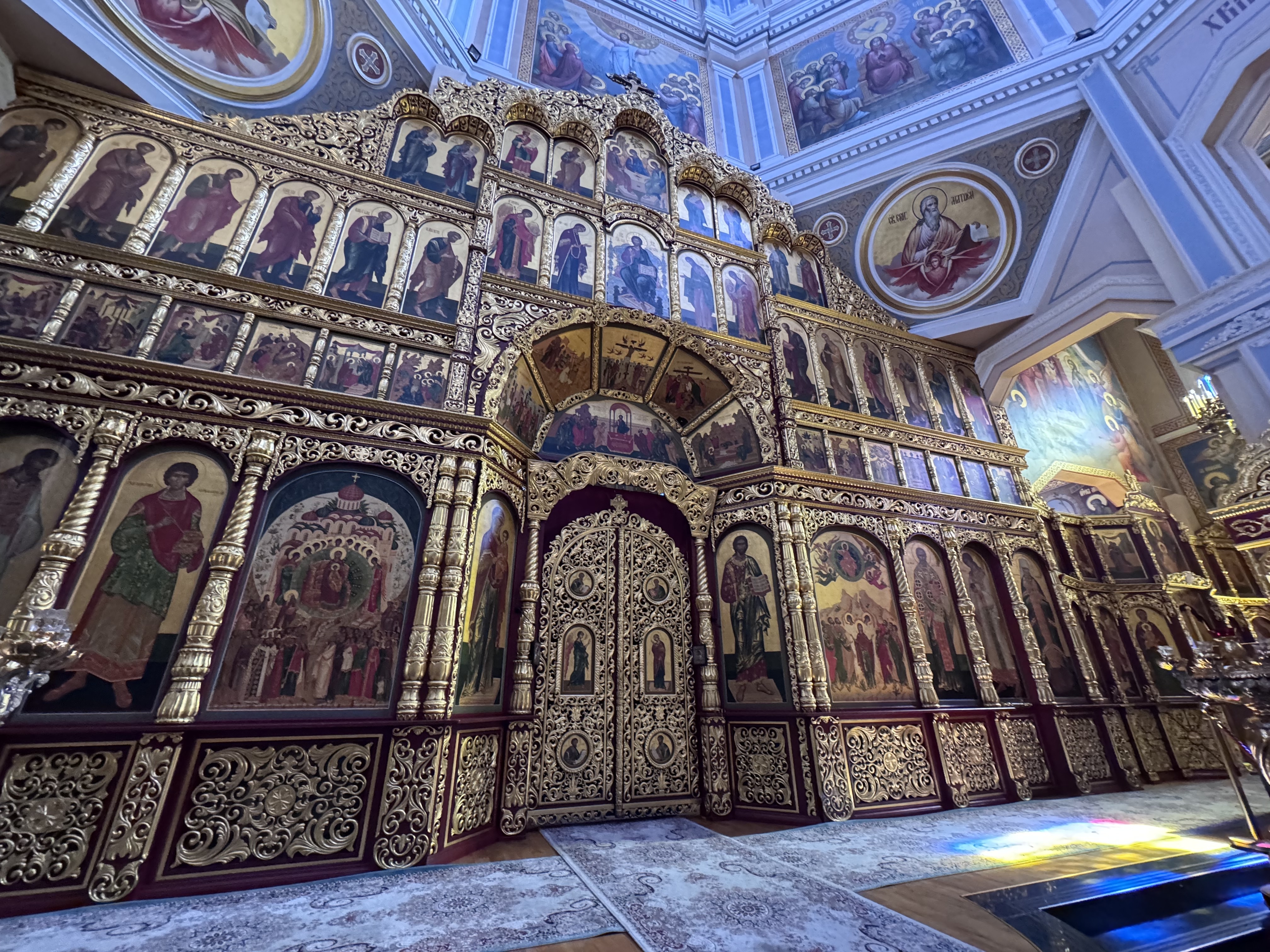
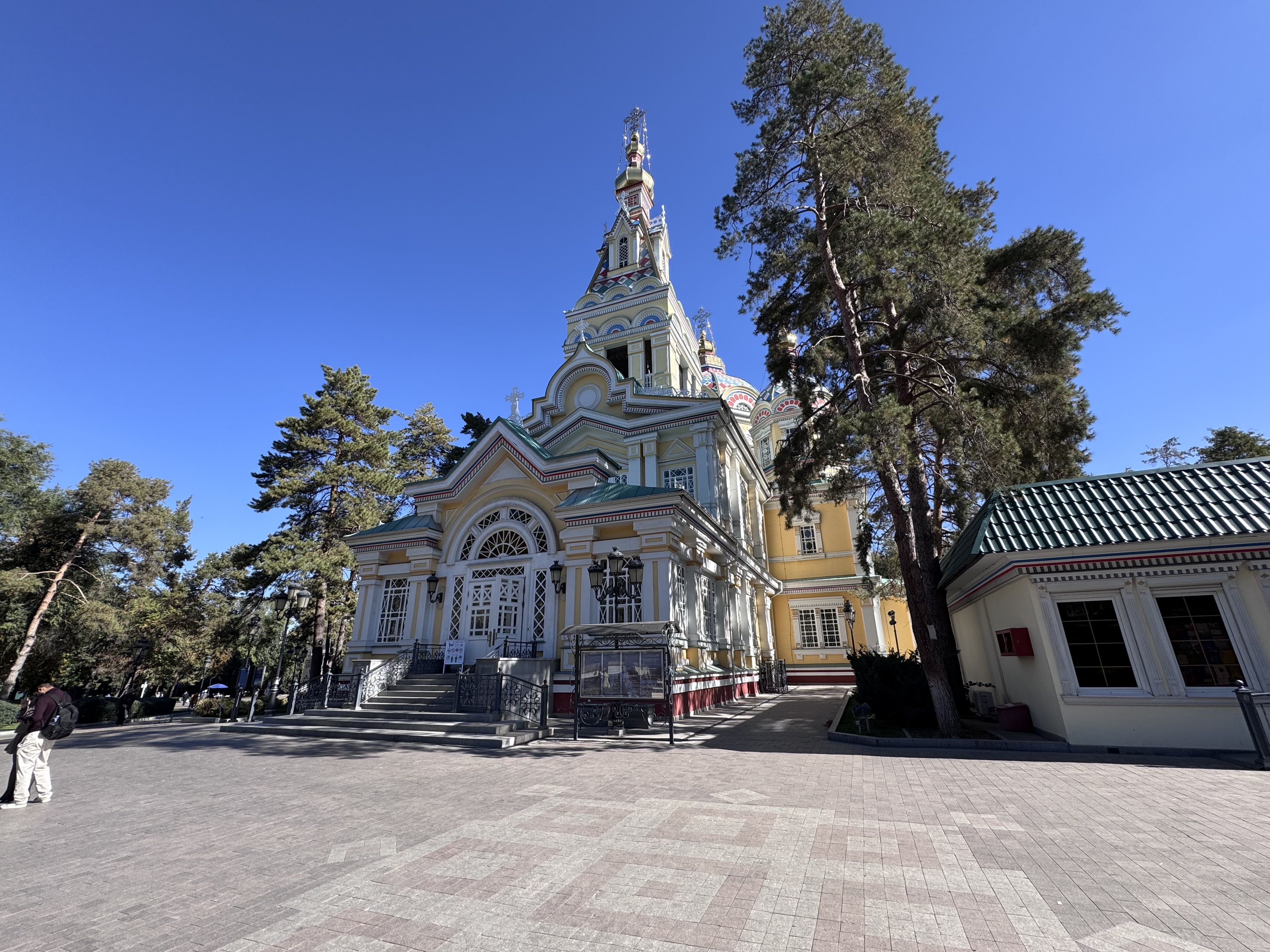
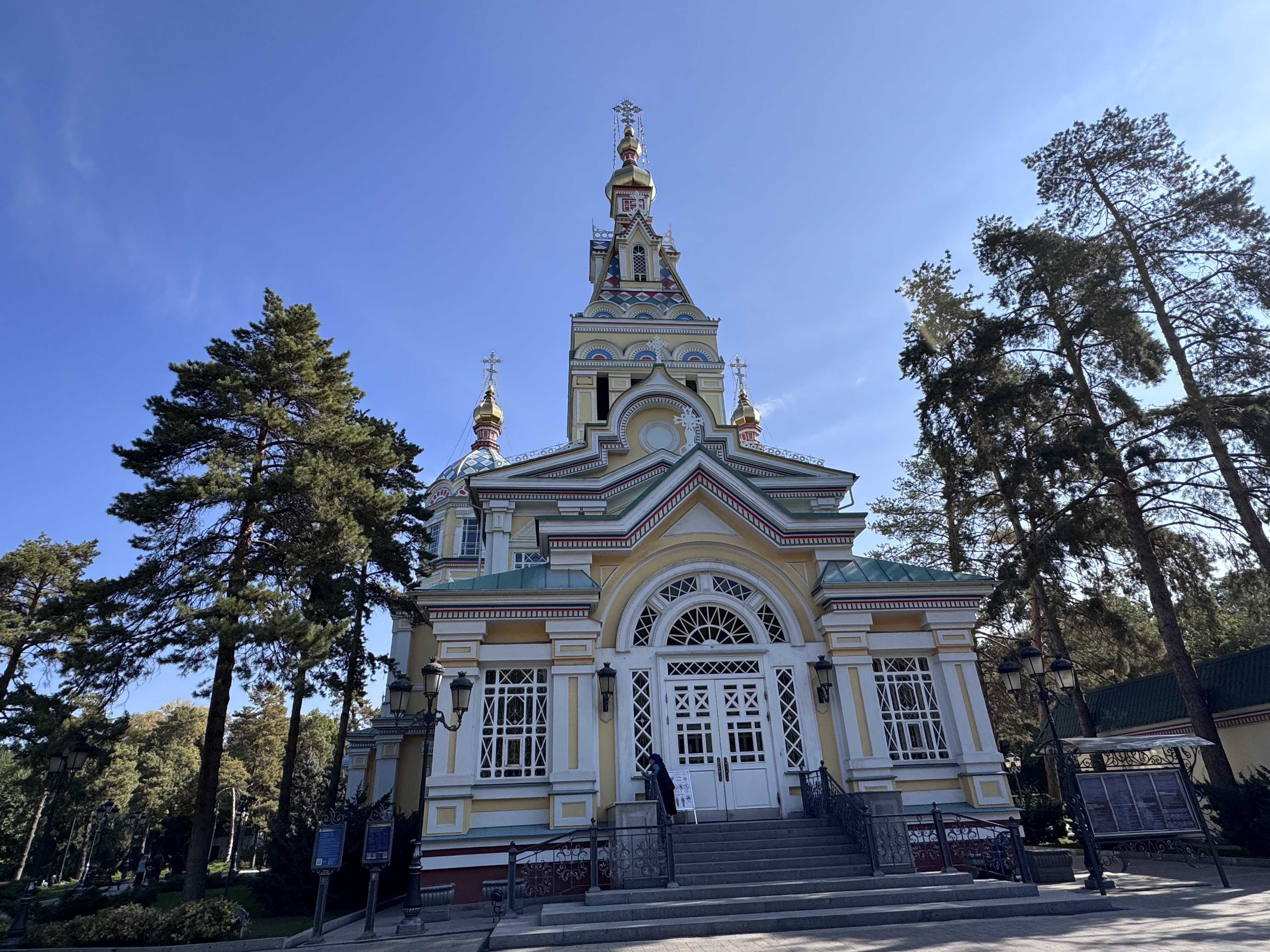
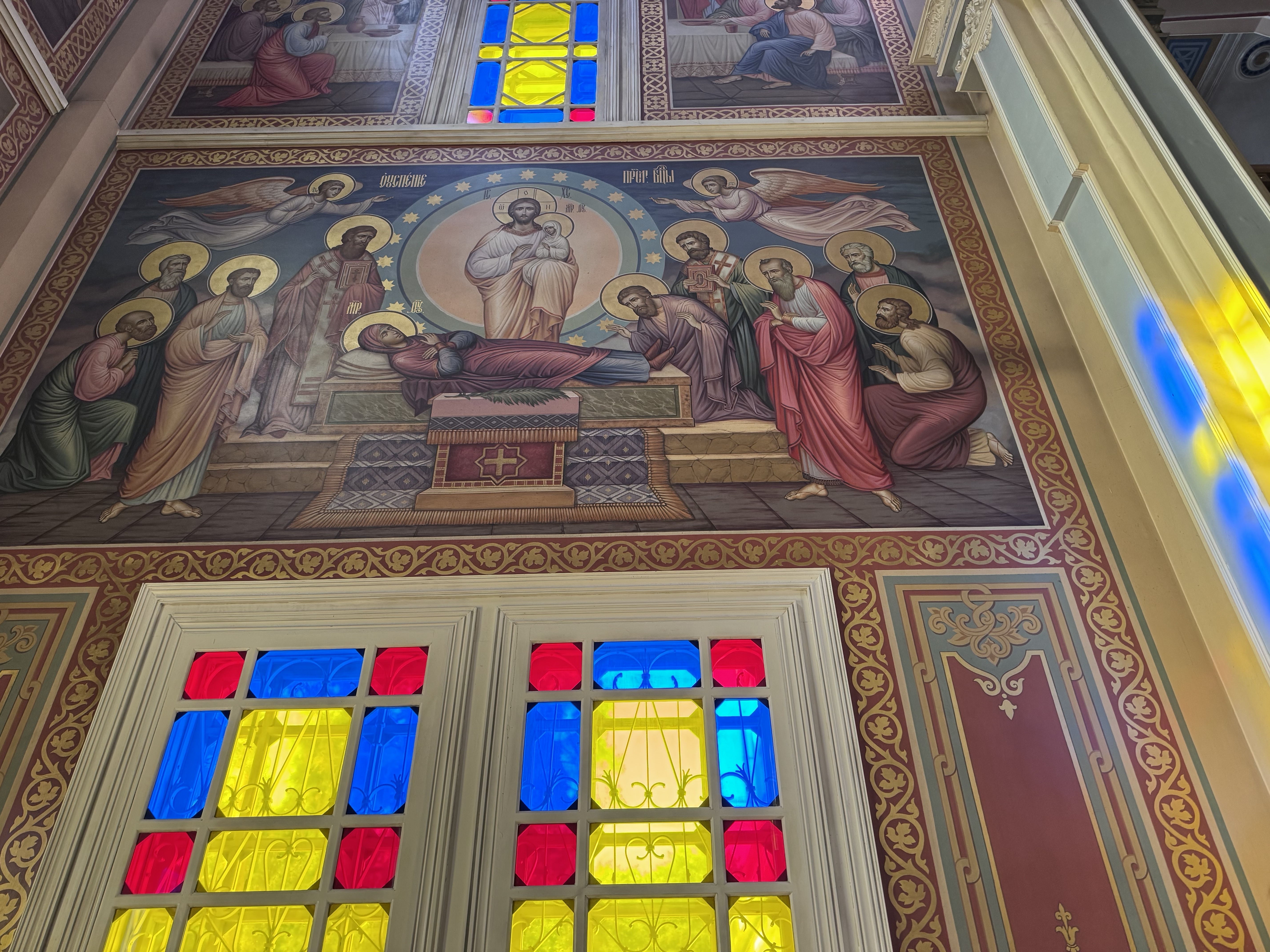
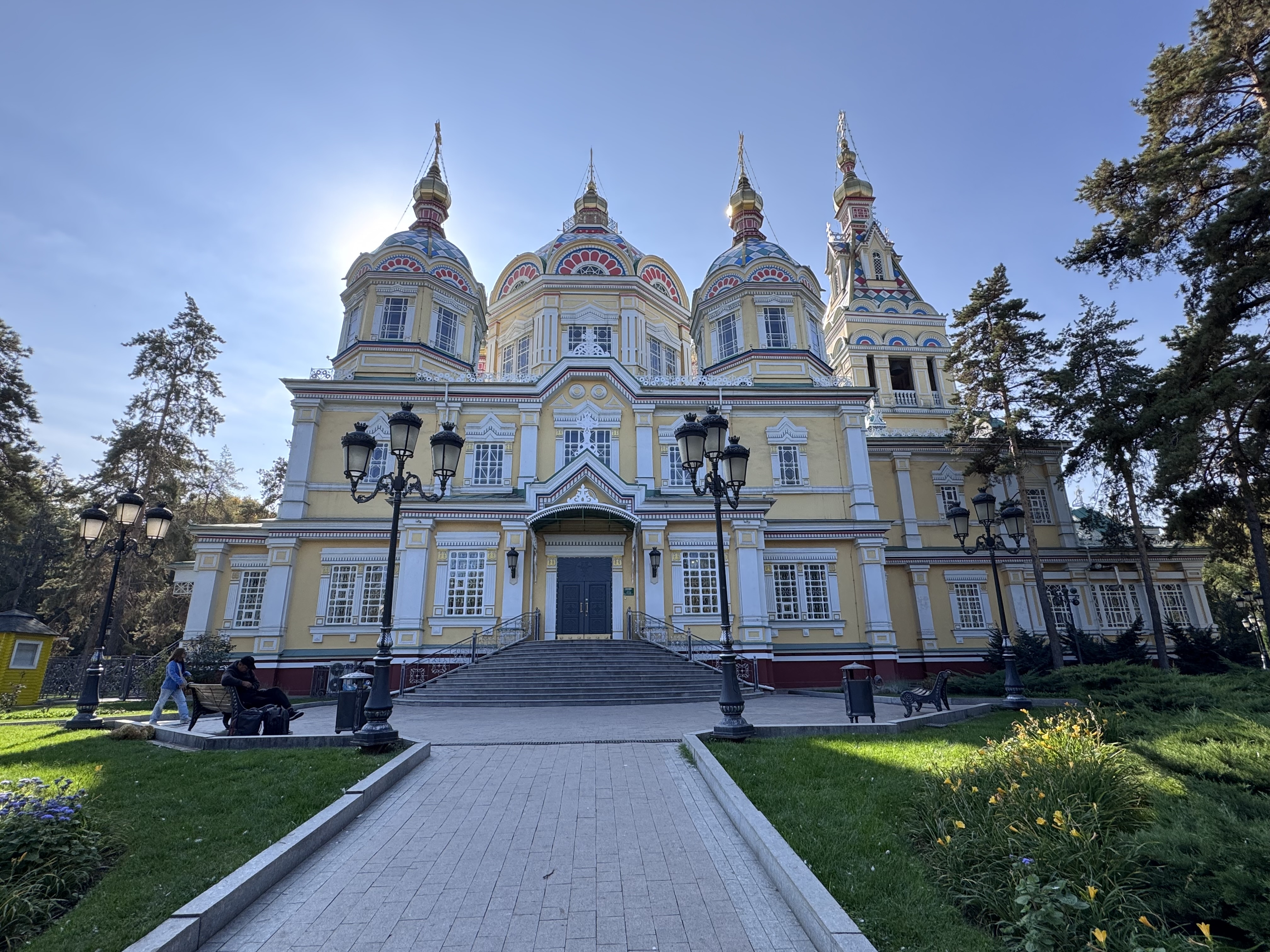
The Ascension Cathedral in Almaty, Kazakhstan, also known as Zenkov Cathedral, stands as a striking Russian Orthodox church and one of the most remarkable examples of wooden ecclesiastical architecture in the world.
Constructed entirely of wood between 1904 and 1907 under the guidance of engineer Andrei Pavlovich Zenkov, who refined earlier plans by architect Konstantin Borisoglebsky, the cathedral was built primarily from durable local Tian Shan spruce using traditional joinery techniques that relied on interlocking wooden elements rather than metal nails for its main structural frame.
This all wood construction reaches approximately 56 meters in height to the tip of its central dome and cross, earning it widespread recognition as the second tallest wooden church on the planet.
Its five onion domes, vibrant pastel exterior of blues, greens, and whites accented with gold, and cruciform plan embody classic Russian Orthodox design adapted to the seismic realities of the region. The flexible wooden ...