

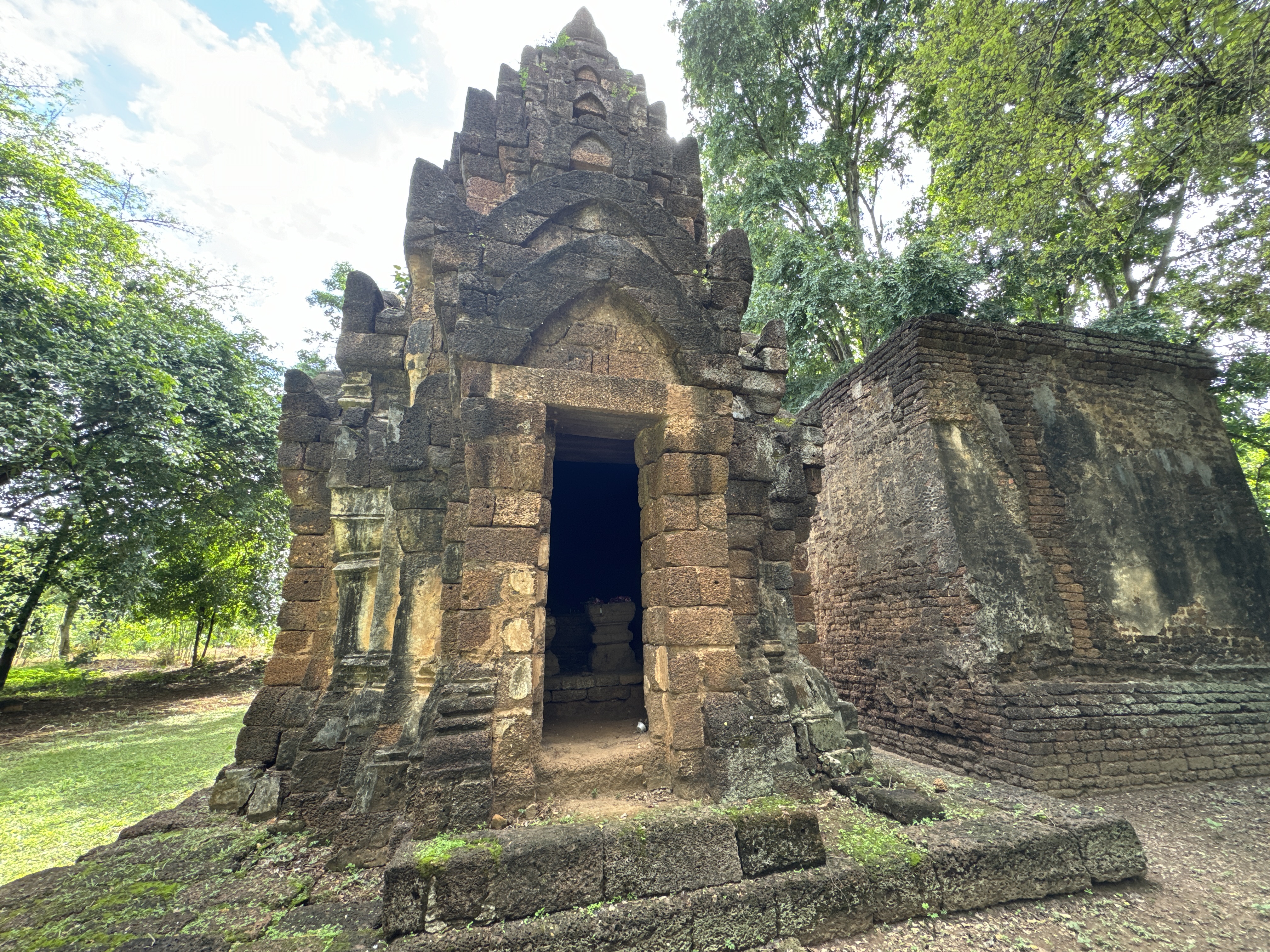
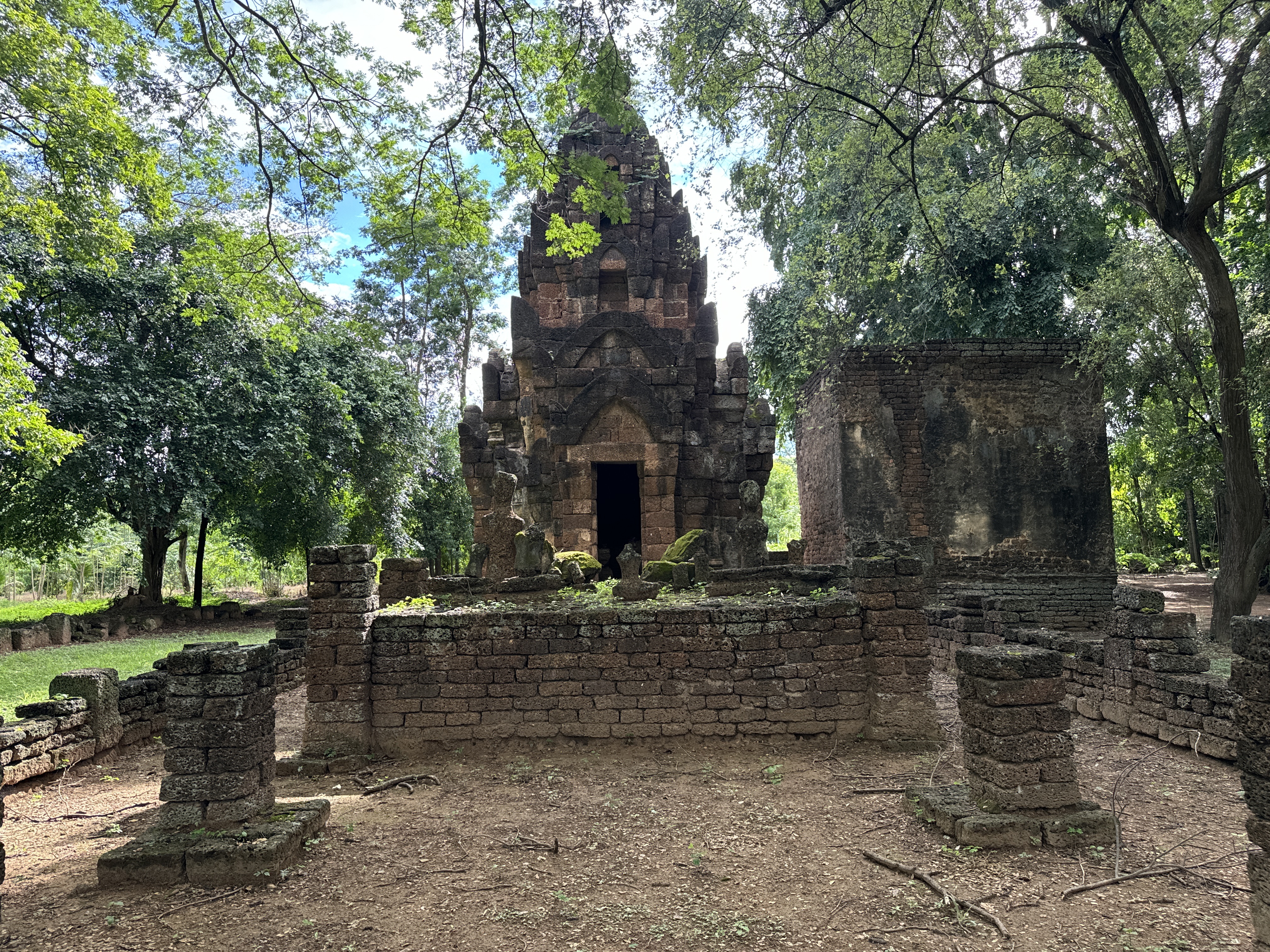
Wat Chao Chan
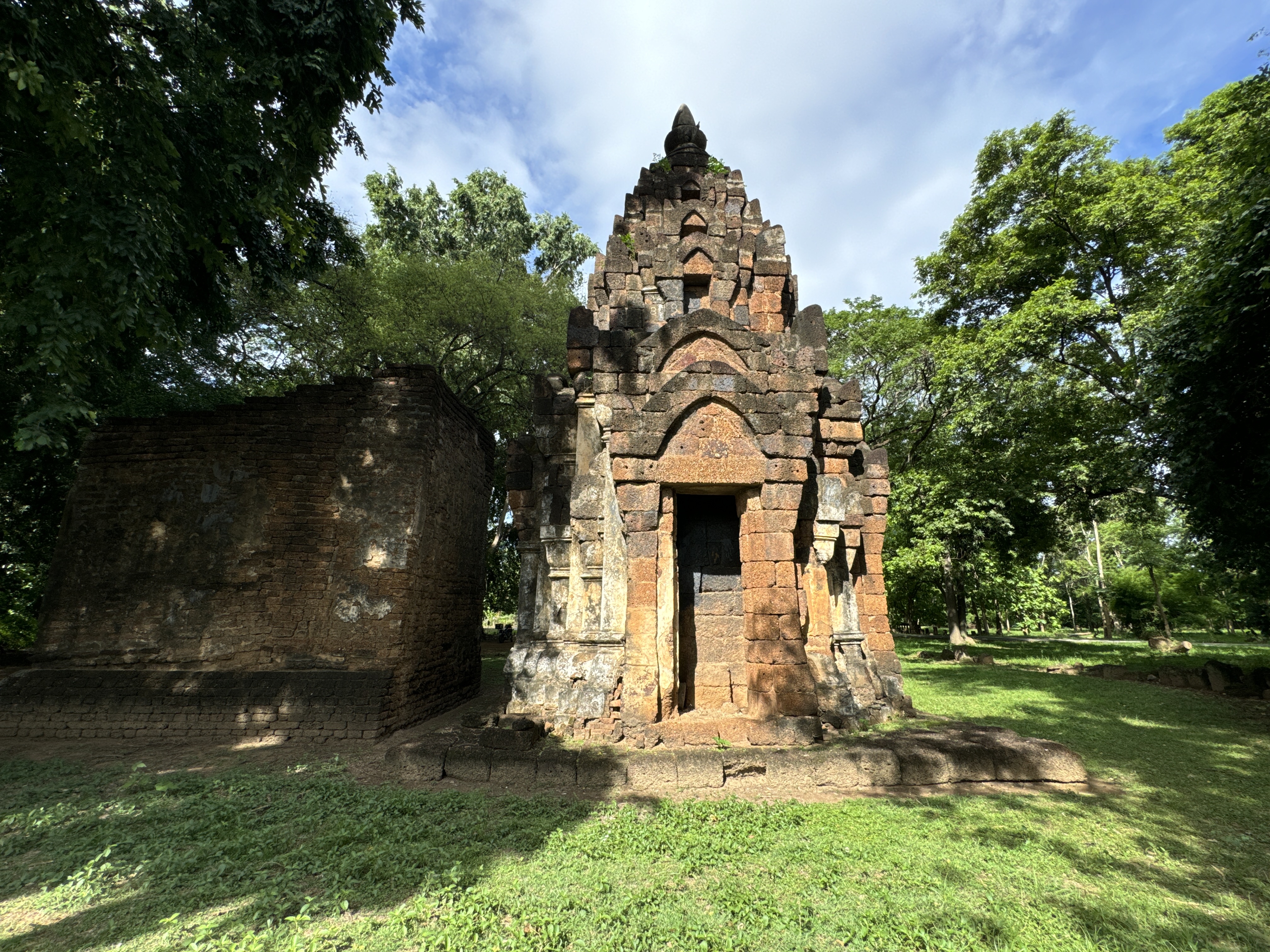
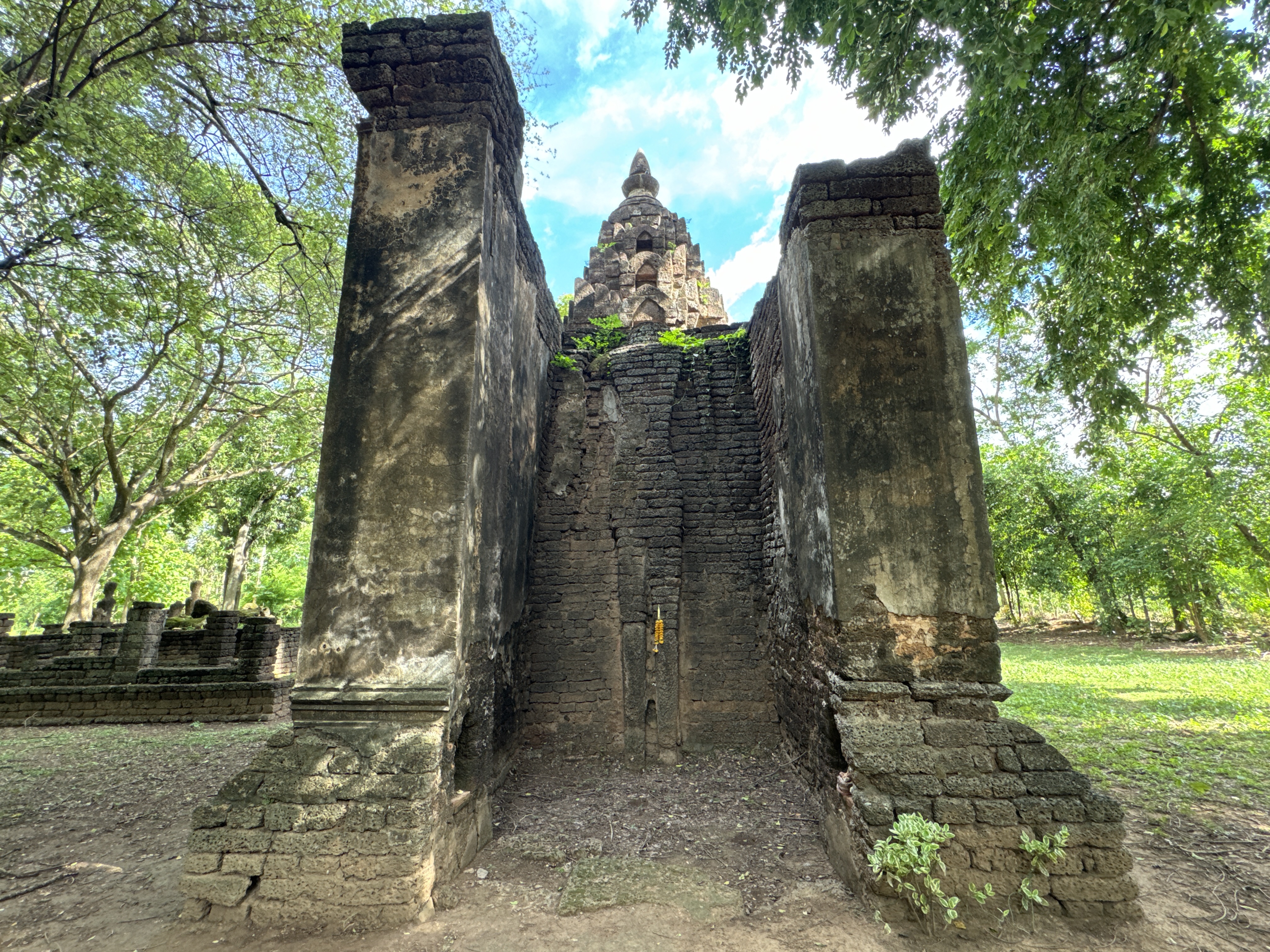
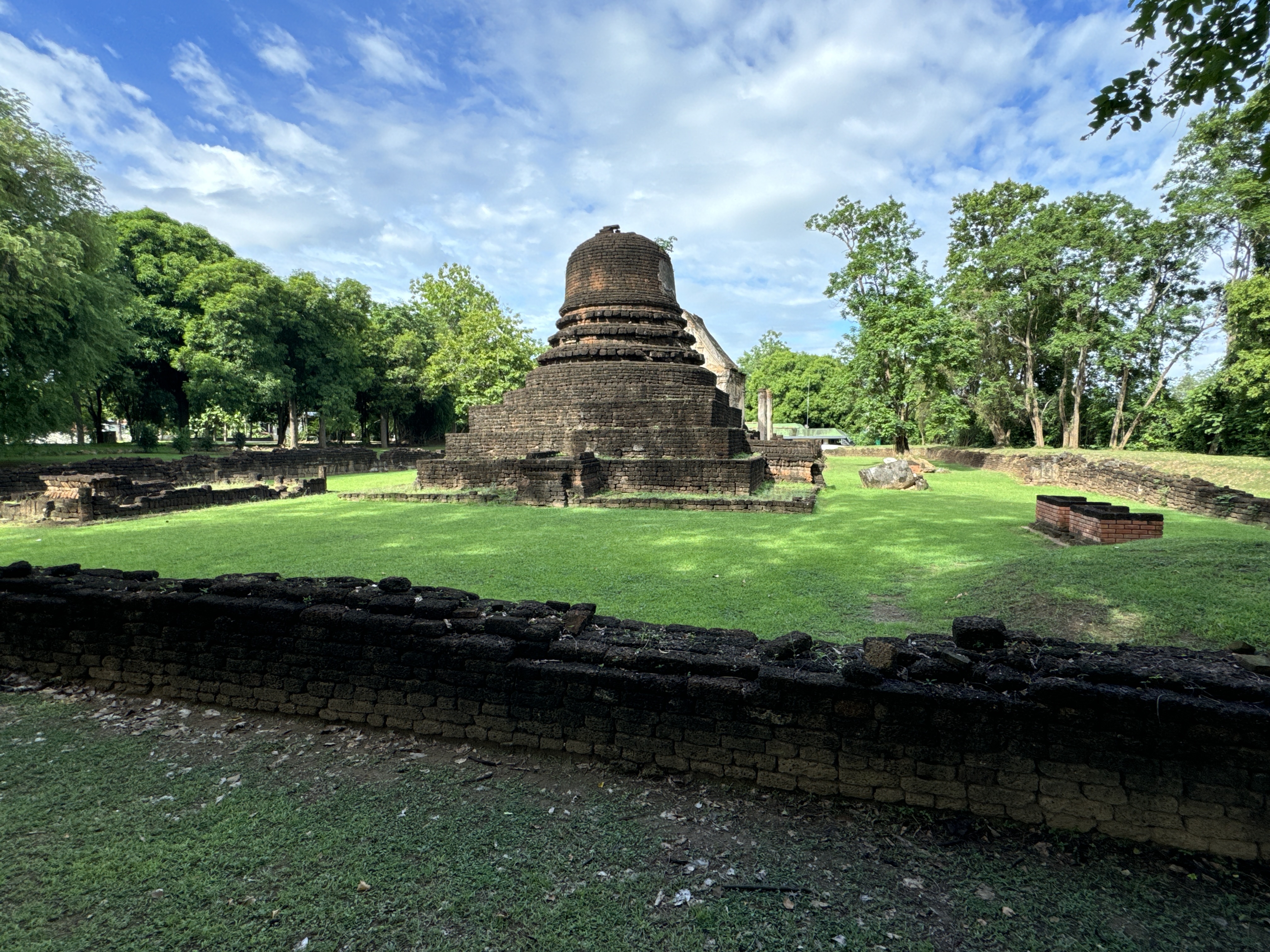
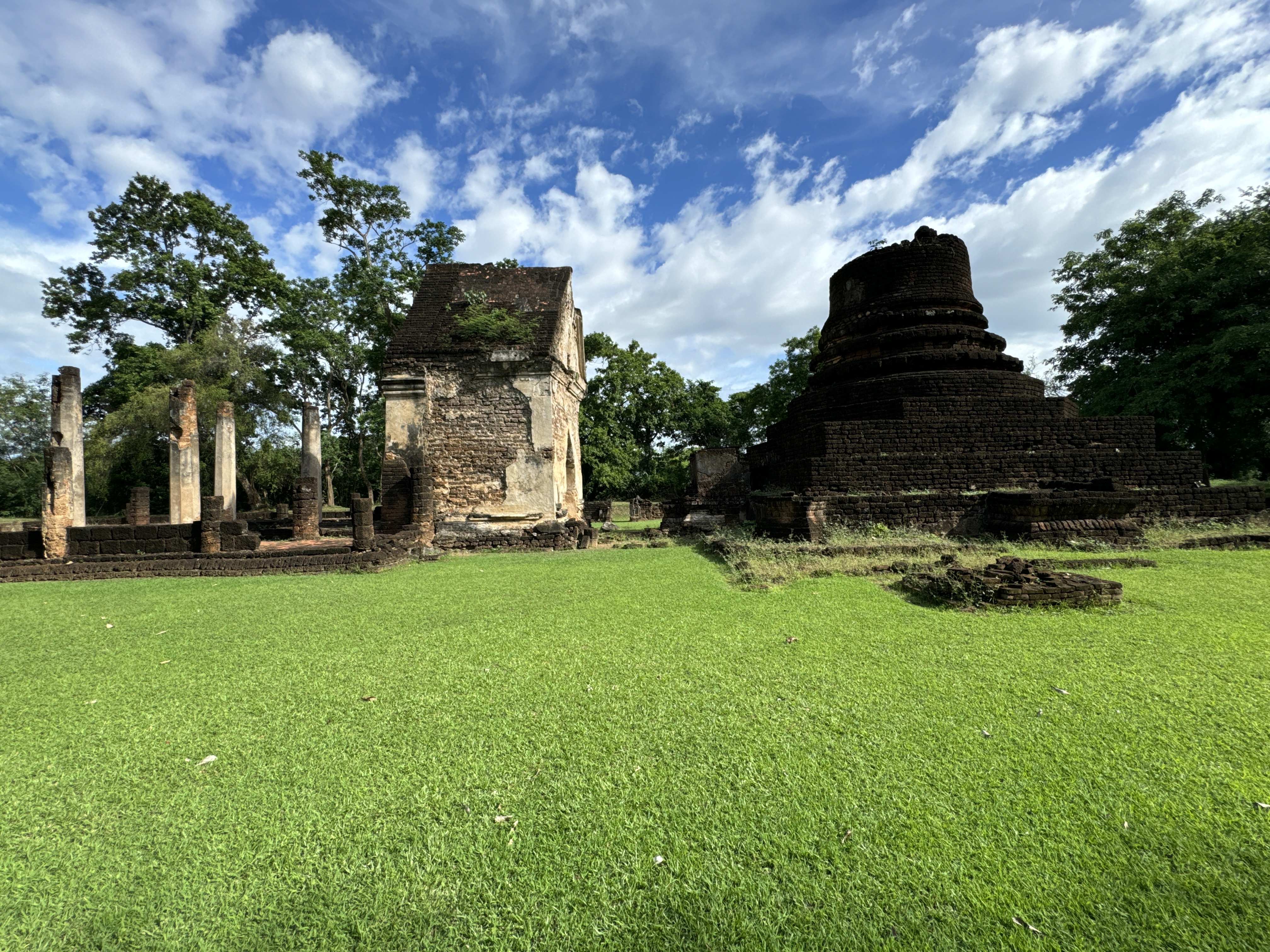
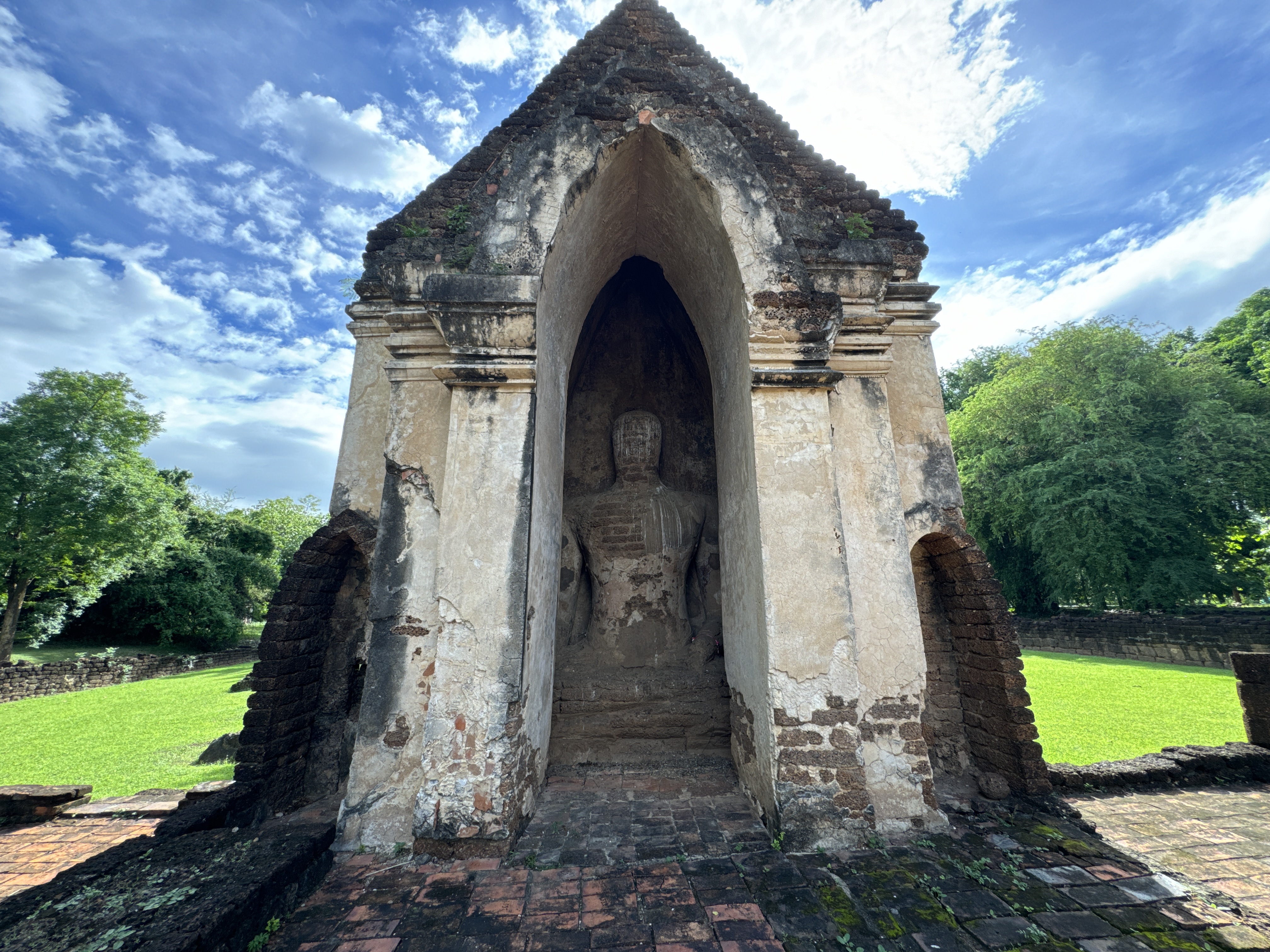
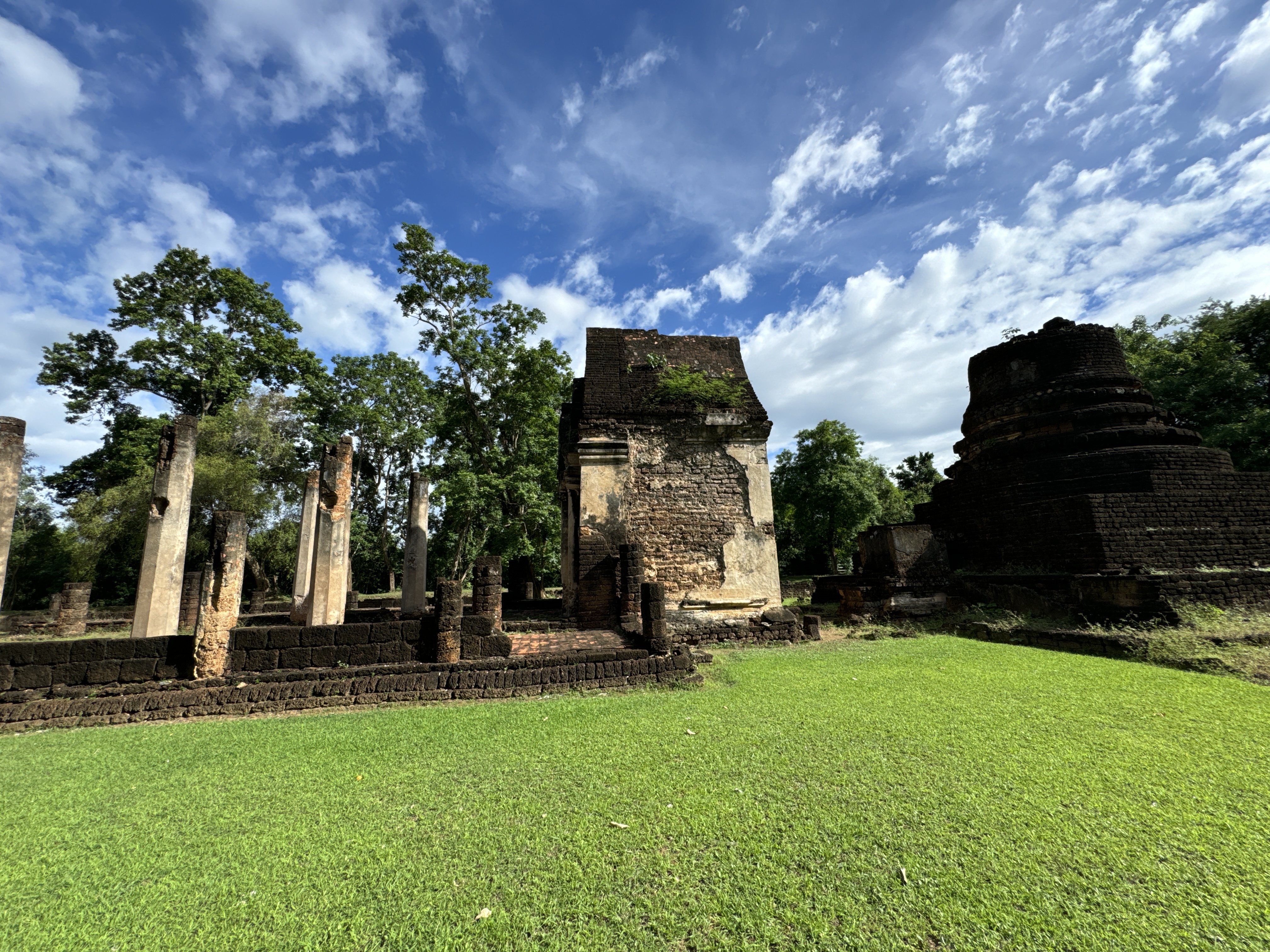
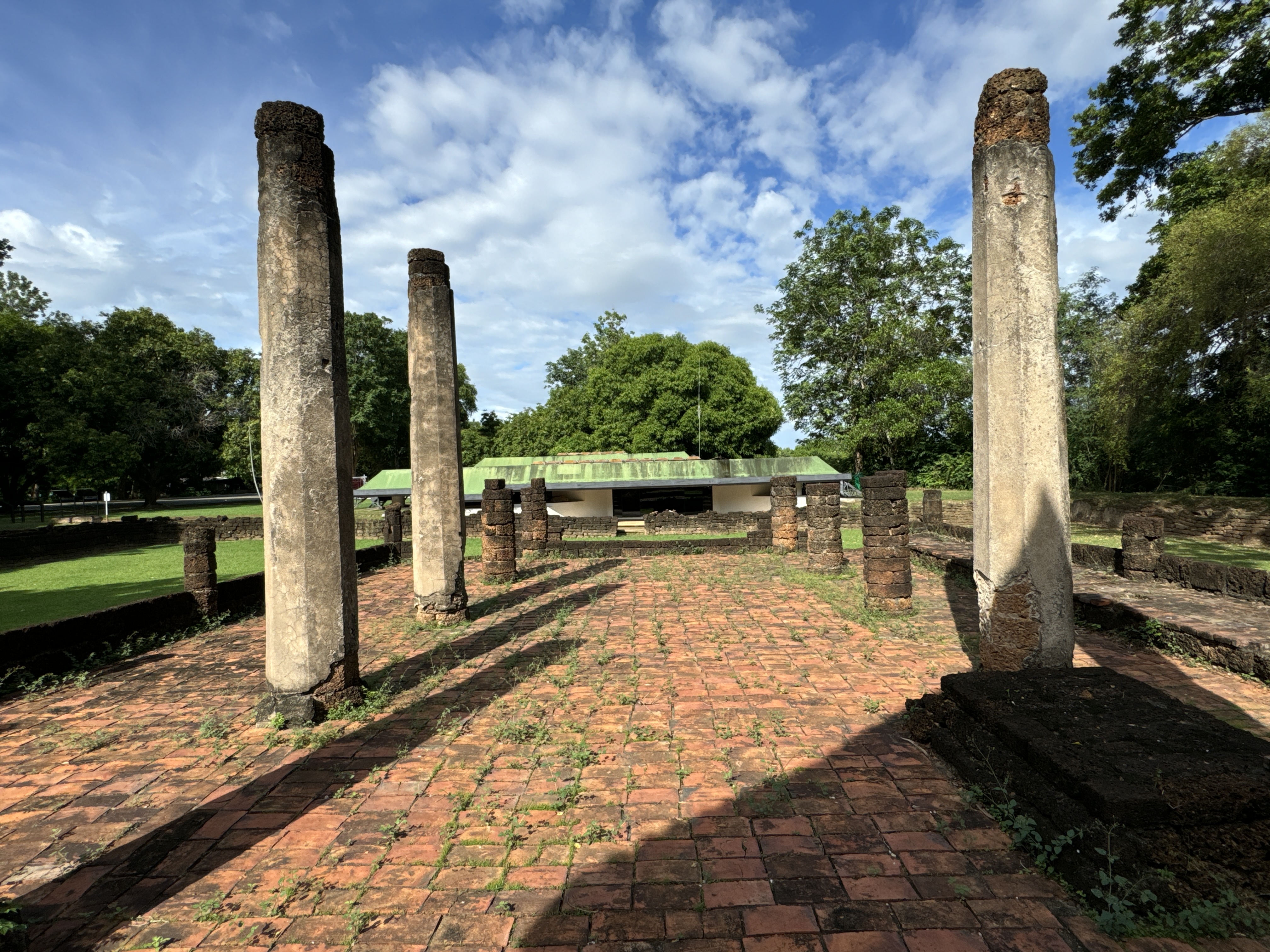
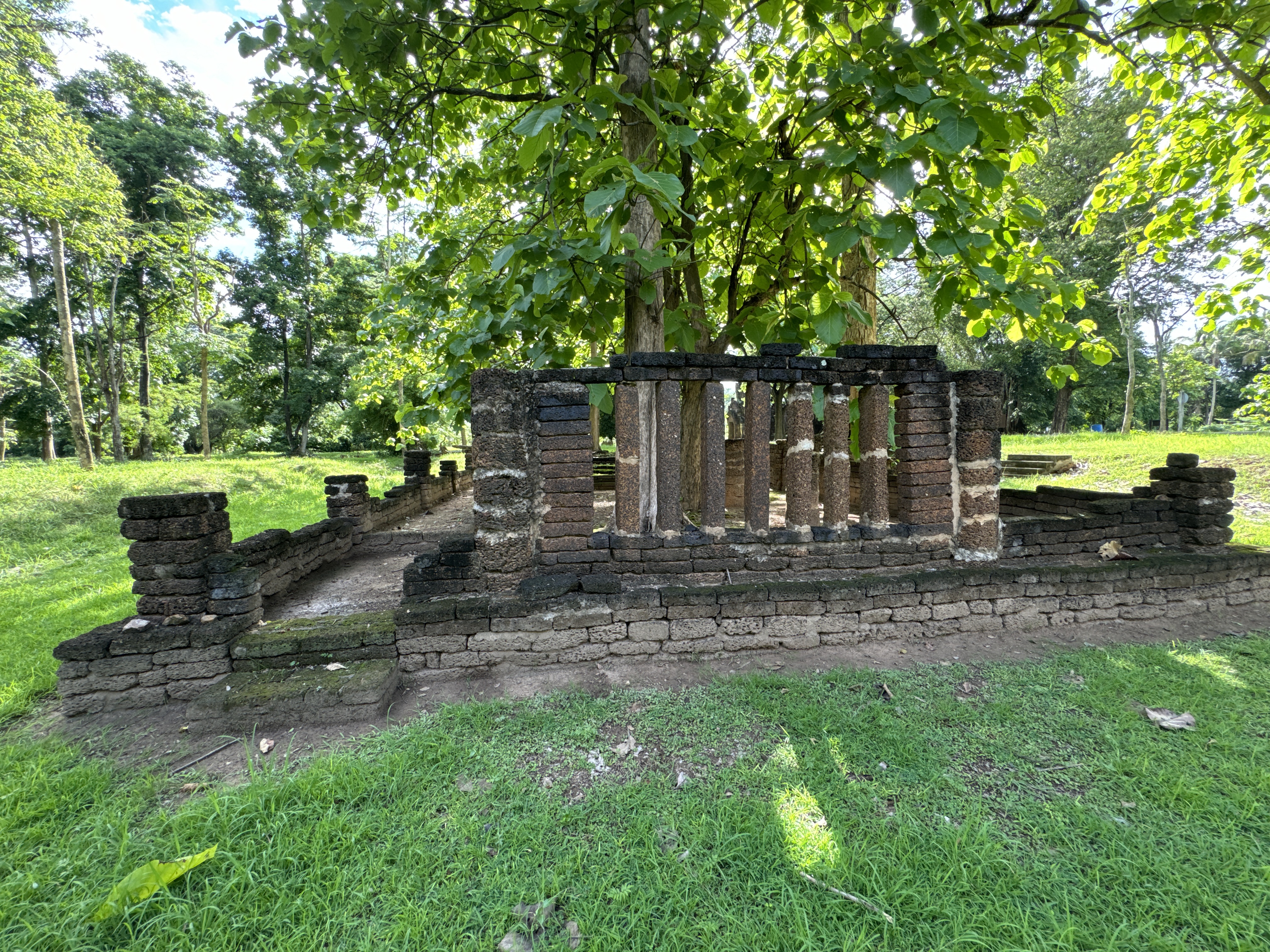
Wat Chao Chan is a 13th century Buddhist temple located in Chaliang, a few kilometers East of the ancient walled town of Si Satchanalai. The temple is found near the banks of the Yom river.
The Wat Chao Chan predates the Sukhothai Kingdom. It was founded in the early 13th during the Khmer era.
During the reign of King Jayavarman in the late 12th, early 13th century the Khmer established Chaliang as a satellite town of their empire. Jayavarman VII was one of Angkor’s greatest Kings who built numerous temples, as well as hospitals and a system of roads with rest houses connecting various parts of the empire.
The oldest structure of Wat Chao Chan is the prasat, a Khmer style tower, probably constructed during the reign of Angkor King Jayavarman VII. The prasat has been restored. Built from blocks of laterite covered with a layer of plaster, the Bayon style prasat was constructed to enshrine a relic of the Buddha. It has porches on all sides with a doorway in the east to chamber, which ...
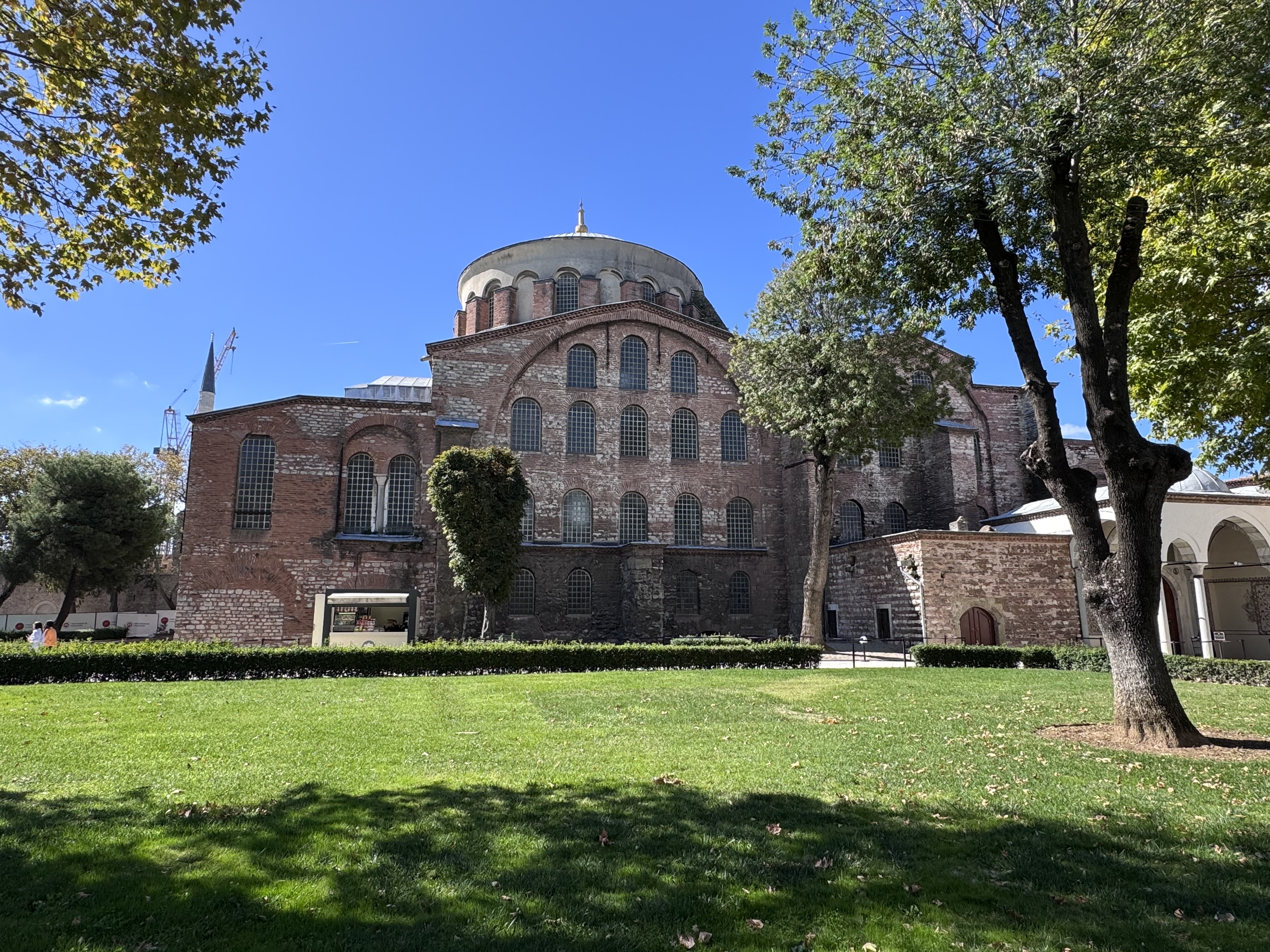
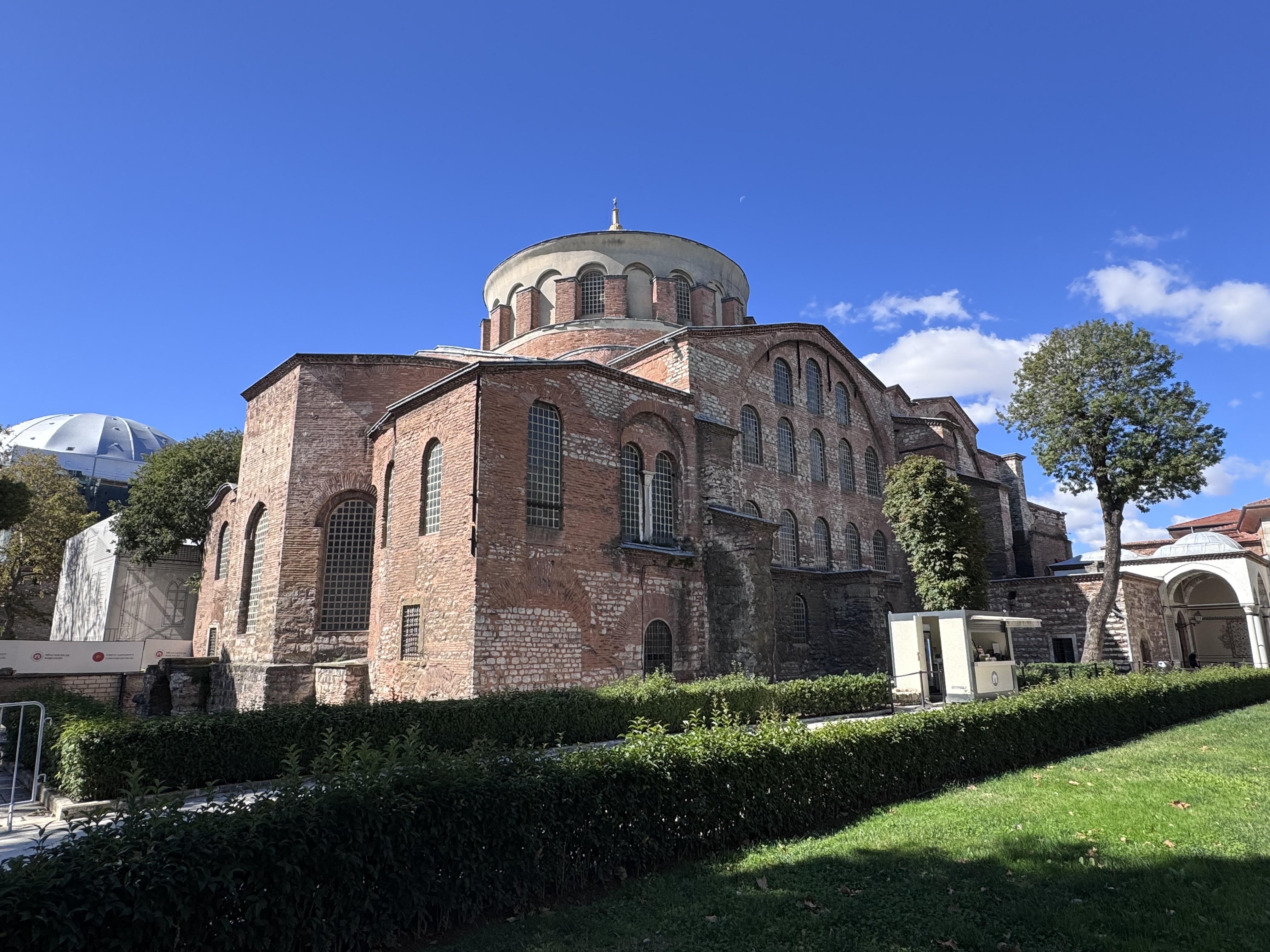
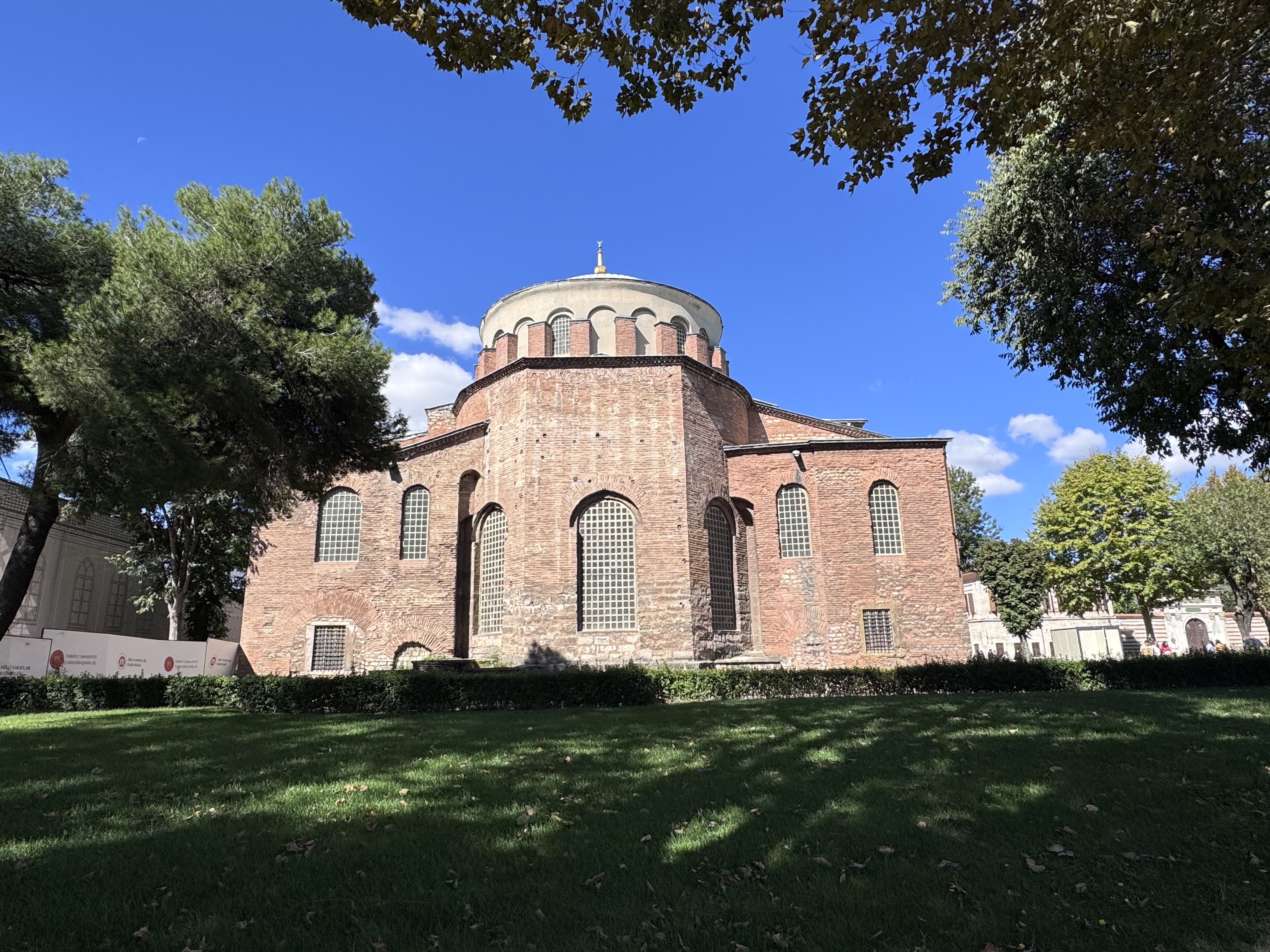
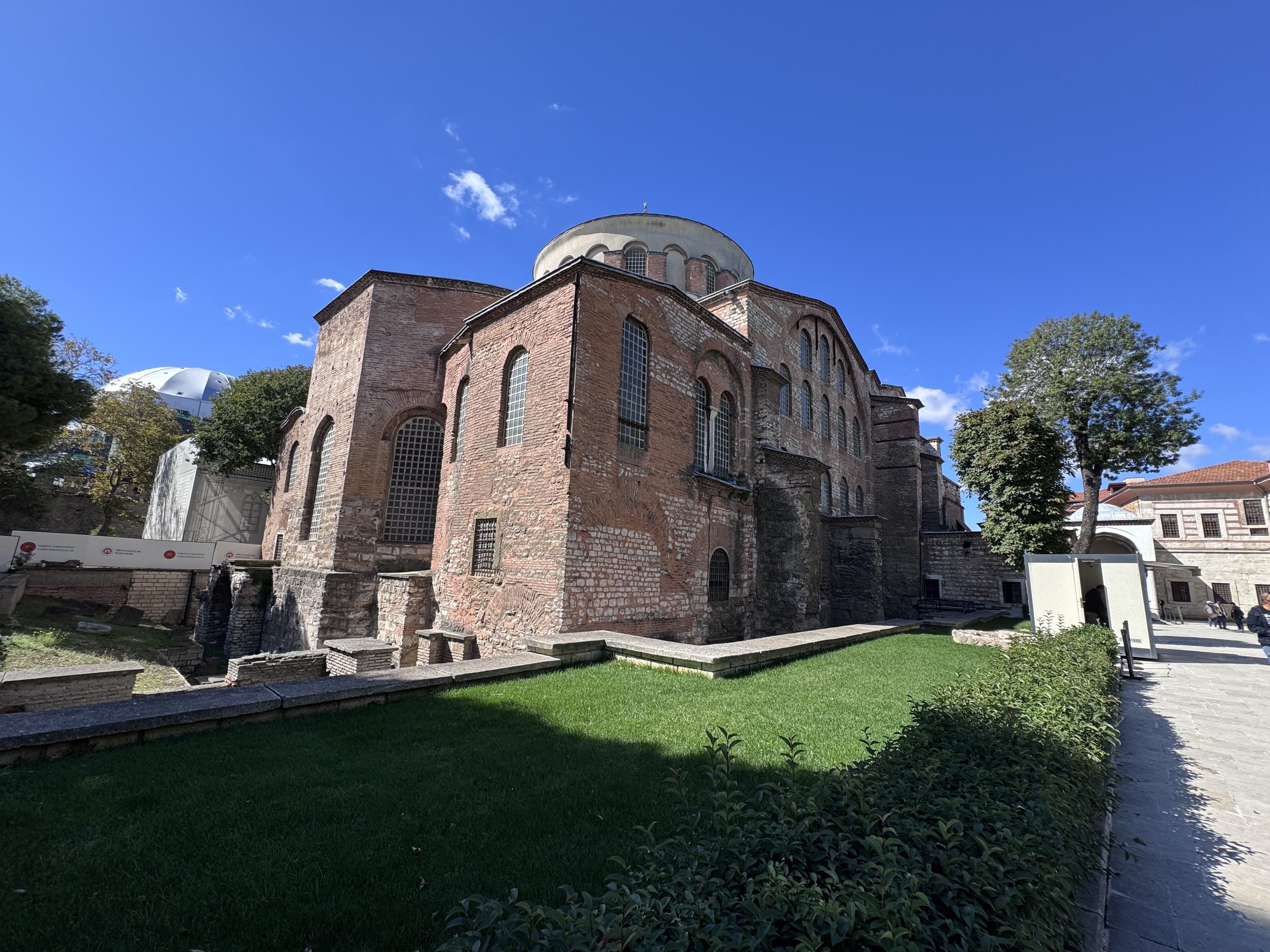
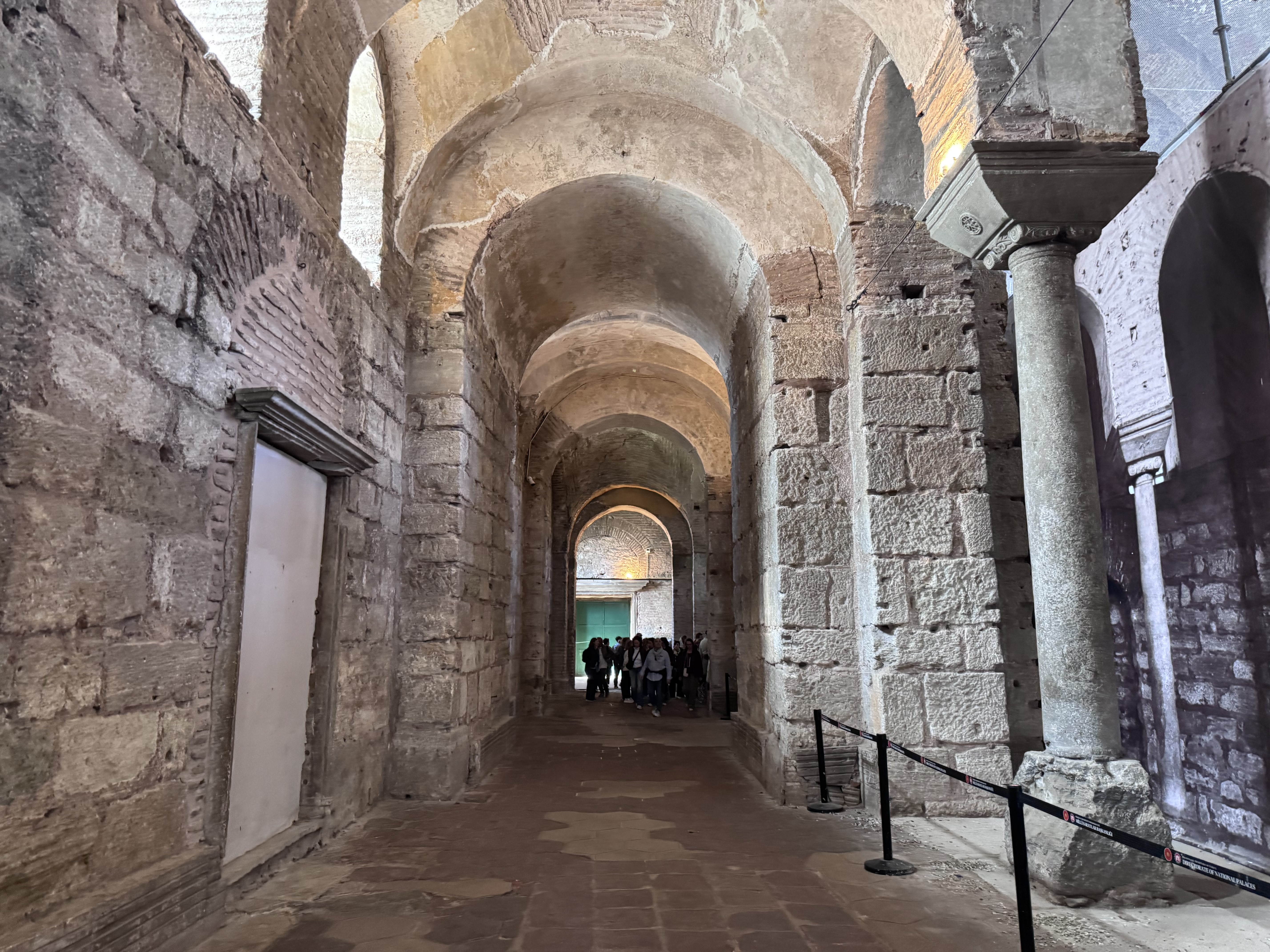
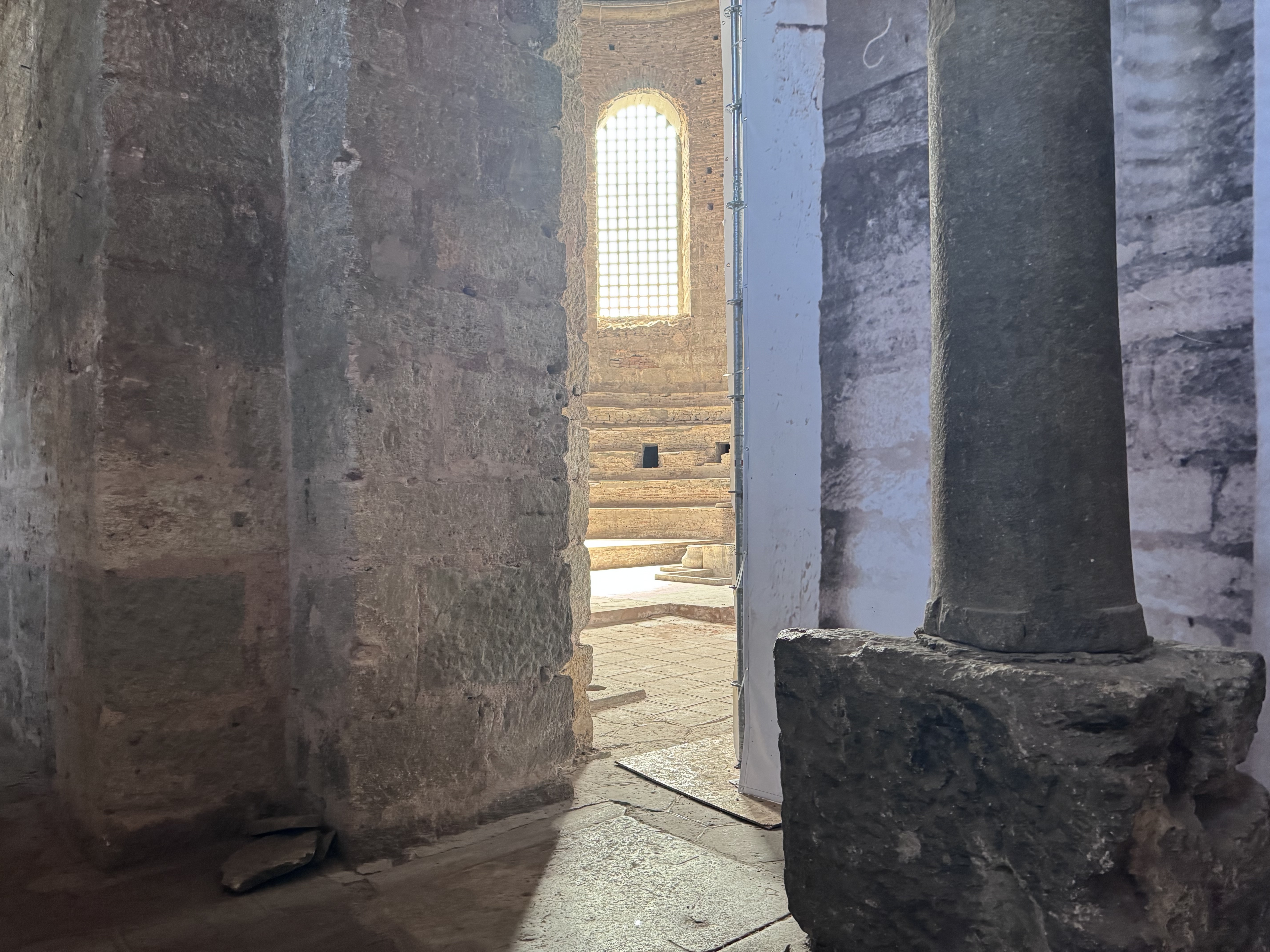
Hagia Irene, known as the Church of Holy Peace, stands as the oldest surviving Byzantine church in Istanbul, a quiet sentinel within the outer courtyard of Topkapı Palace.
Long before the grandeur of Hagia Sophia rose nearby, this sacred space served as the principal church of the newly founded Constantinople, traditionally commissioned by Emperor Constantine the Great in the early fourth century.
It witnessed the city’s transformation from an ancient Greek colony into the eastern capital of the Roman Empire and briefly held the role of cathedral until Hagia Sophia’s completion in 360.
Destroyed by fire during the Nika Revolt of 532, it was rebuilt by Emperor Justinian I as a majestic domed basilica. A devastating earthquake in 740 led to further restoration under the iconoclast emperor Constantine V, who left behind one of its most striking features: a simple yet powerful mosaic cross on a gold ground in the apse, a rare surviving example of Iconoclastic art.
Unlike nearly every other ...
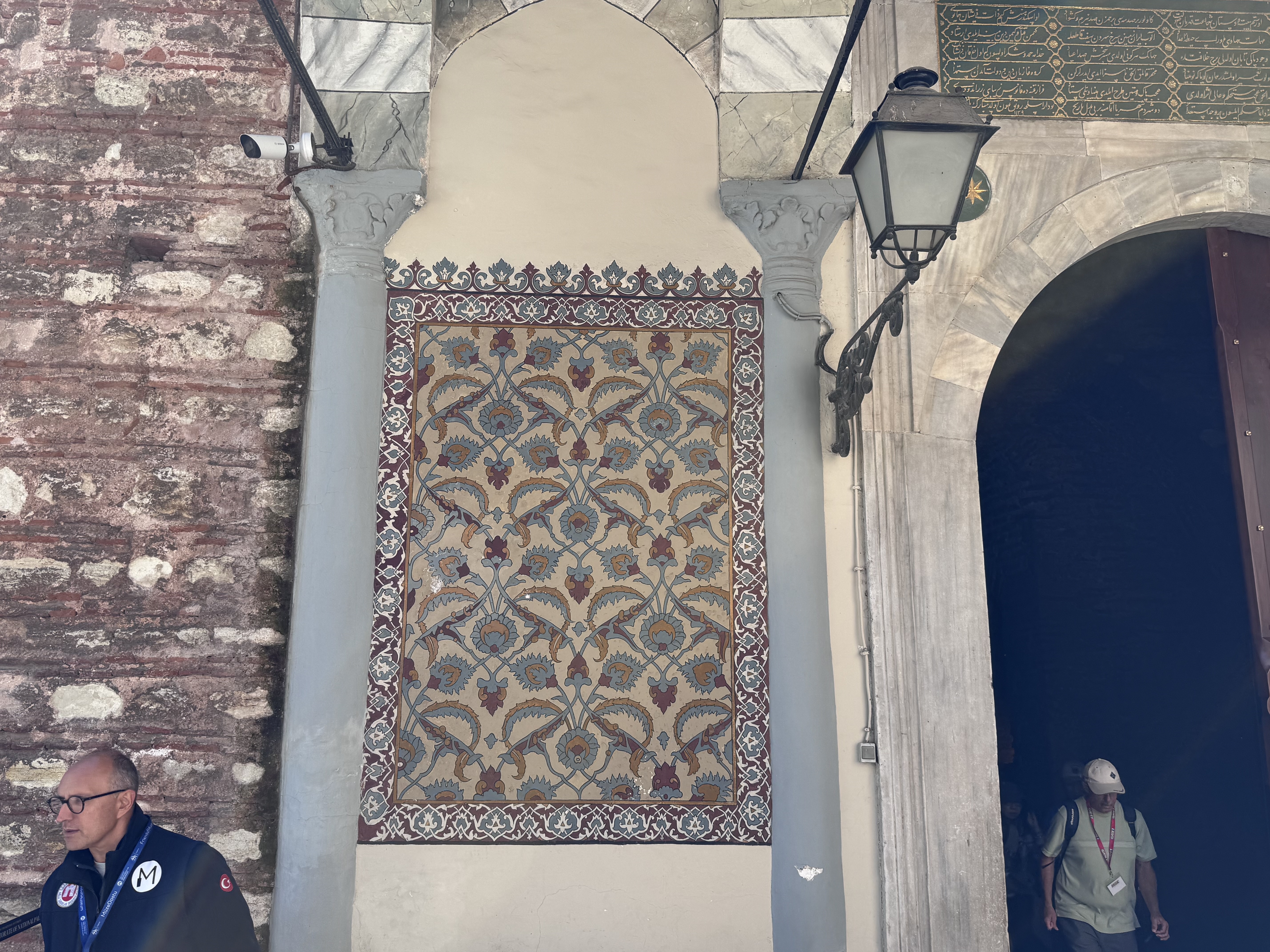
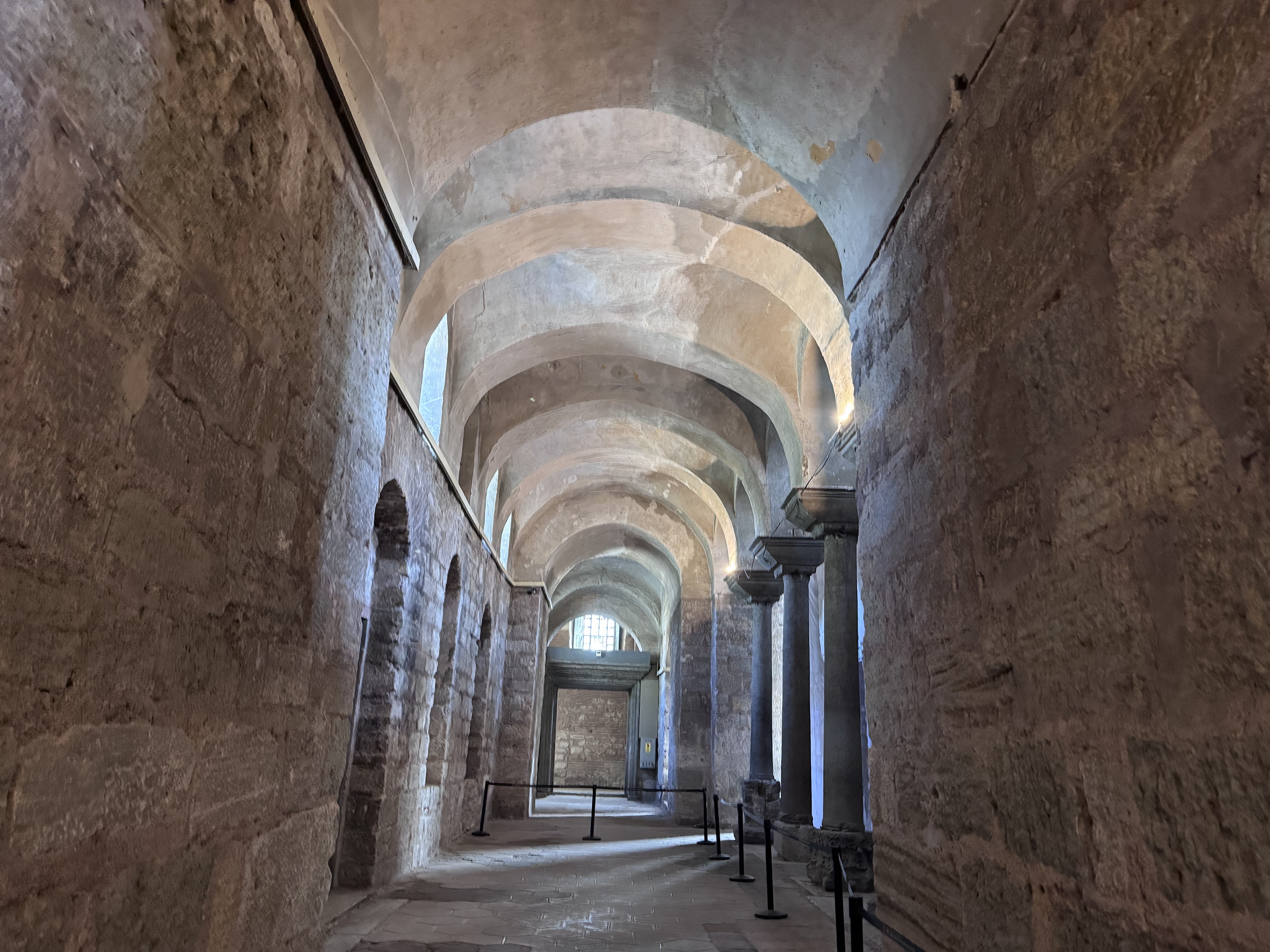
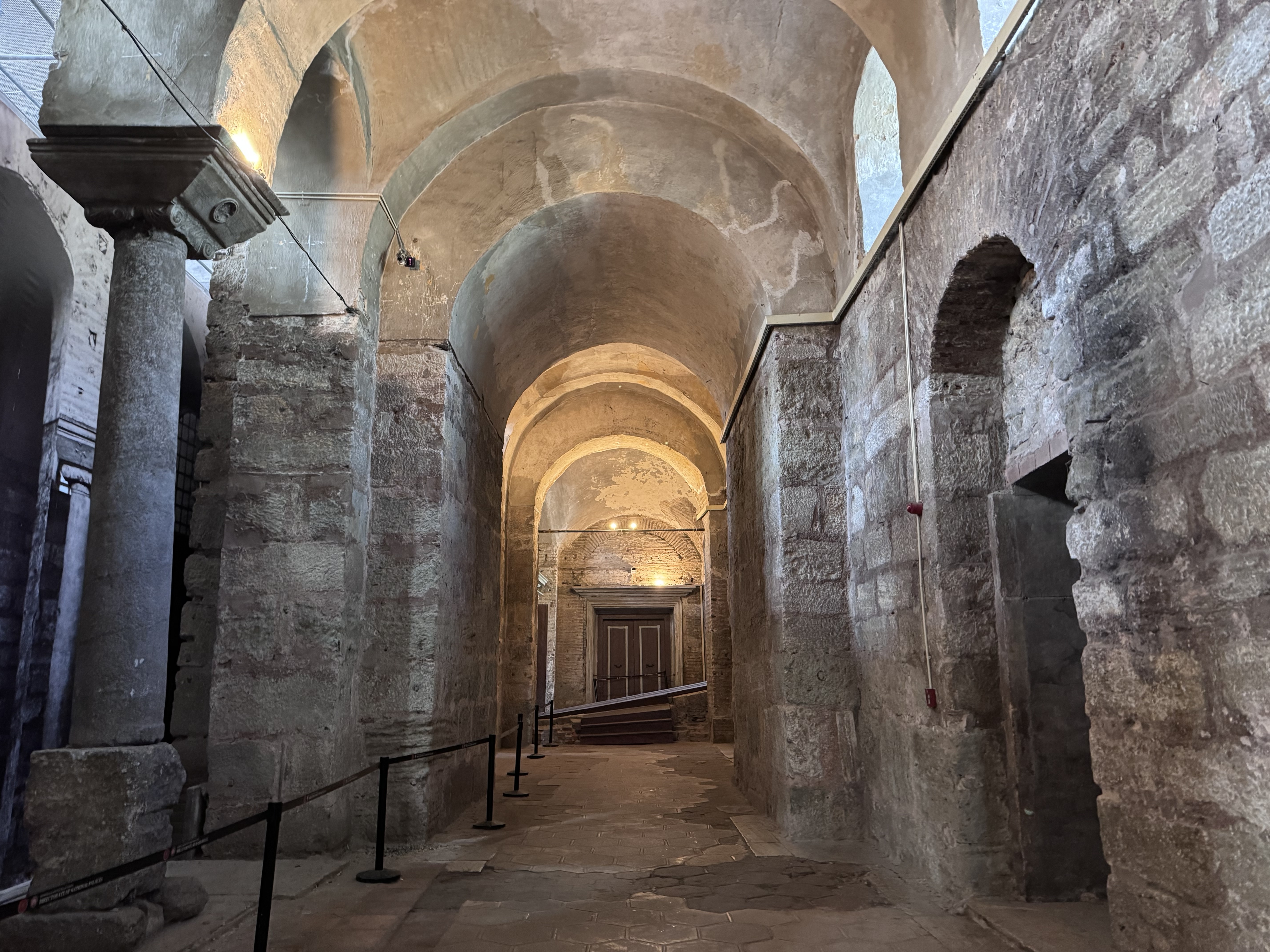
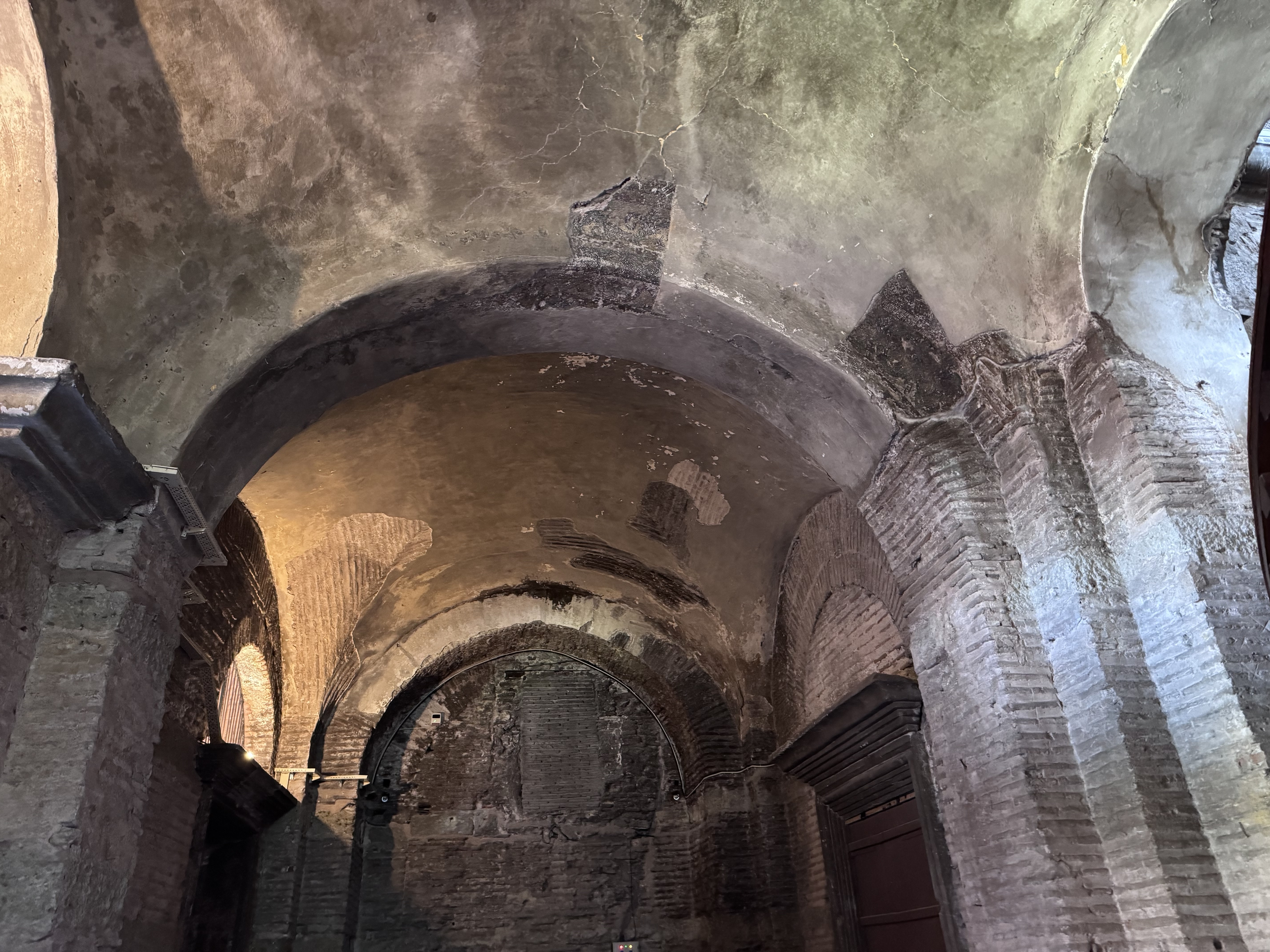
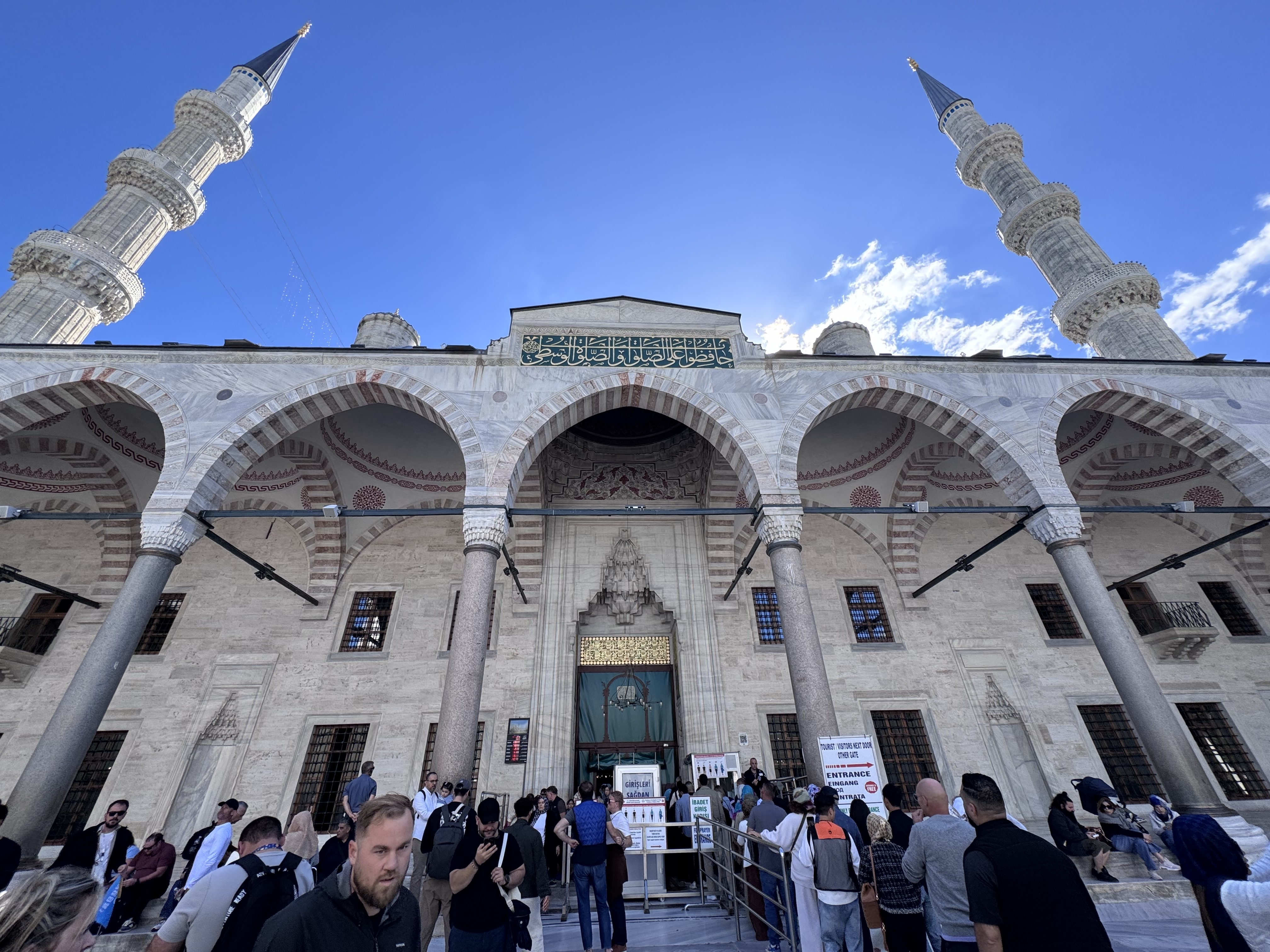
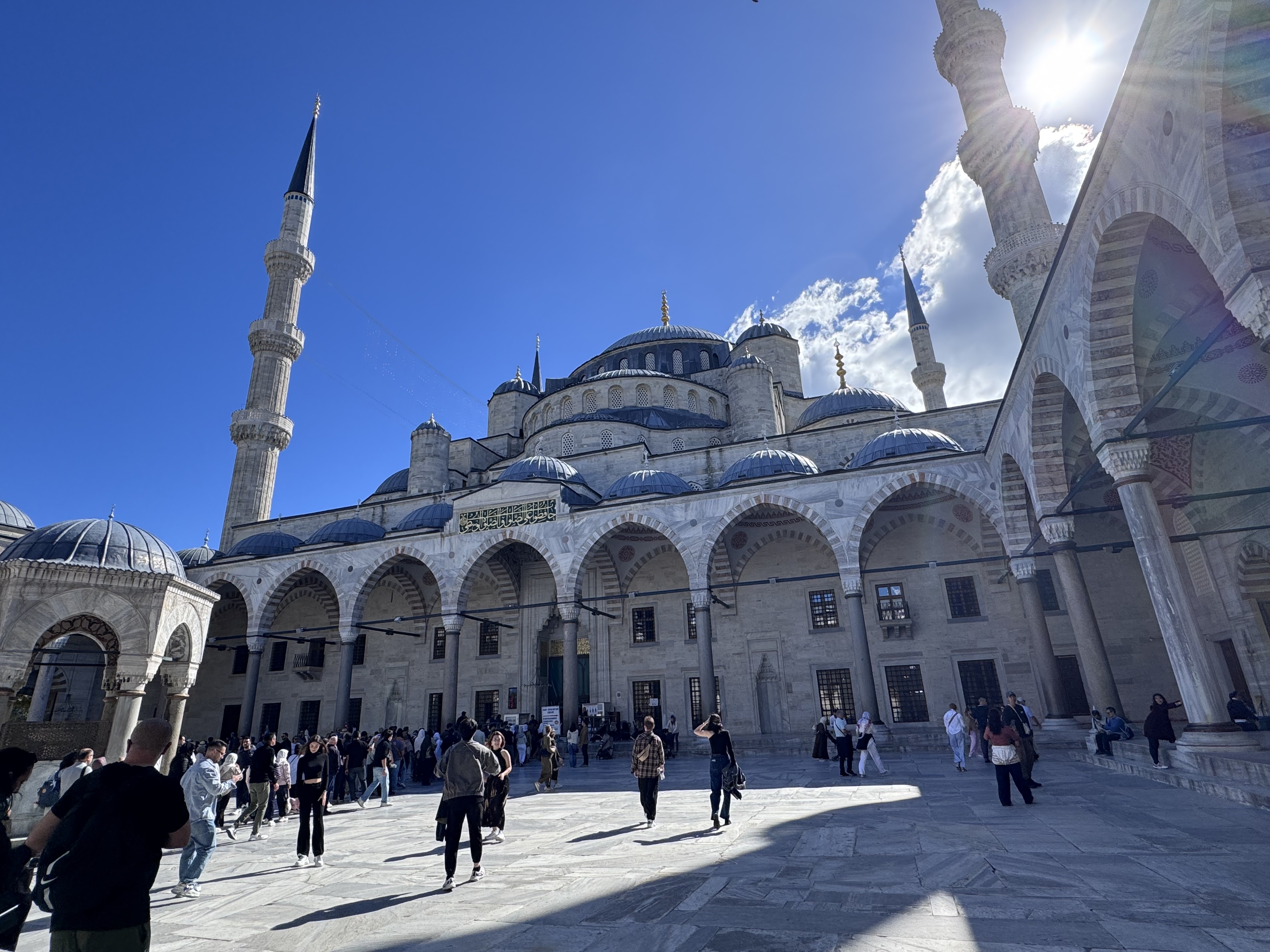
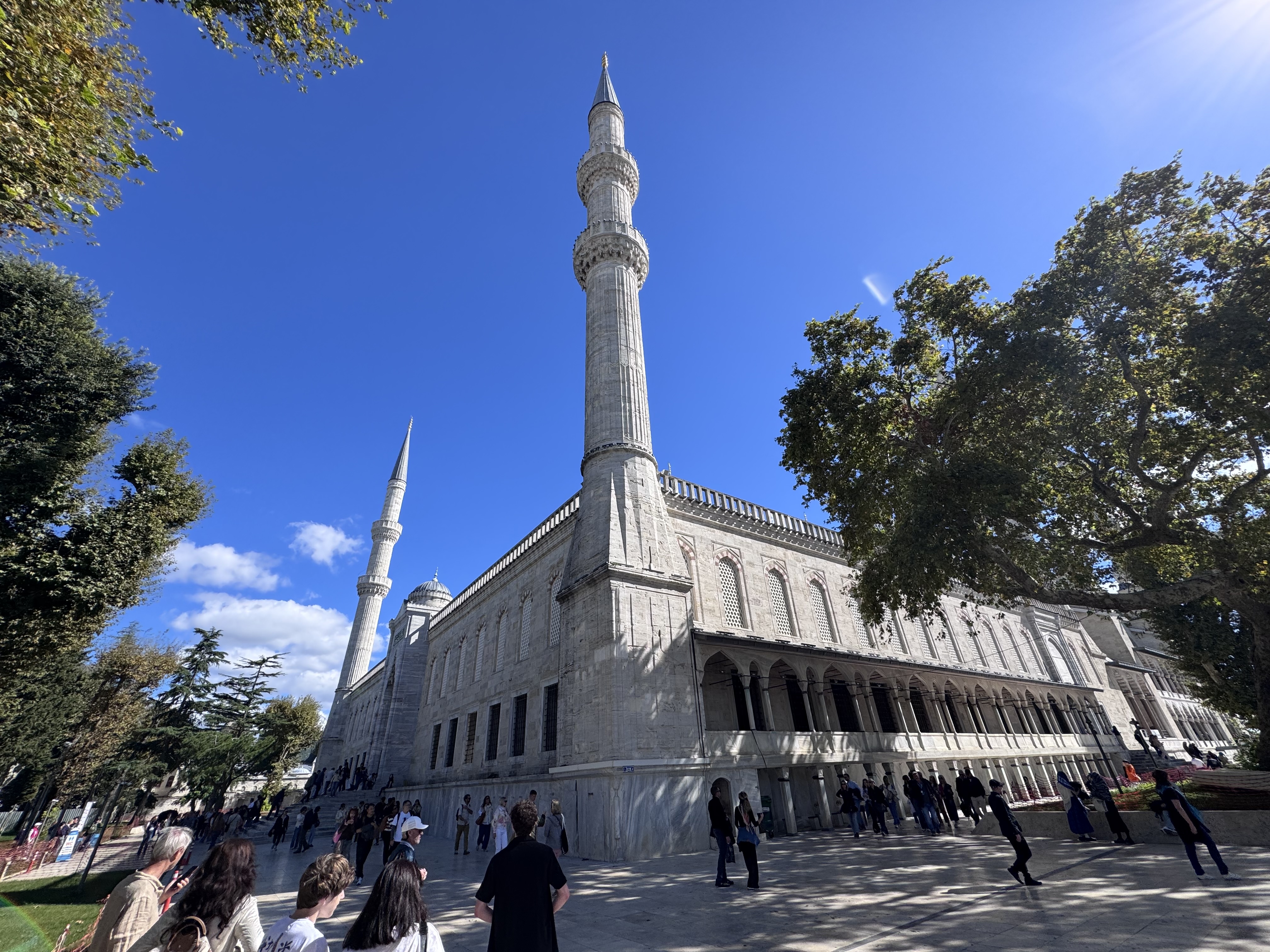
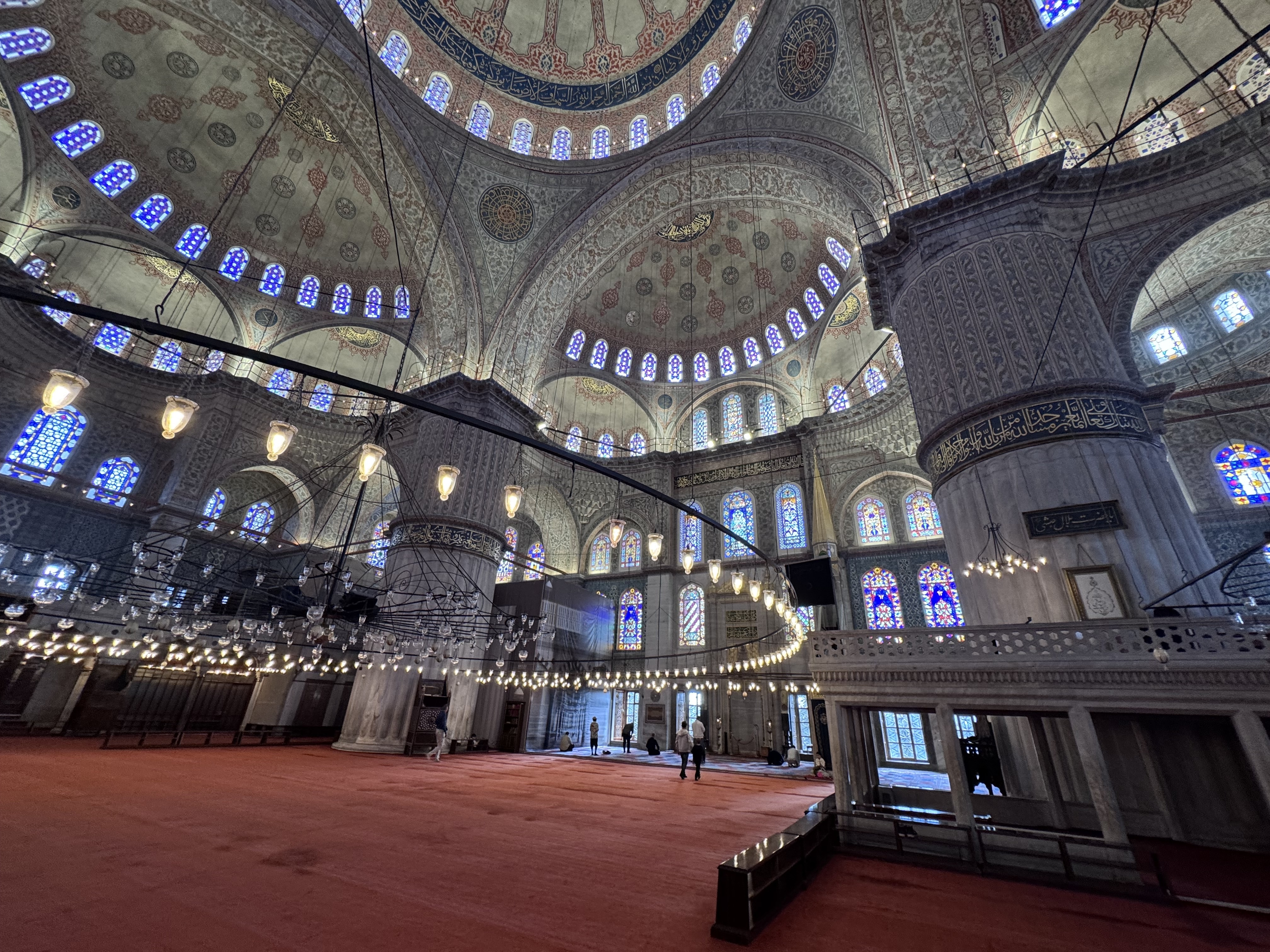
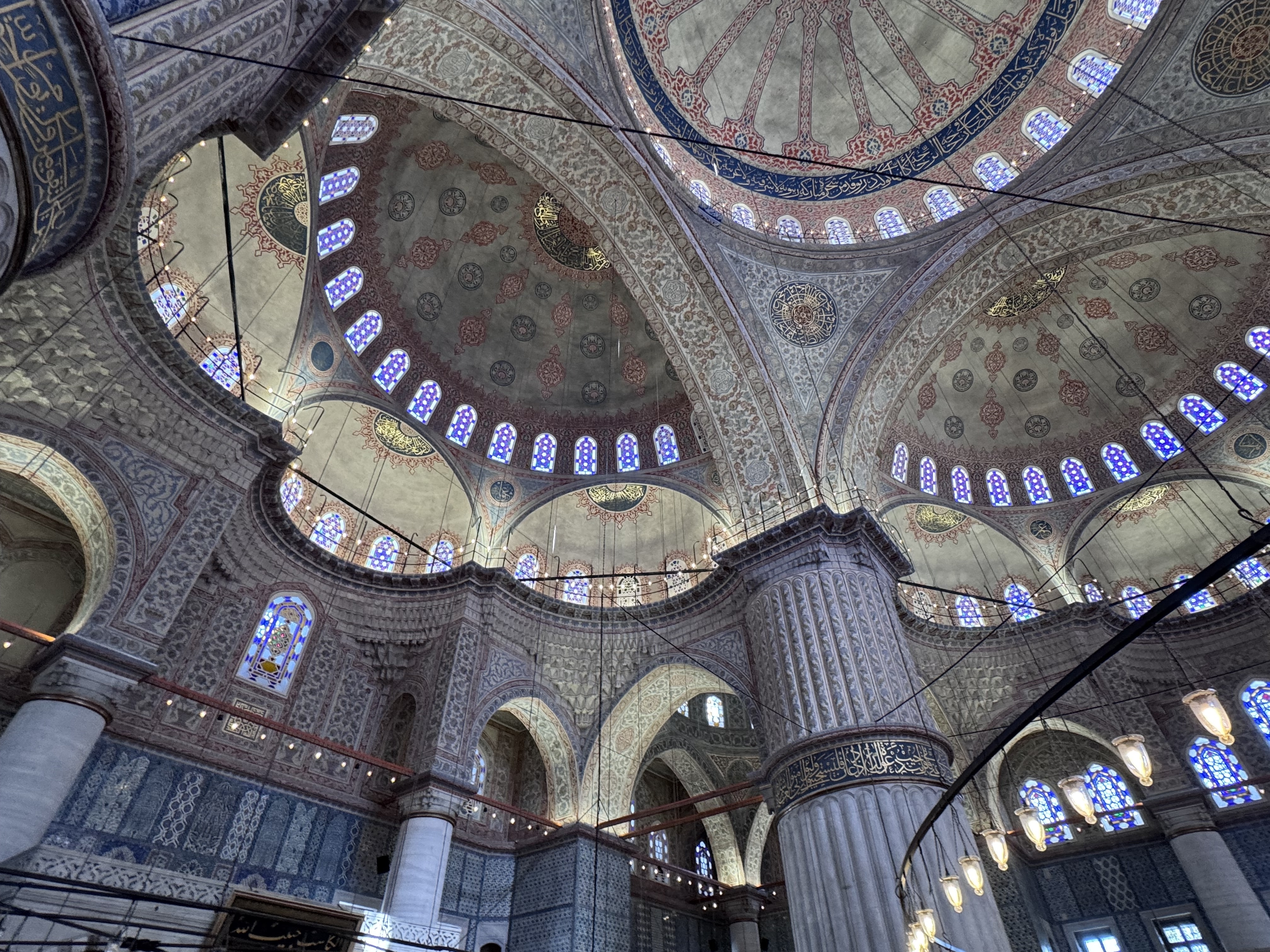
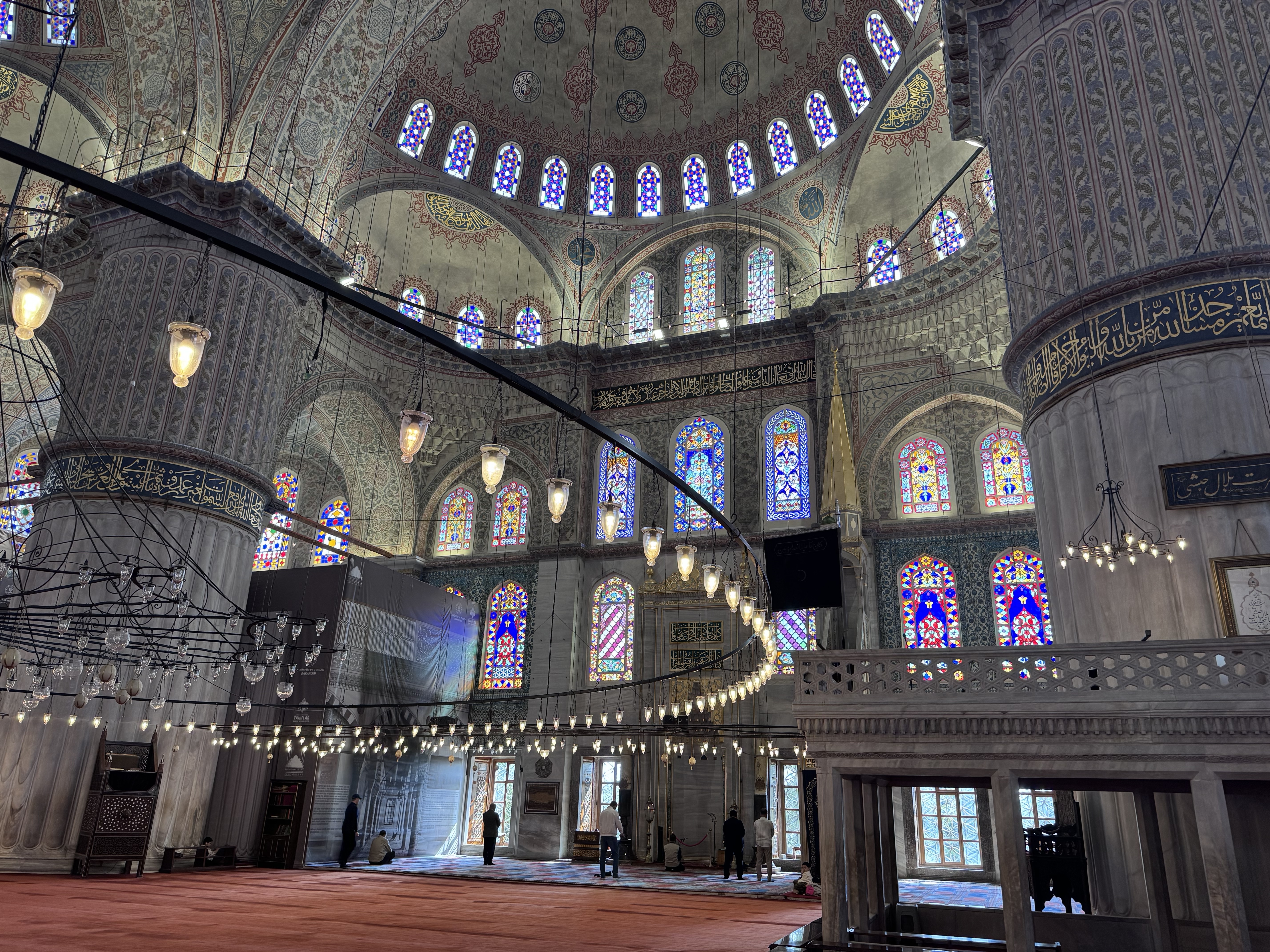
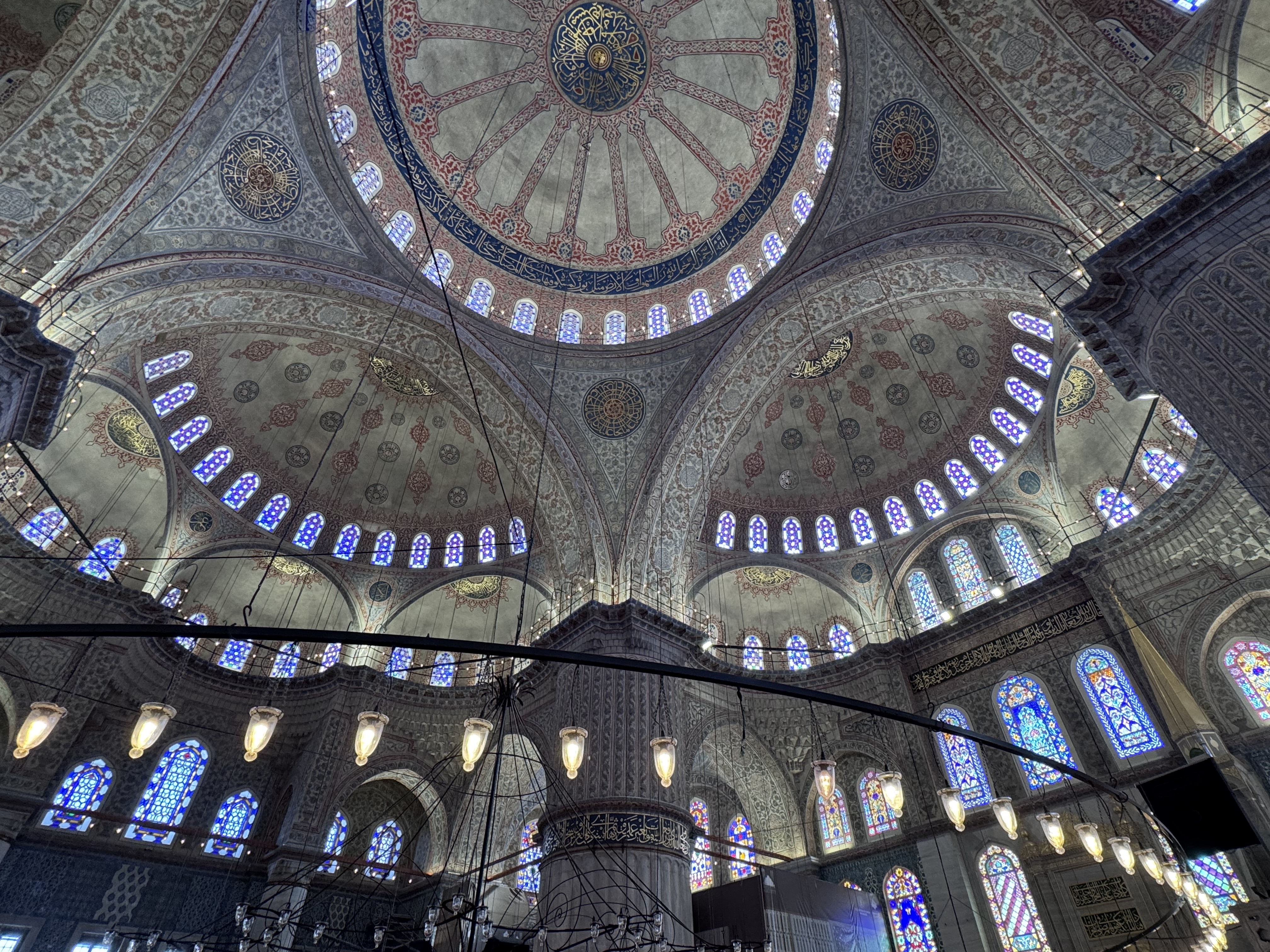
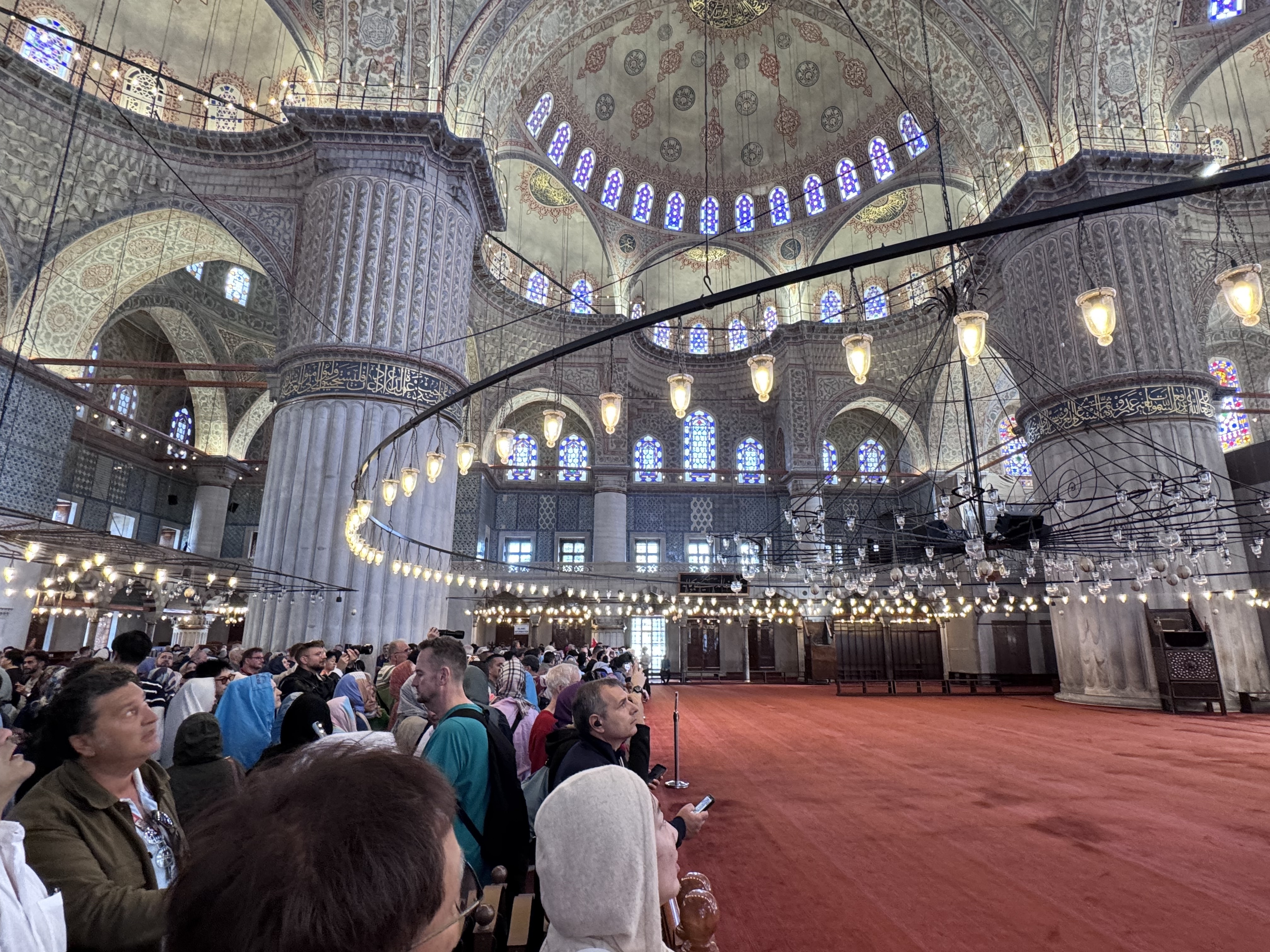
The Blue Mosque, officially the Sultan Ahmed Mosque (Turkish: Sultan Ahmet Camii), is an iconic 17th-century Ottoman mosque in Istanbul’s Sultanahmet district. Renowned for its stunning blue Iznik tiles and six slender minarets, it’s a UNESCO World Heritage site within Istanbul’s Historic Areas.
It remains an active mosque, drawing worshippers and tourists for its architectural grandeur and historical significance.
Commissioned by Sultan Ahmed I (1603–1617), it was built between 1609 and 1616 by architect Sedefkâr Mehmed Ağa, a student of Mimar Sinan. Intended to rival Hagia Sophia (directly opposite), it symbolized Ottoman power and piety after military setbacks.
The mosque sparked controversy for its six minarets, equaling Mecca’s Masjid al-Haram, resolved by adding a seventh minaret to Mecca.
Completed just before Ahmed I’s death at age 27, it has since been a centerpiece of Istanbul’s skyline. Restorations in the 19th and 21st centuries preserved its ornate interiors.
The mosque ...
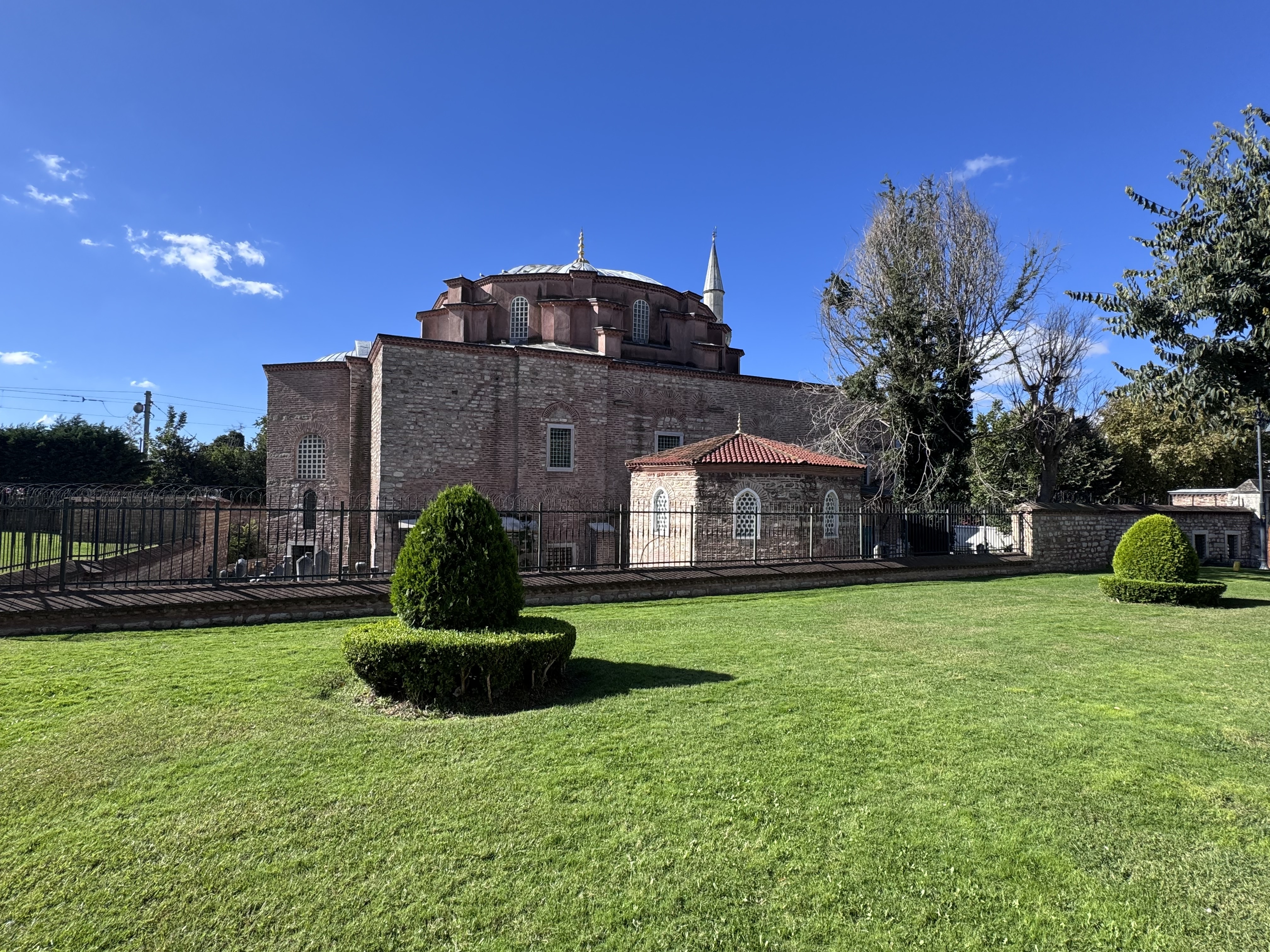
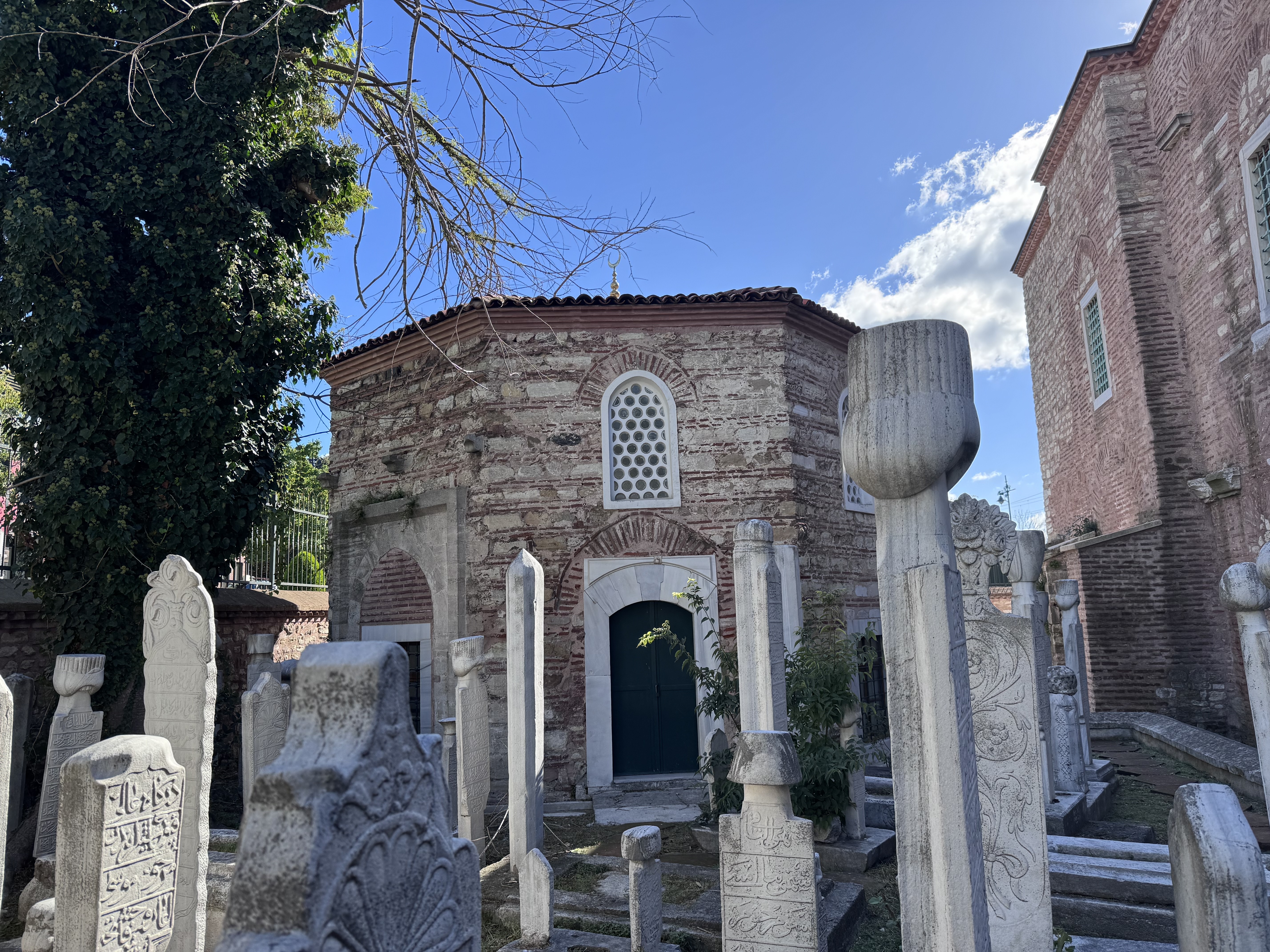
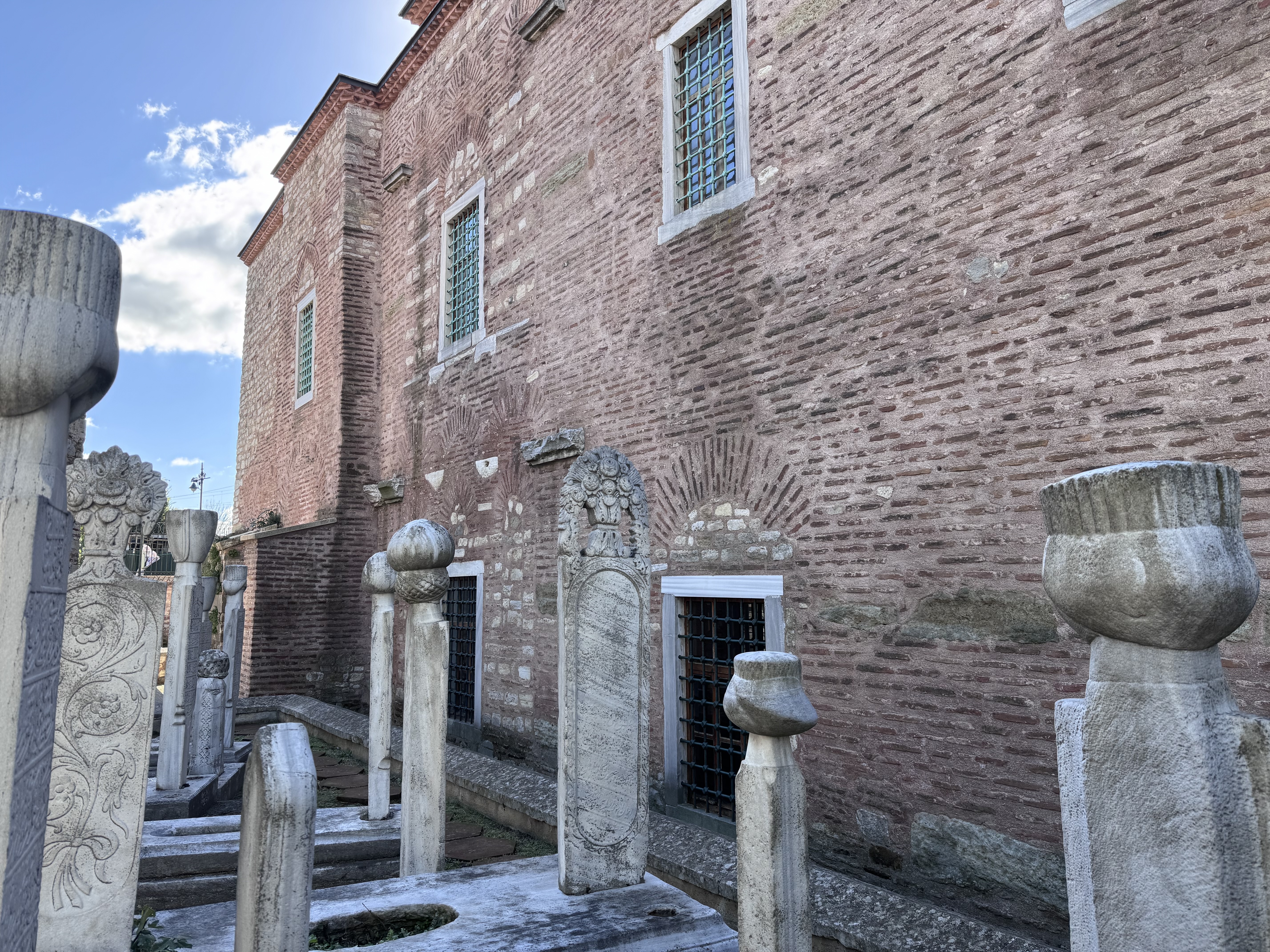
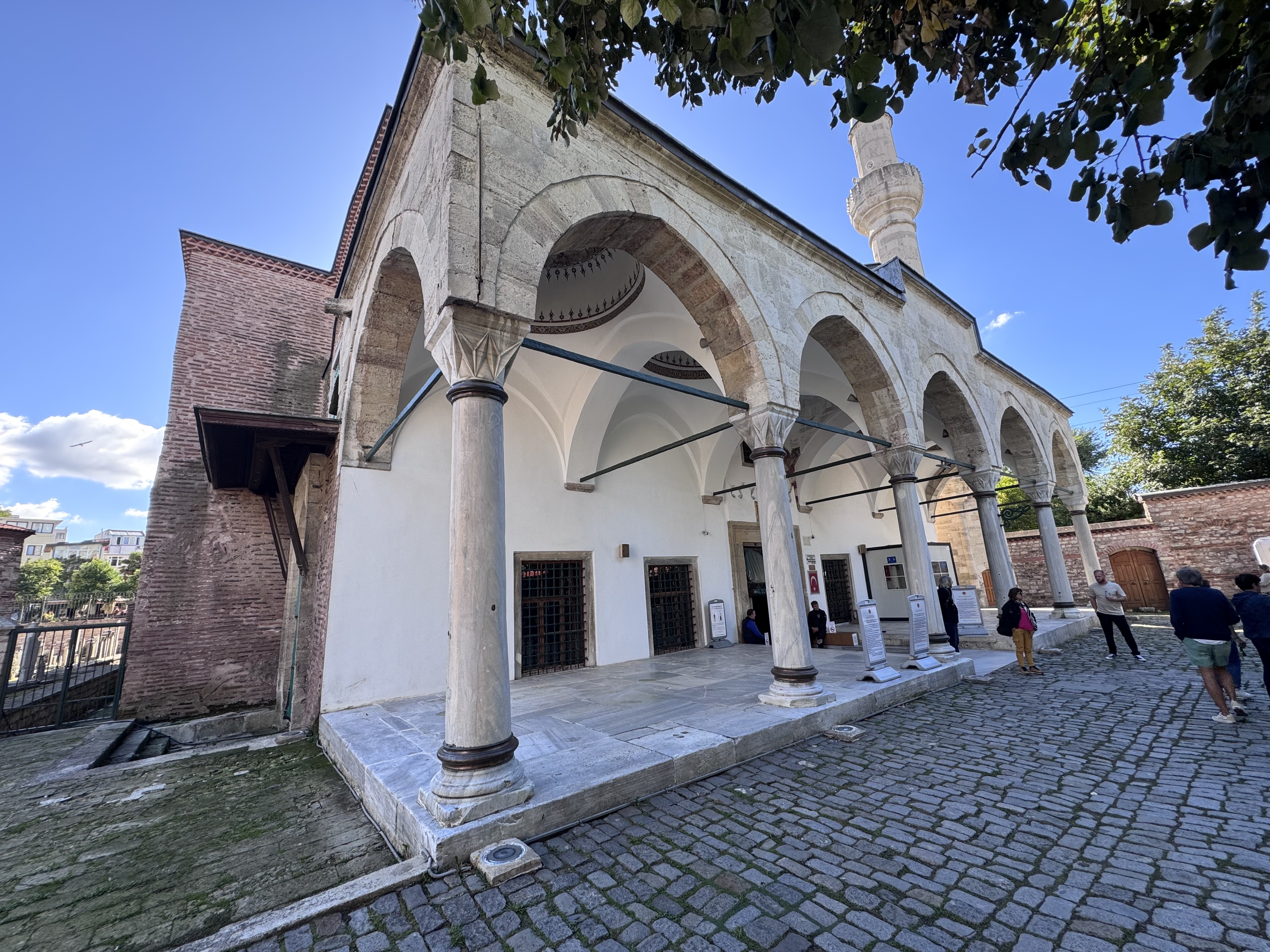
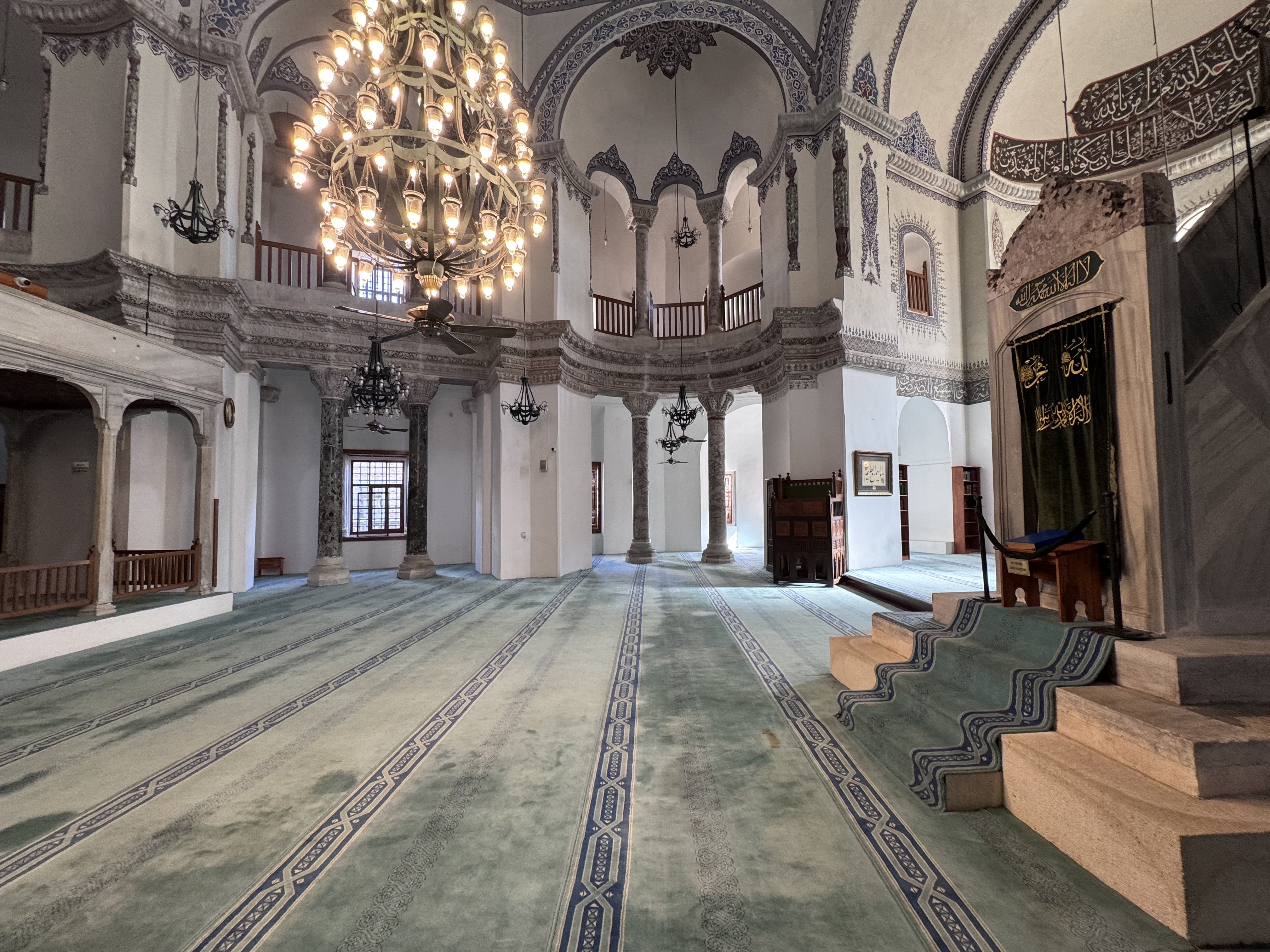
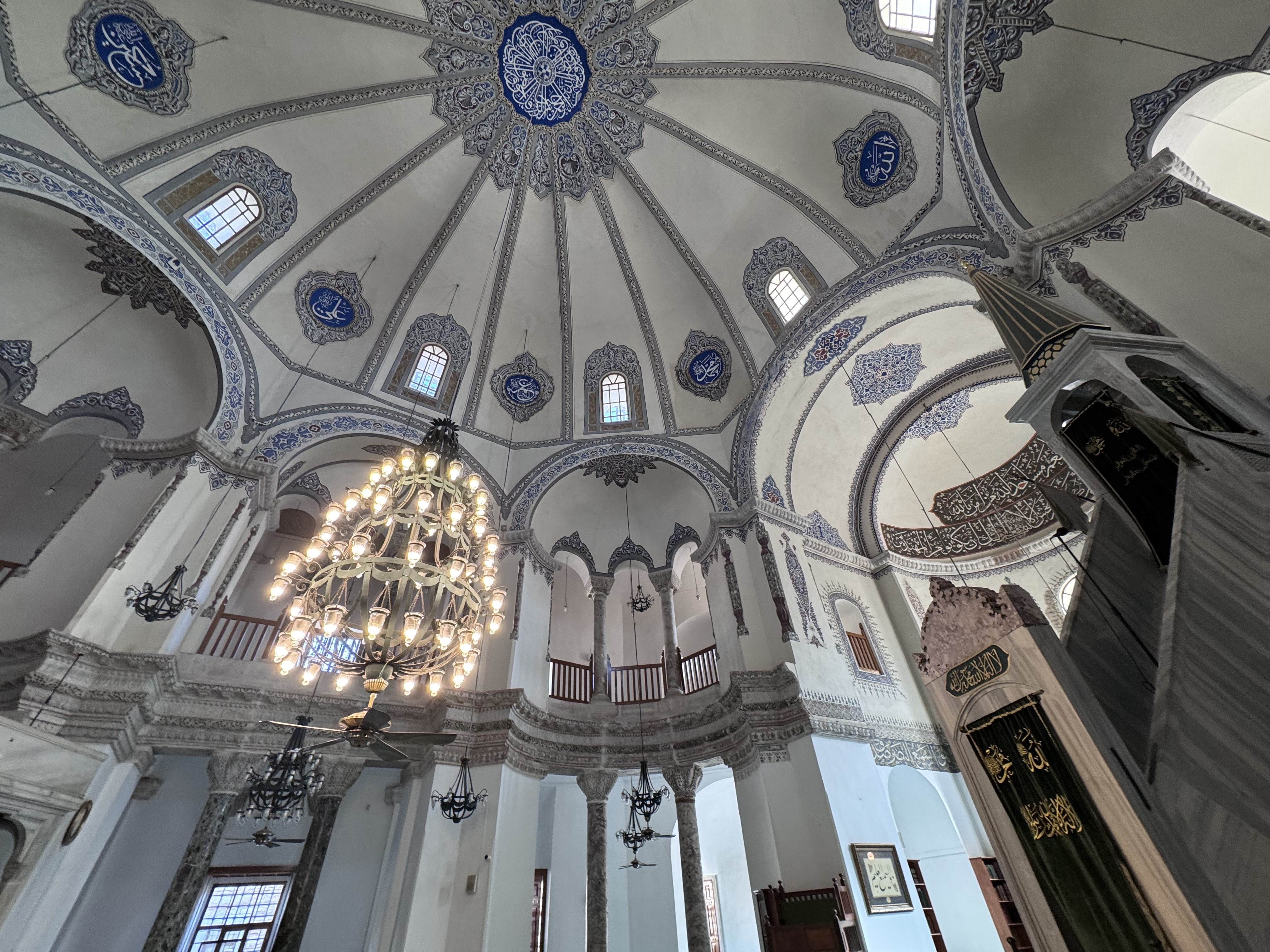
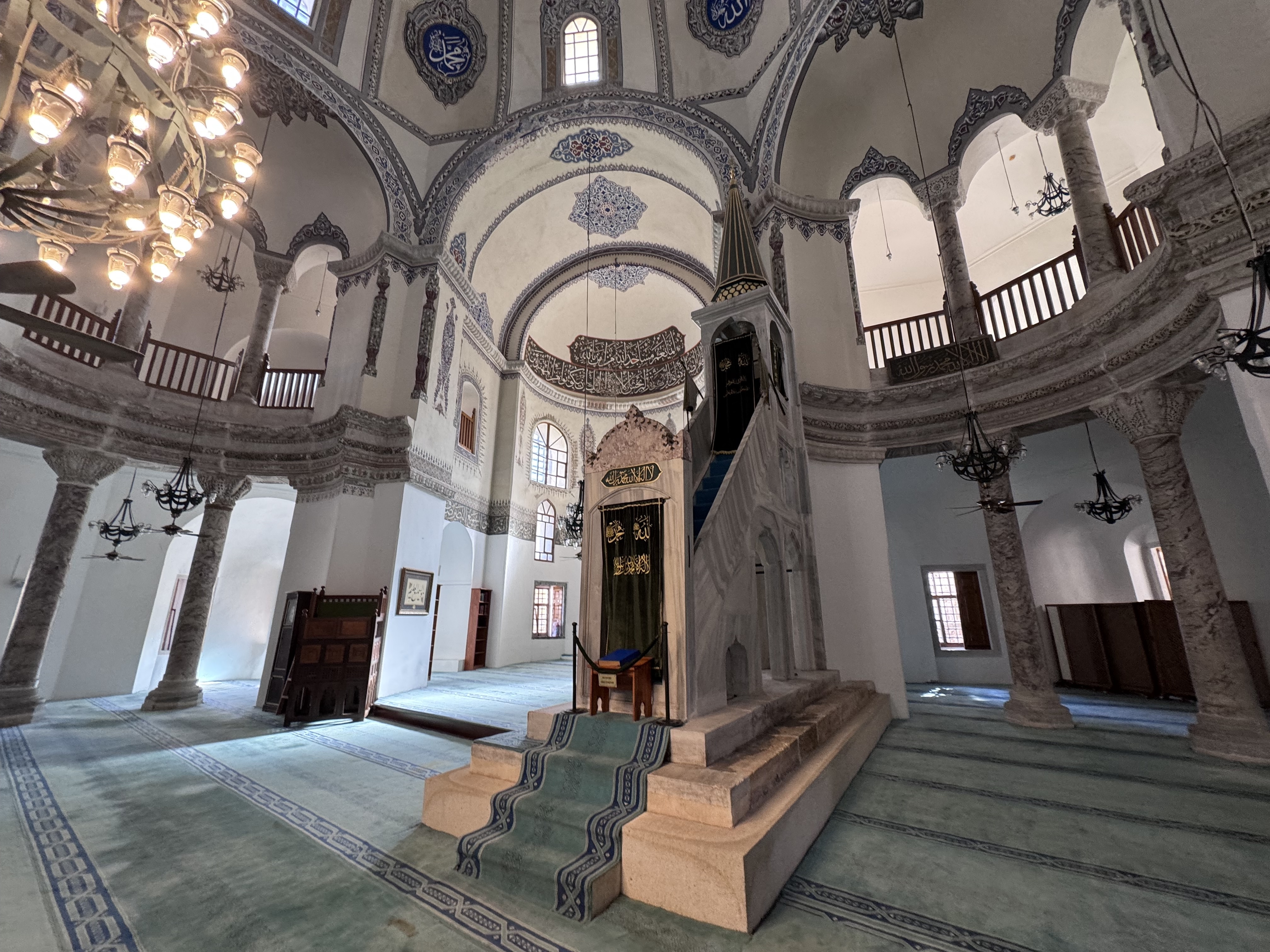
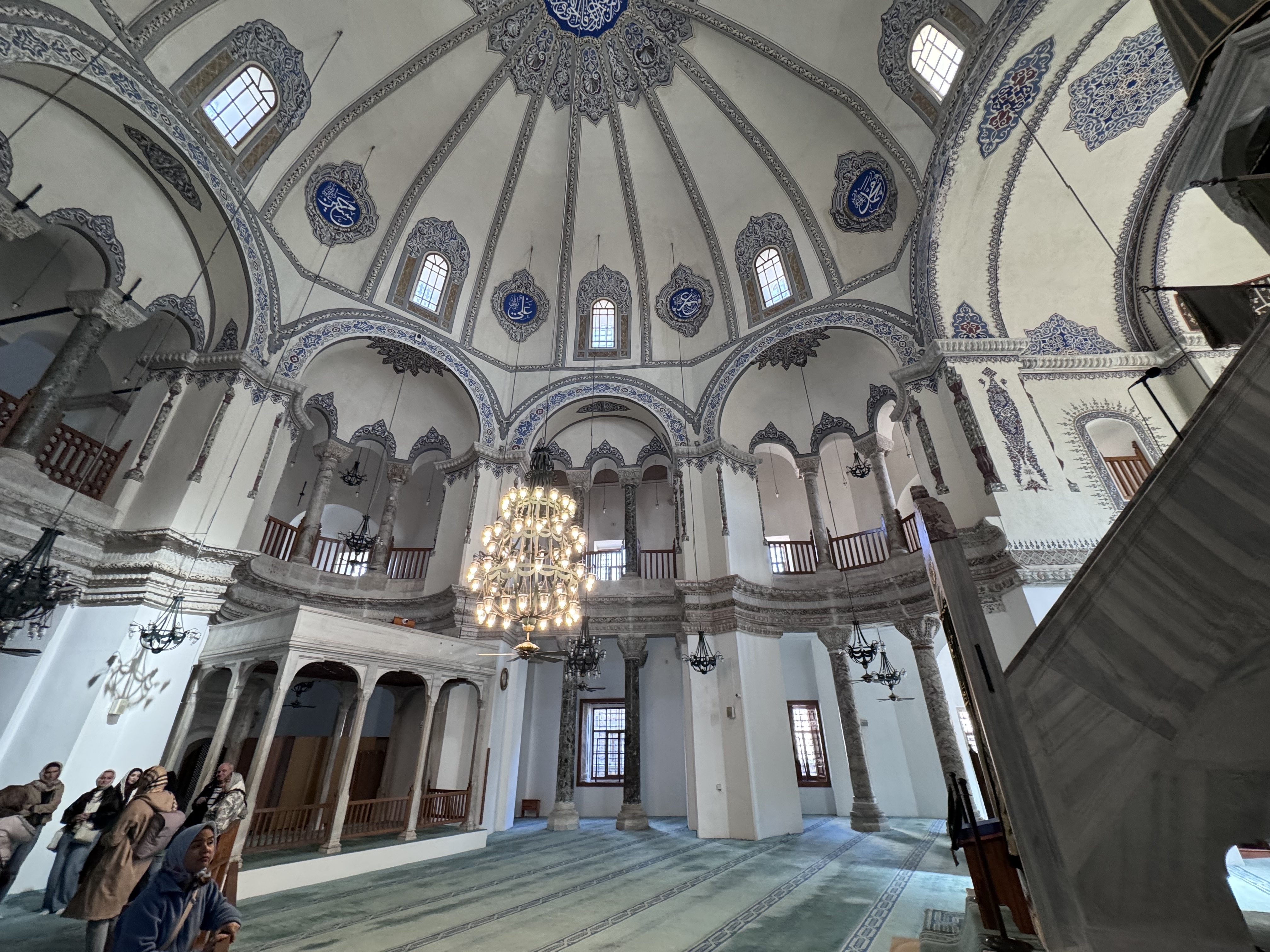
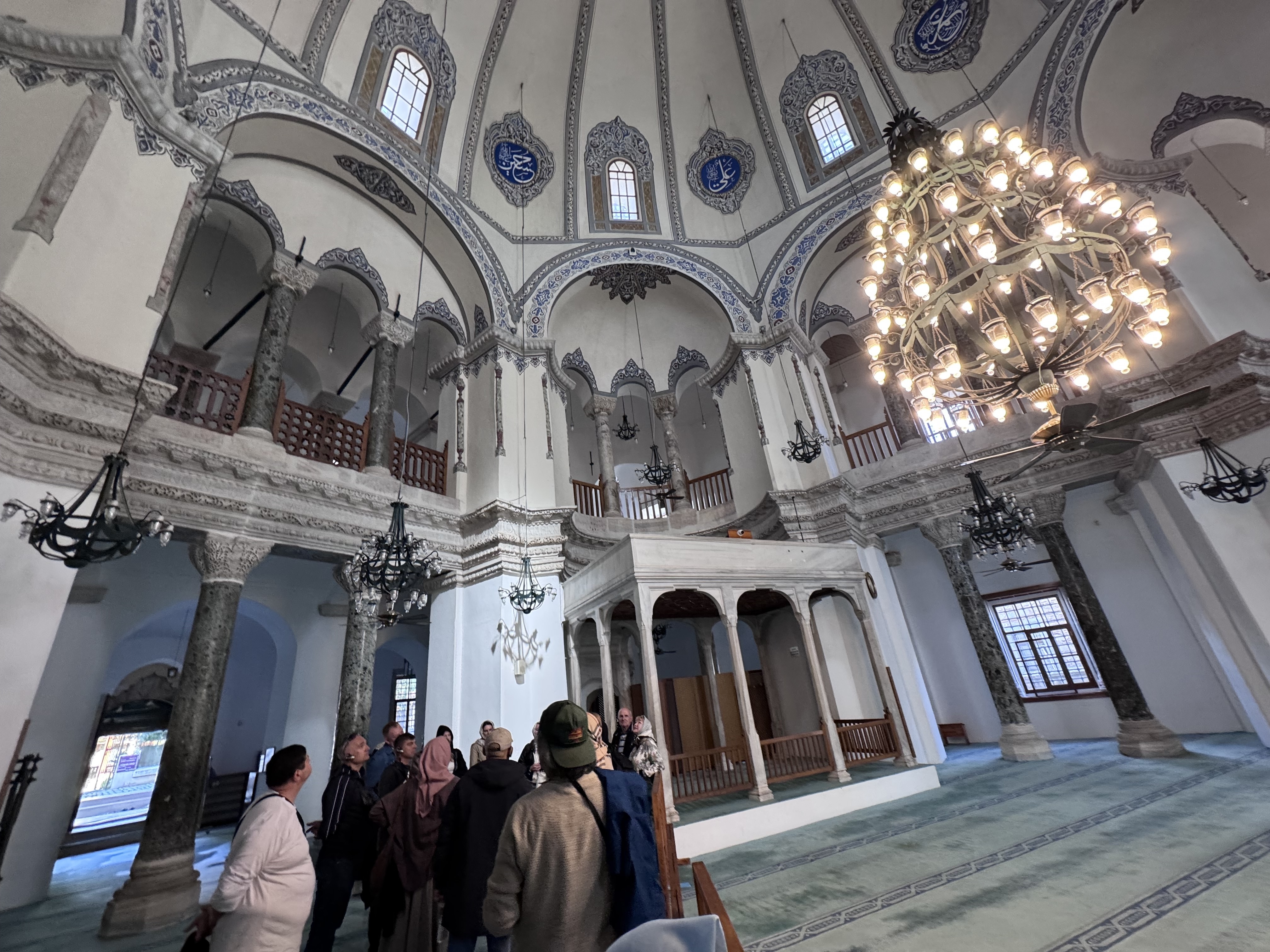
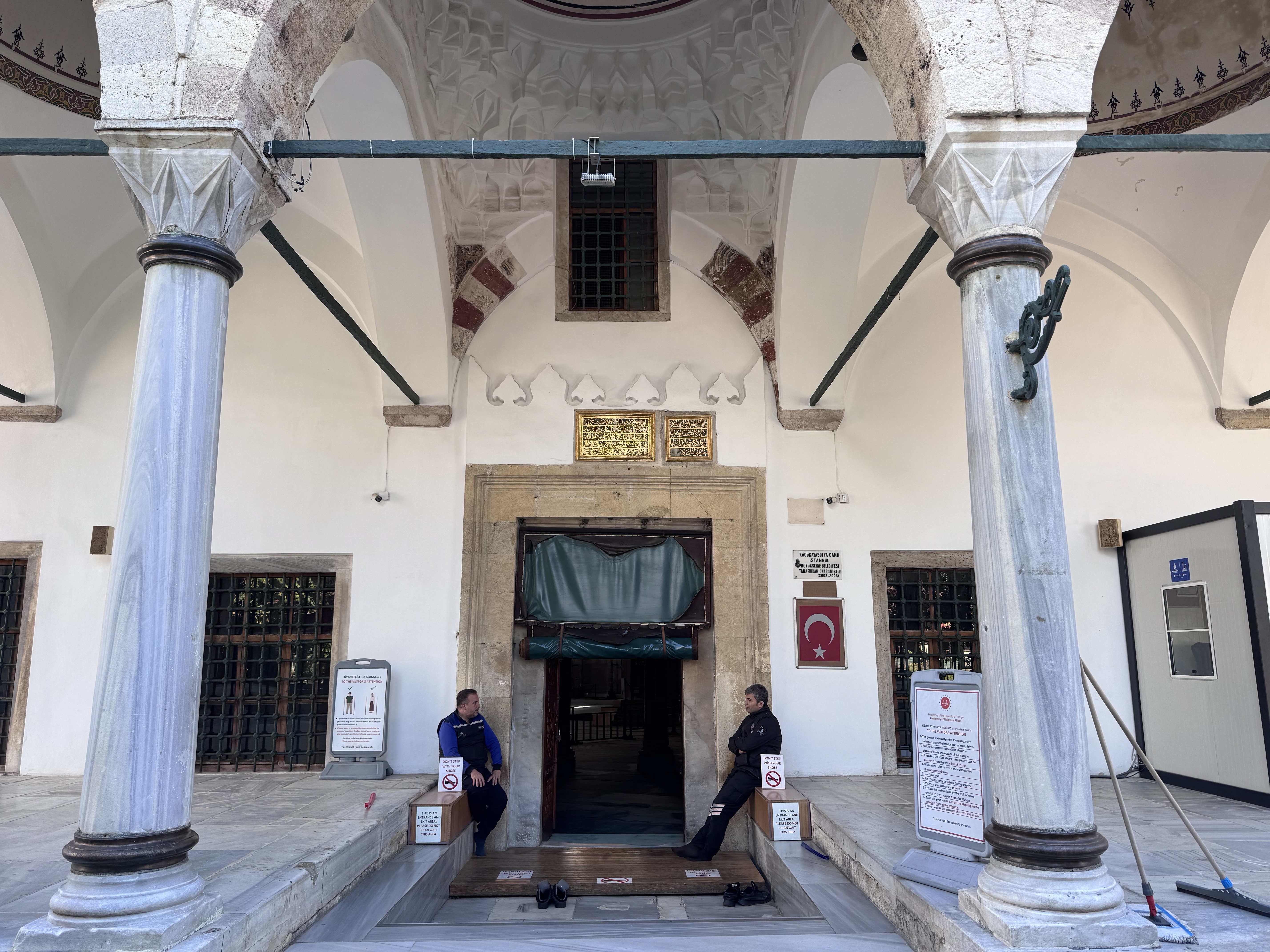
The Little Hagia Sophia, known in Turkish as Küçük Ayasofya Camii, stands in the Fatih district of Istanbul near the shores of the Sea of Marmara, close to the ruins of the Great Palace and south of the Hippodrome. Originally built as the Church of Saints Sergius and Bacchus, it is one of the most important surviving early Byzantine structures in the city and forms part of the Historic Areas of Istanbul, inscribed on the UNESCO World Heritage List in 1985.
Its construction is generally dated between 527 and 536 during the early years of Emperor Justinian I’s reign, though some scholars place the start slightly earlier or later within that decade. The church was dedicated to the Syrian Christian soldier-martyrs Saints Sergius and Bacchus. According to a later legend, Justinian, while still the nephew of Emperor Justin I, had been accused of plotting against the throne and sentenced to death; the two saints appeared to Justin in a dream and vouched for Justinian’s innocence, leading to his ...