

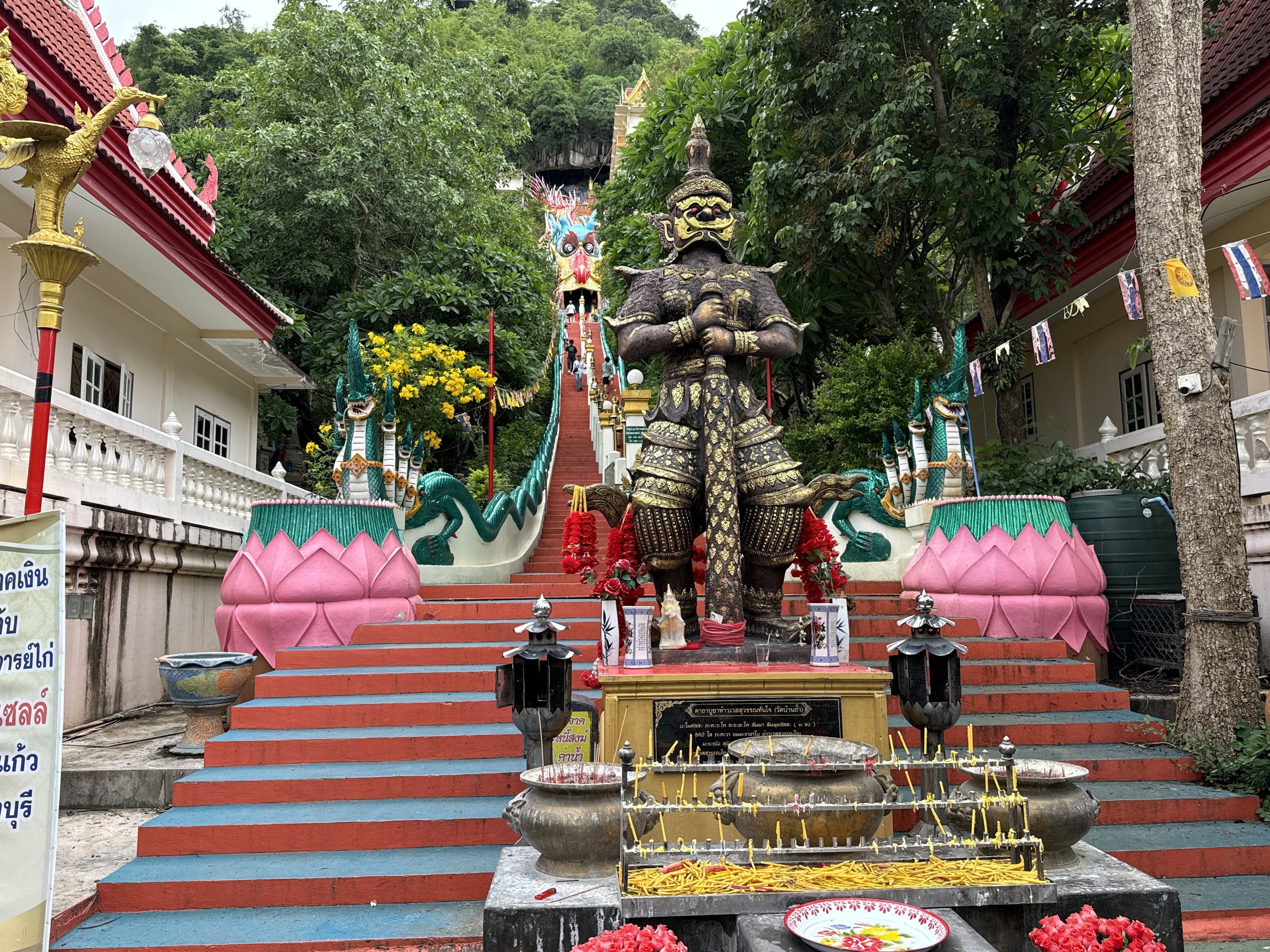
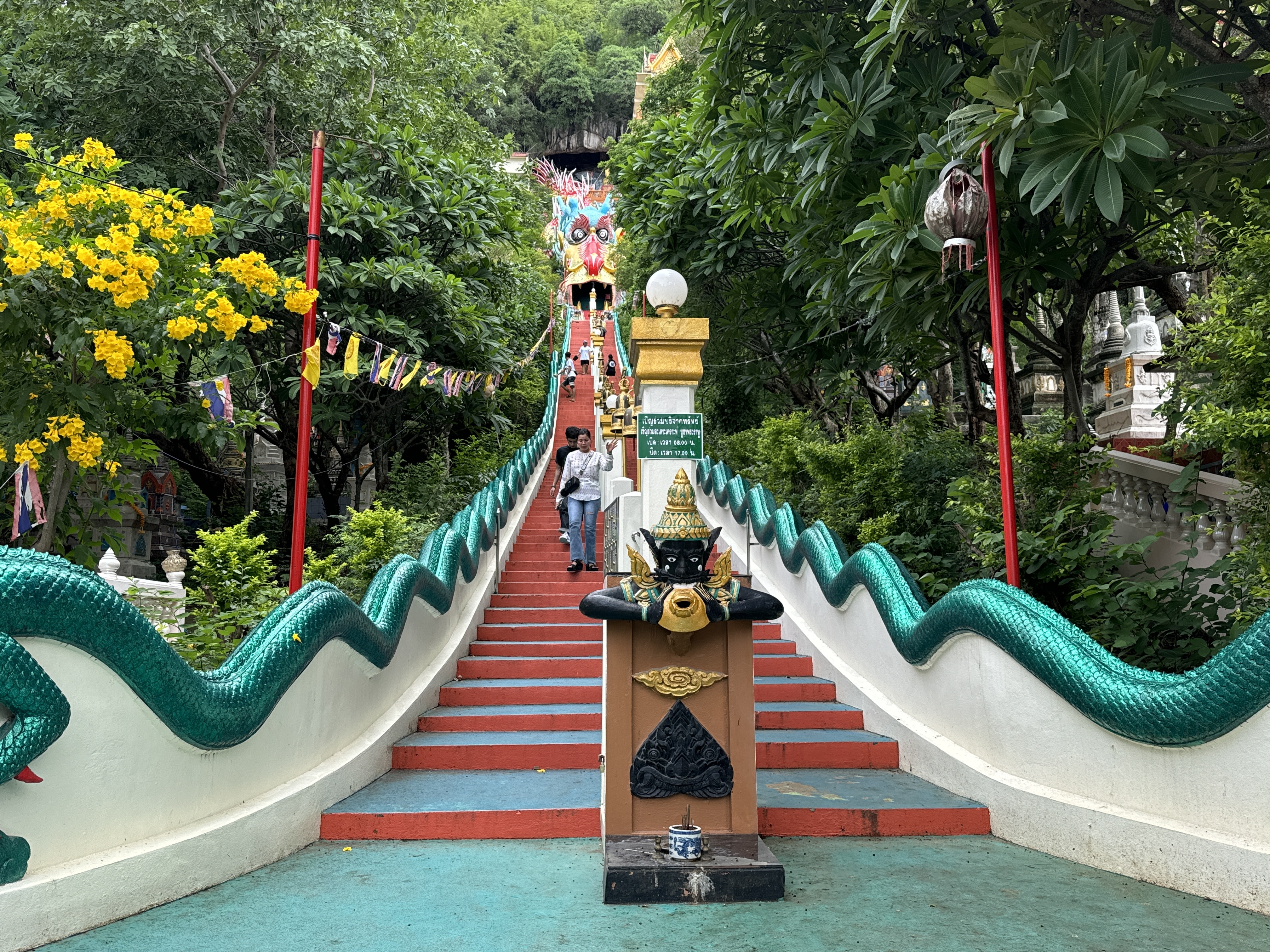
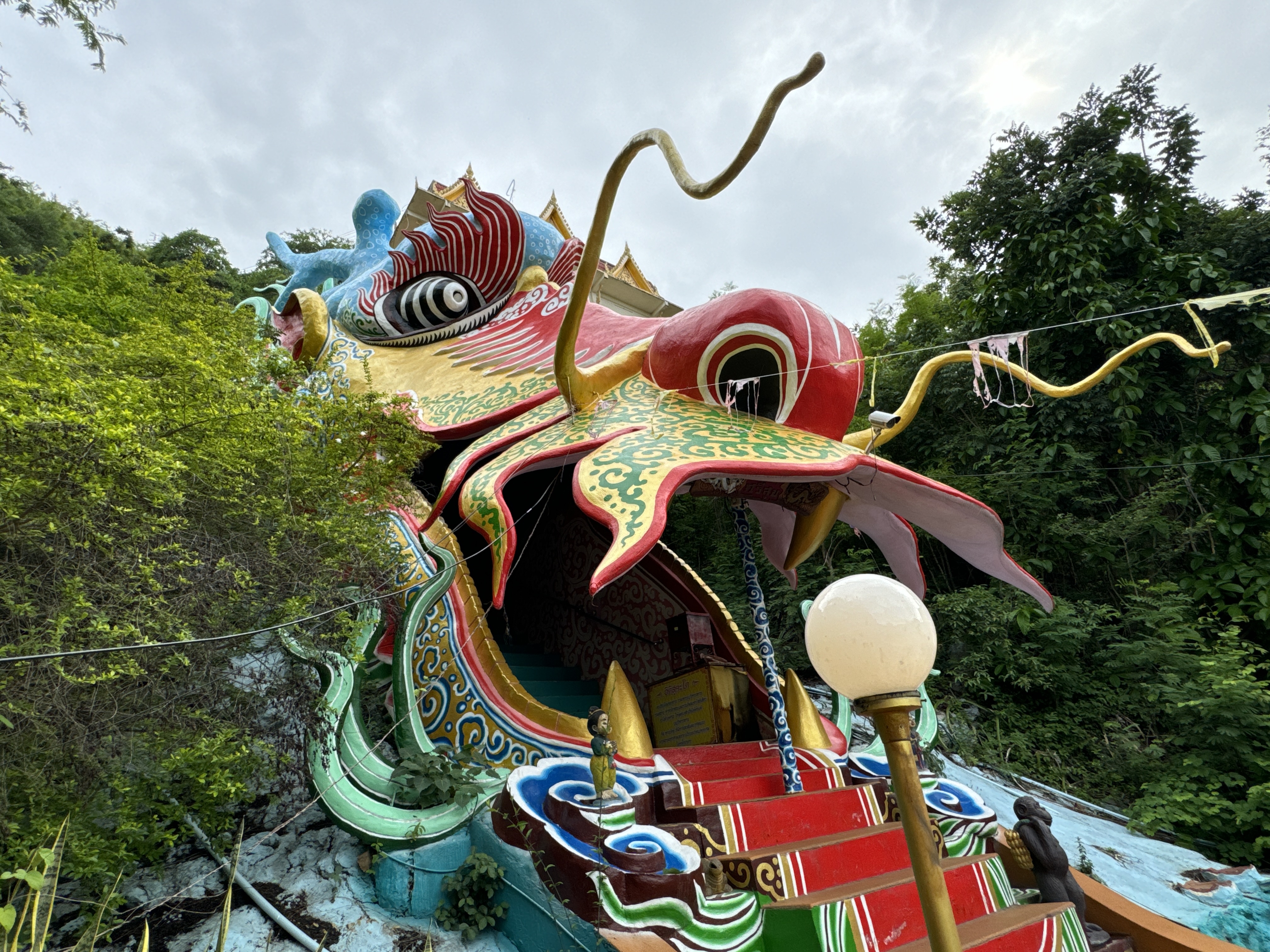
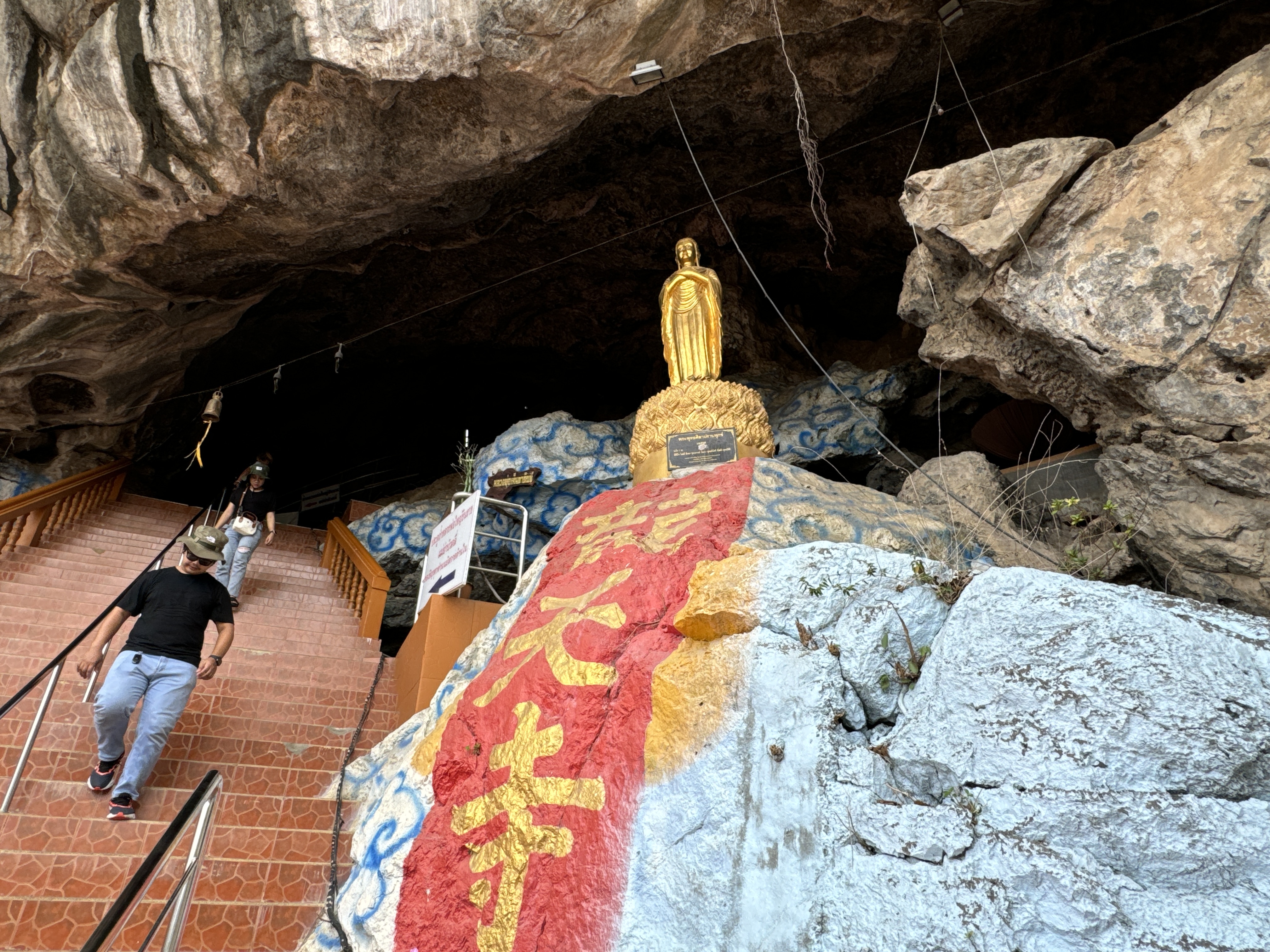
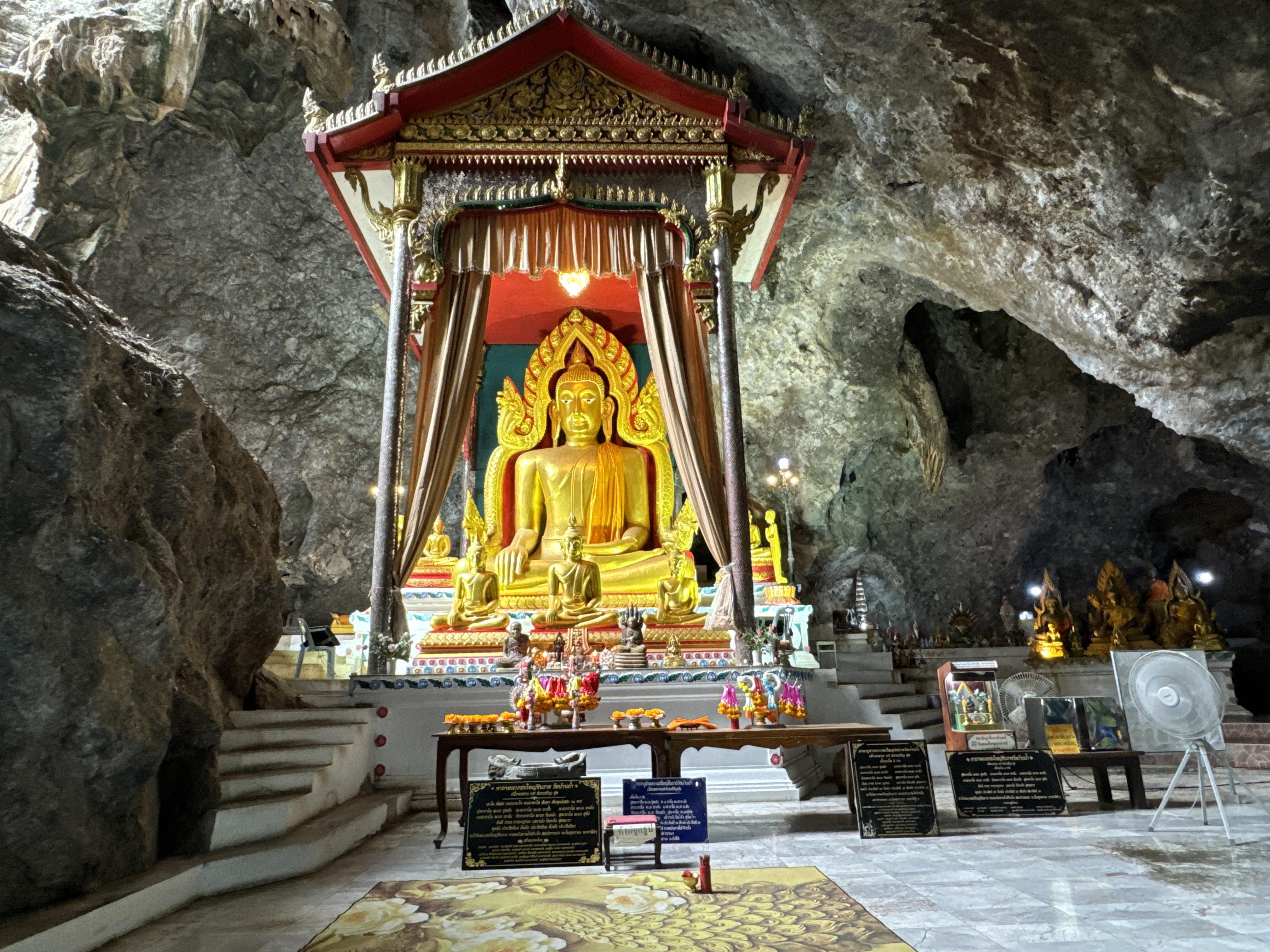
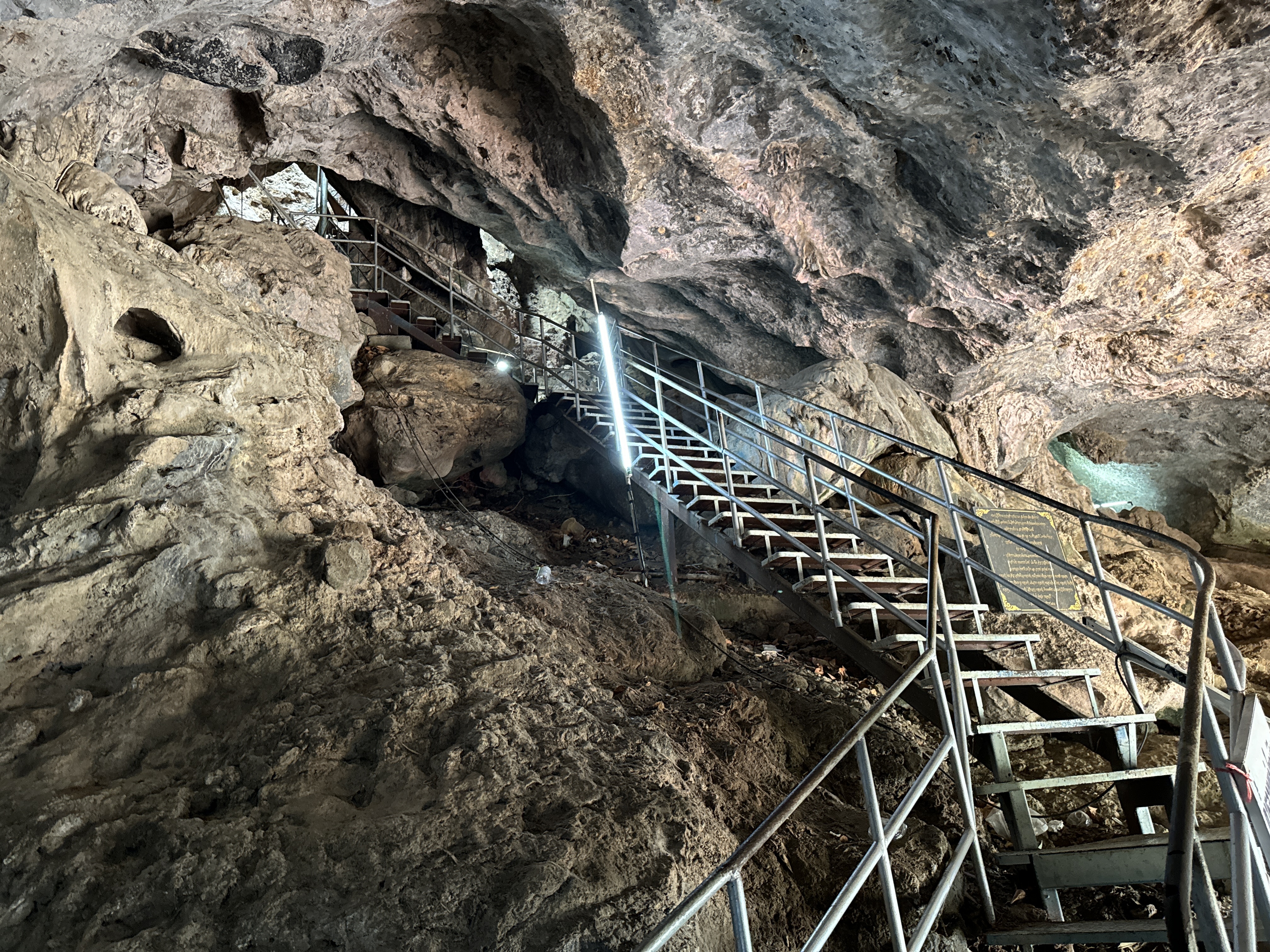
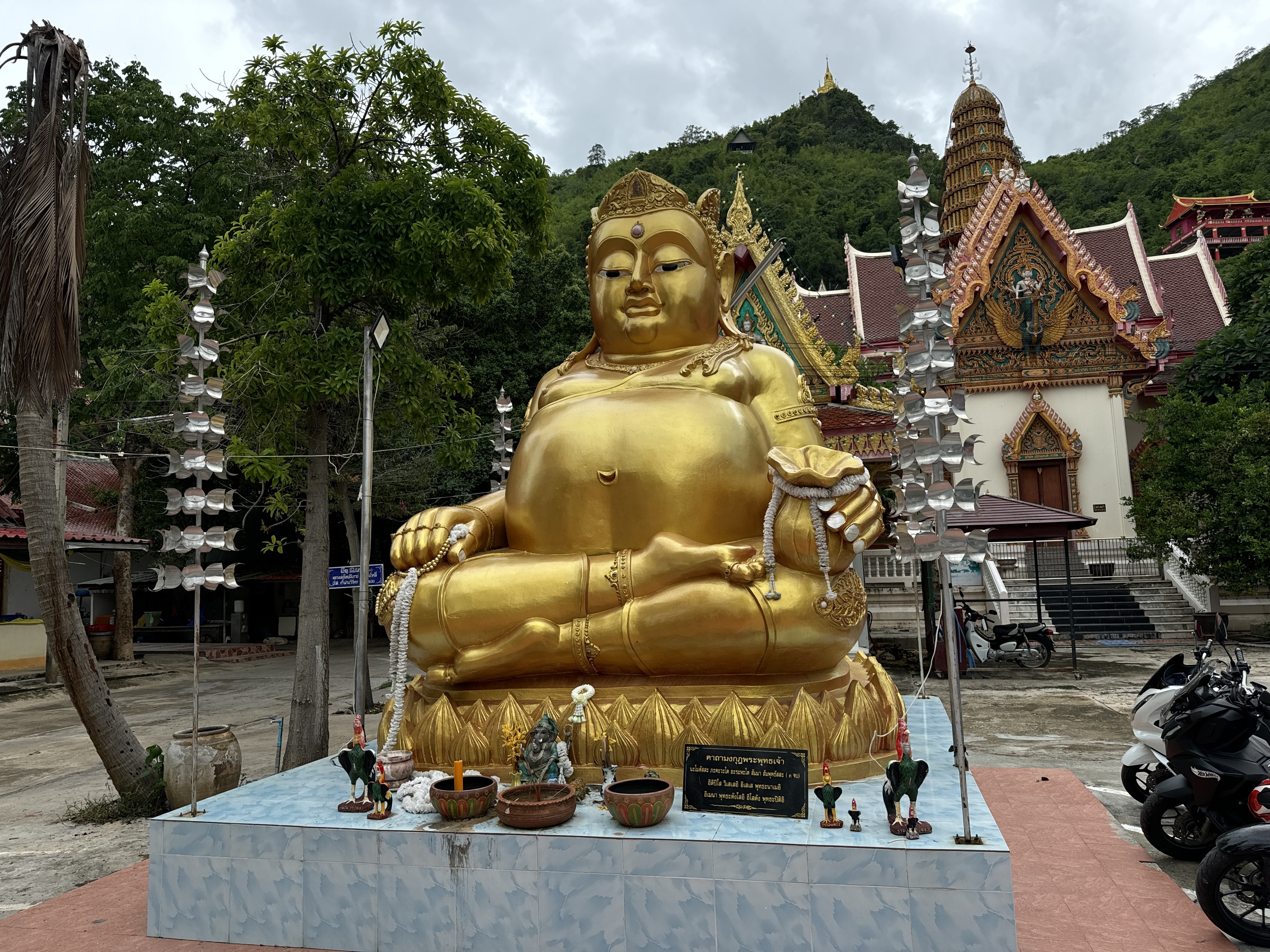
Wat Ban Tham, just south of Kanchanaburi in West Thailand, illustrates two local practices at once: the ancient tradition to build monasteries in natural caves and the relatively new fashion in monastic communities to experiment with cement and paint.
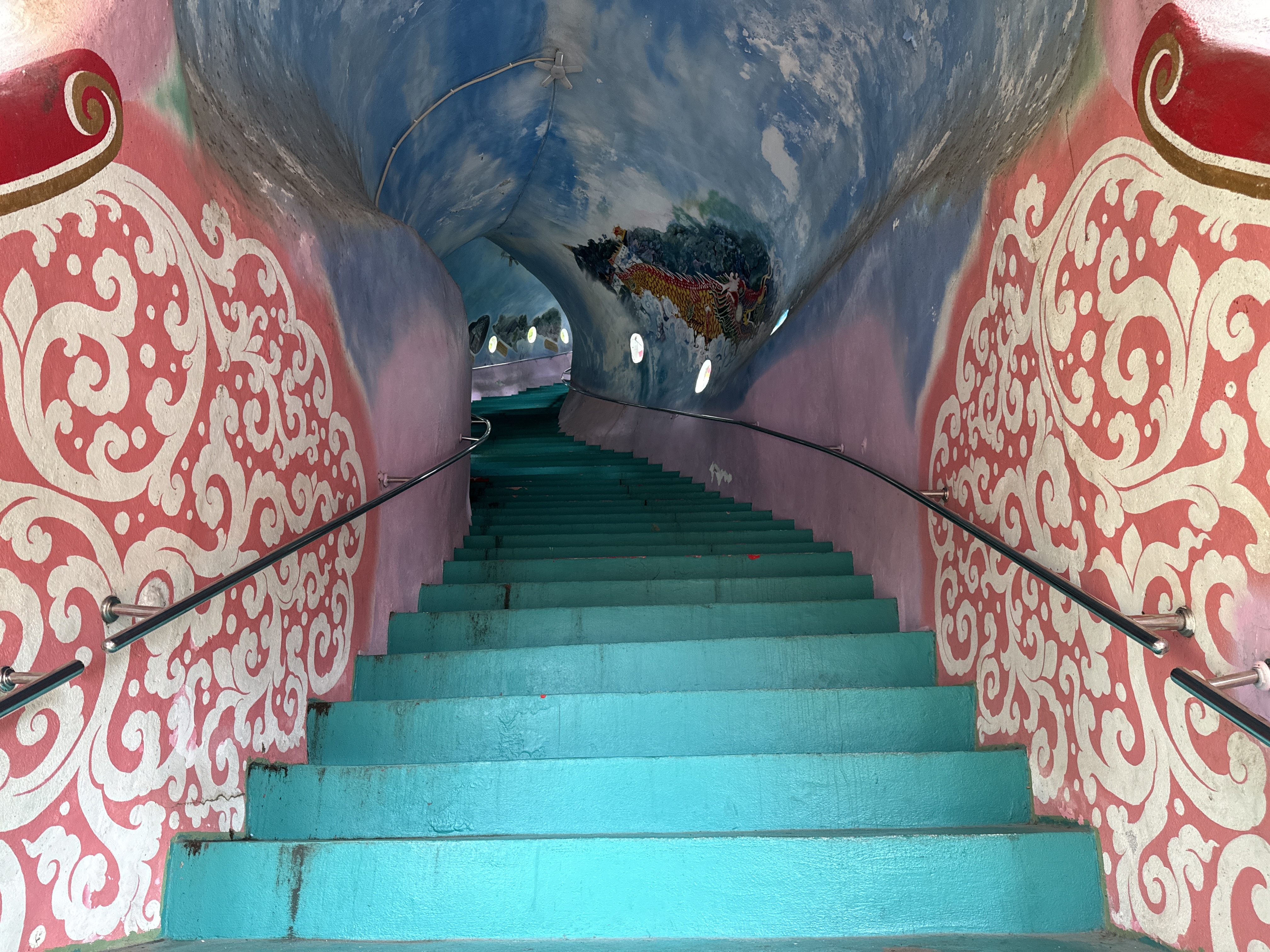
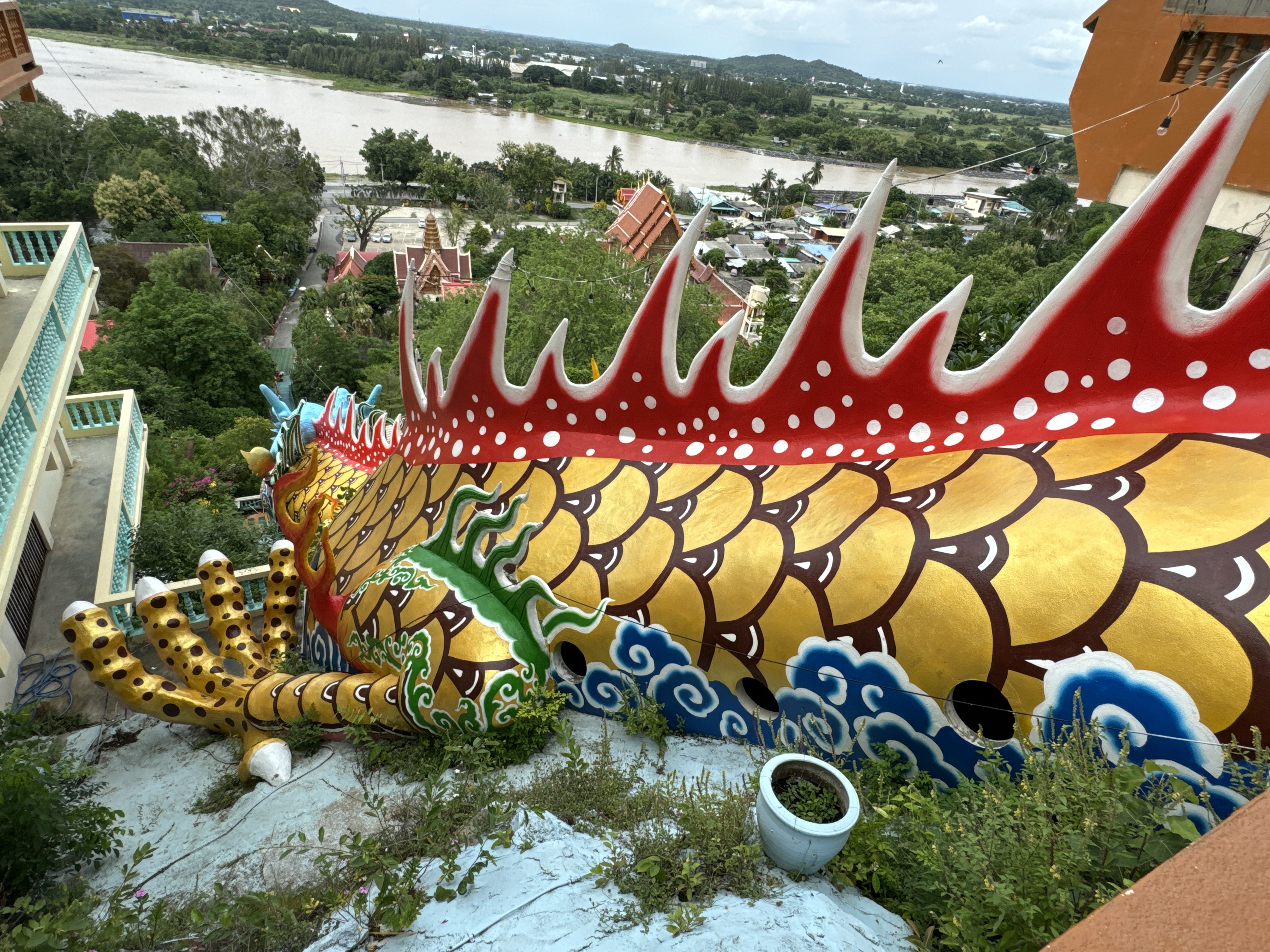
In this case, to reach the cave, one has to pass inside the body of a psychedelically colored dragon.
An impressive Buddha statue dominates the main hall of the cave. But, the side chamber contains something unusual: a stalactite said to house the spirit of Bua Kli.
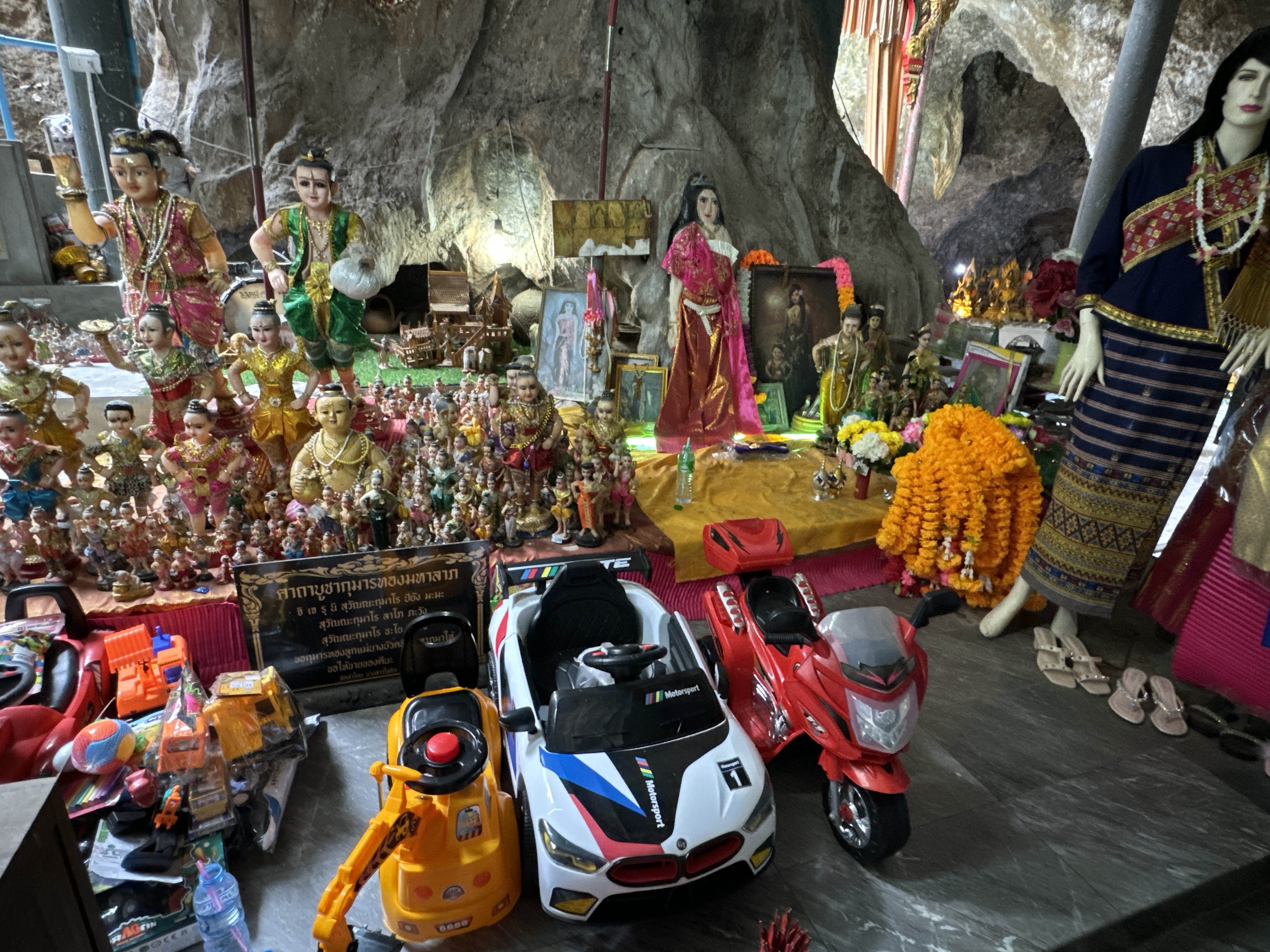
She was one of the many consorts of Khun Paen, a legendary governor of Kanchanaburi, an epic hero known to have been invincible in battle, irresistible in love, and skillful in magic. When Bua Kli died in pregnancy, Khun Paen extracted the unborn child to make a gumanthong, a powerful talisman that renders its wearer immune to all weapons.
Some of the locals say her spirit had become a ghost as a side effect, and now resides in this cave. Worshipers have wrapped the ...
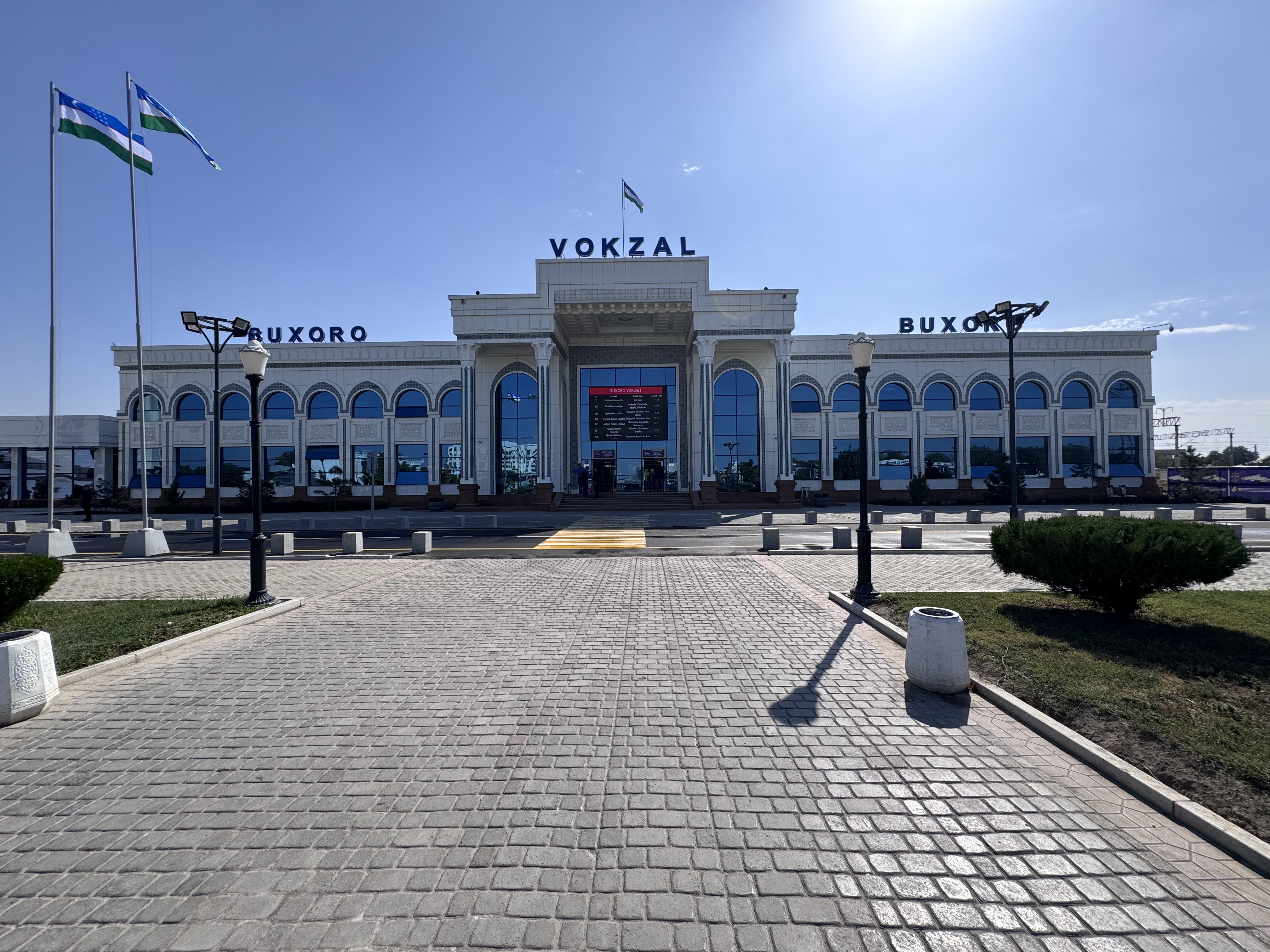
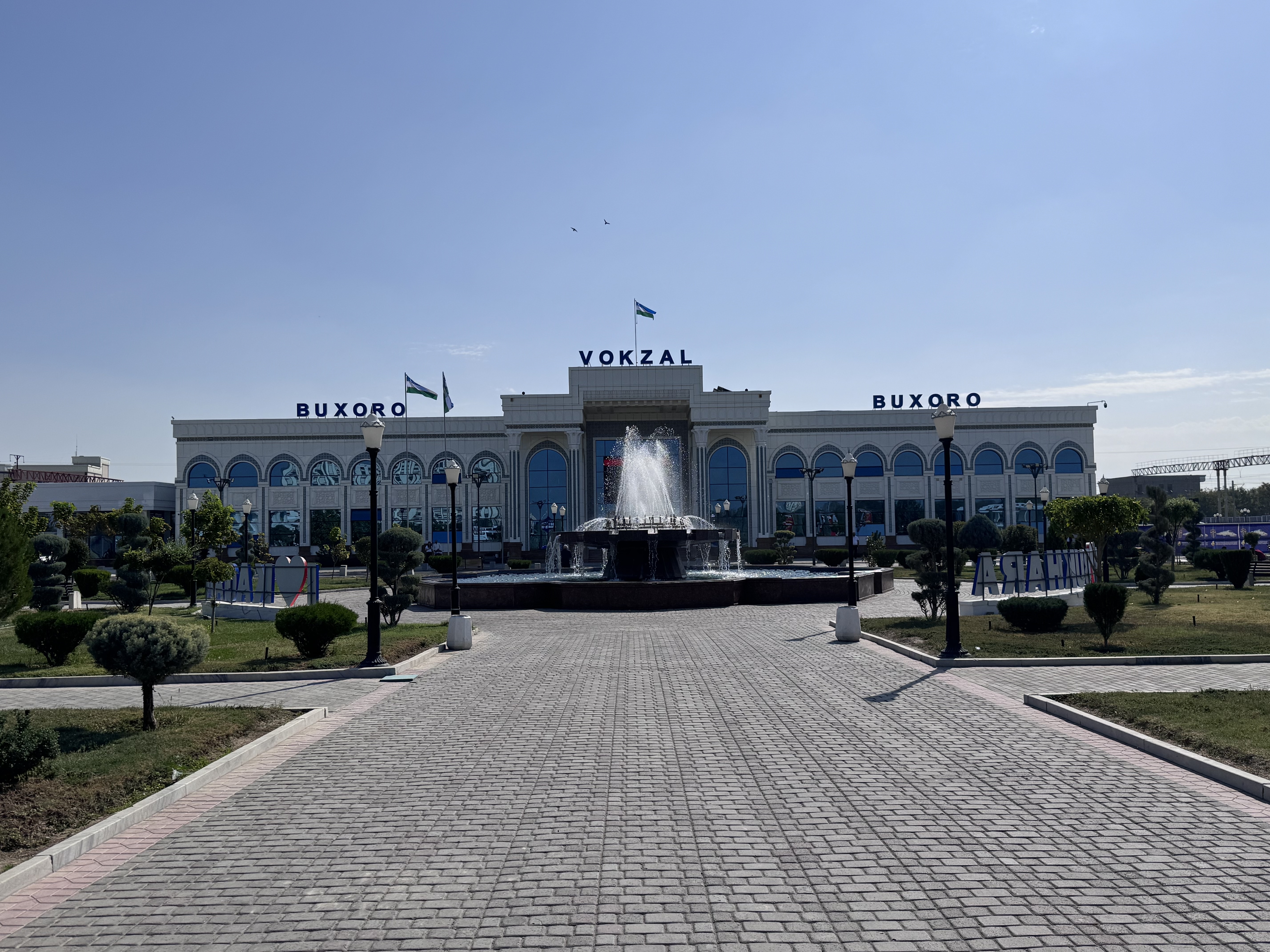
The railway network of Uzbekistan traces its roots to the late nineteenth century when the Russian Empire built the Trans-Caspian line across the region. During the Soviet period the system expanded into a dense network of broad-gauge tracks that linked industrial centers and agricultural zones.
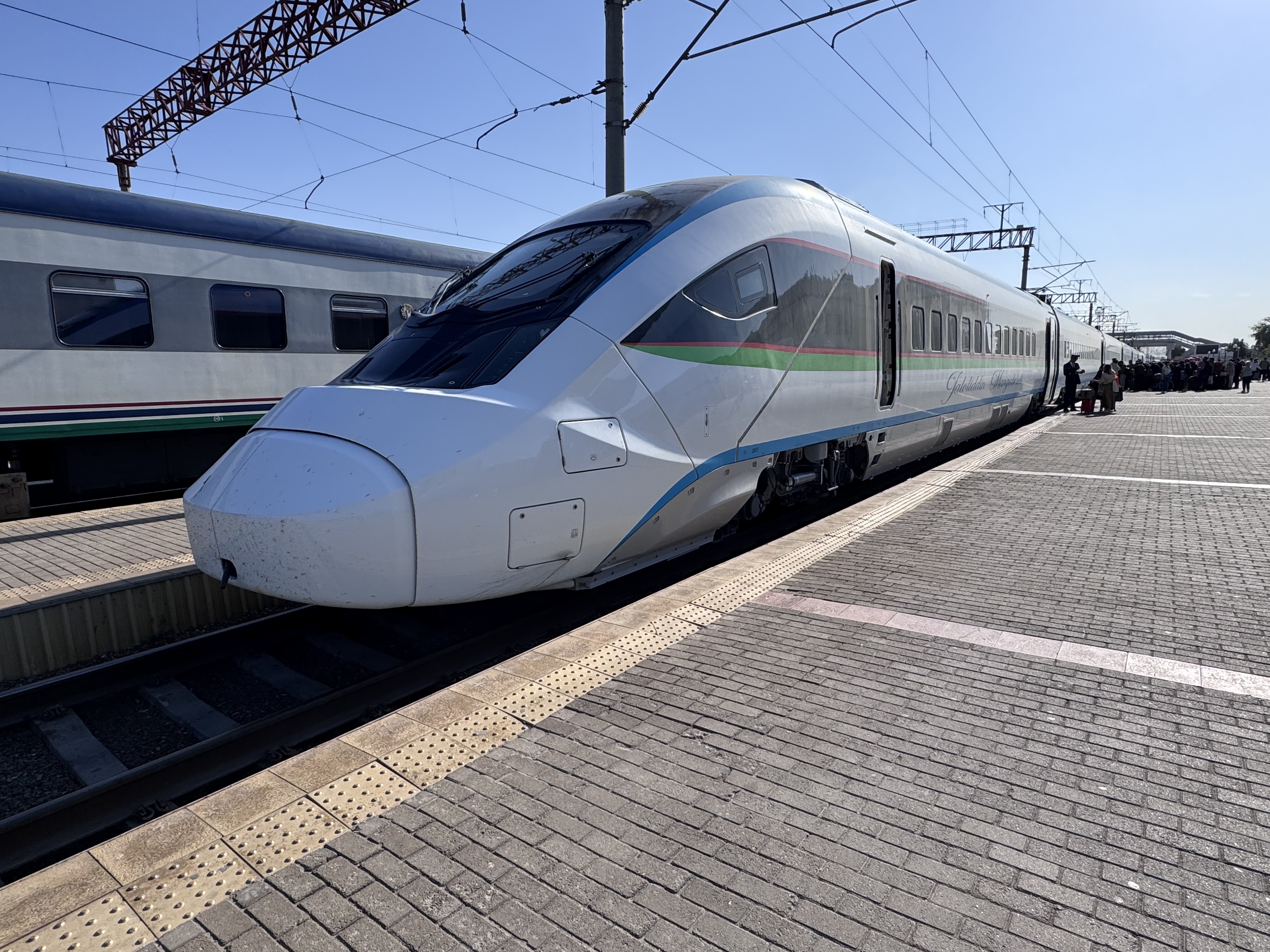
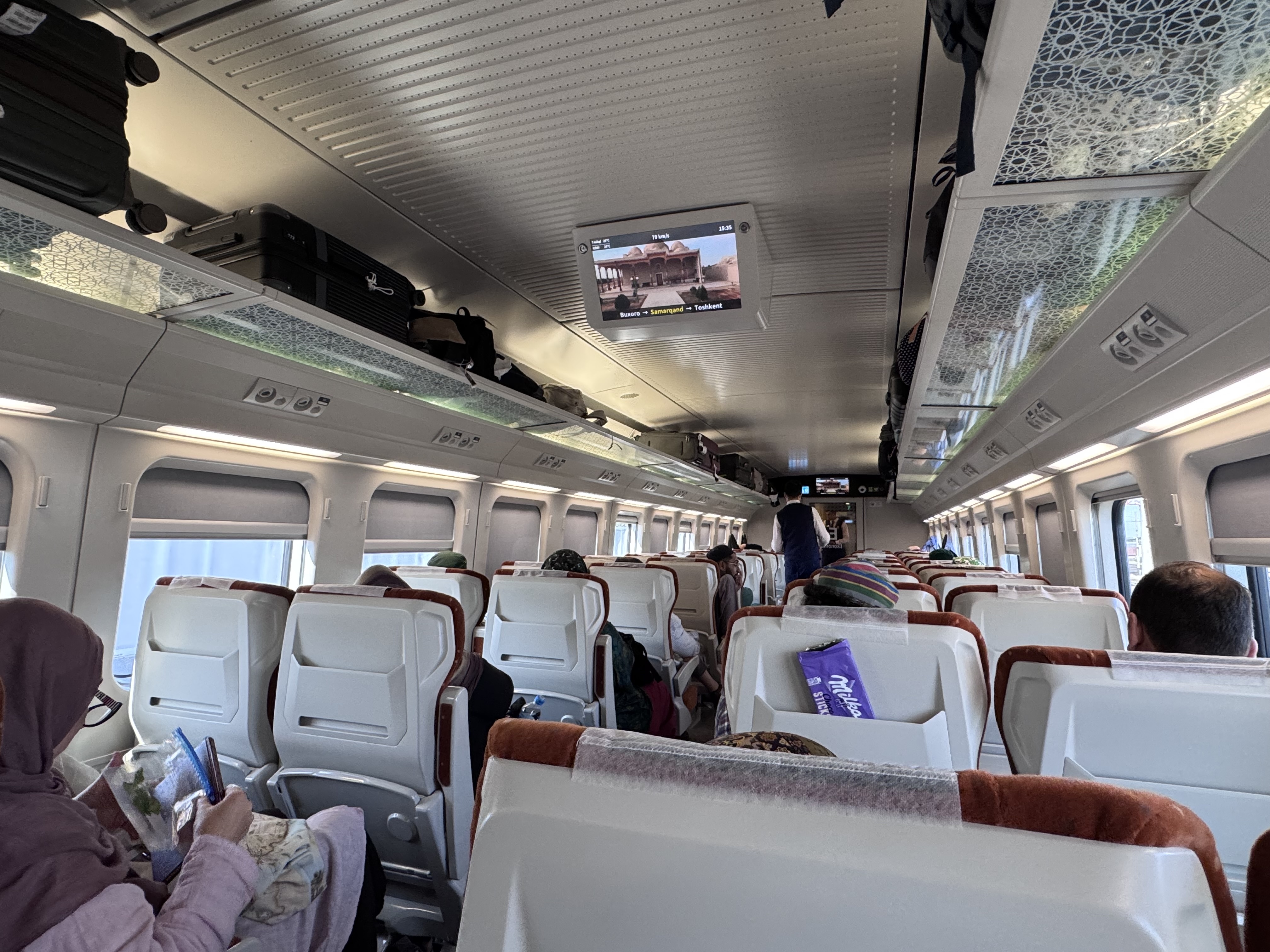
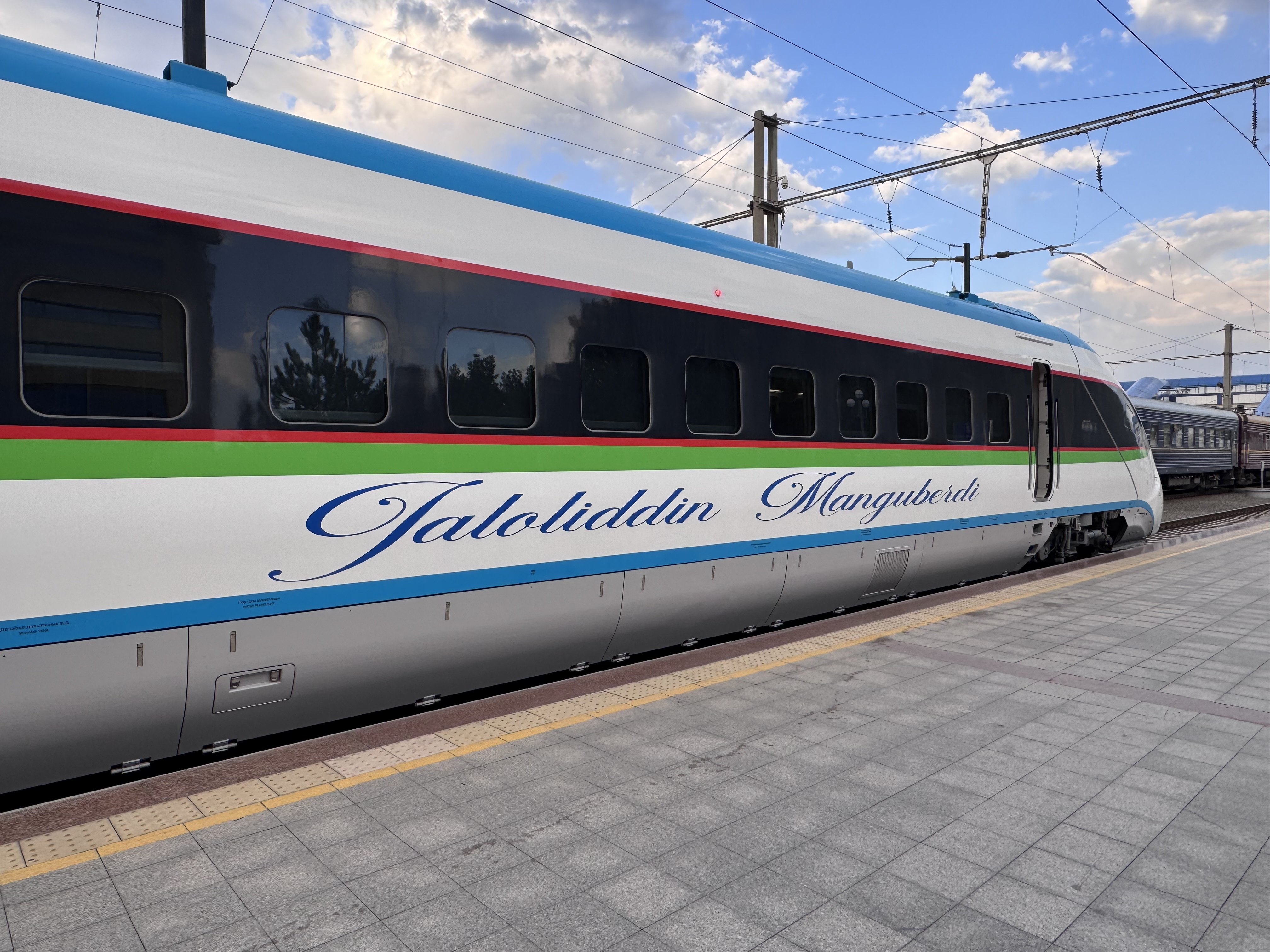
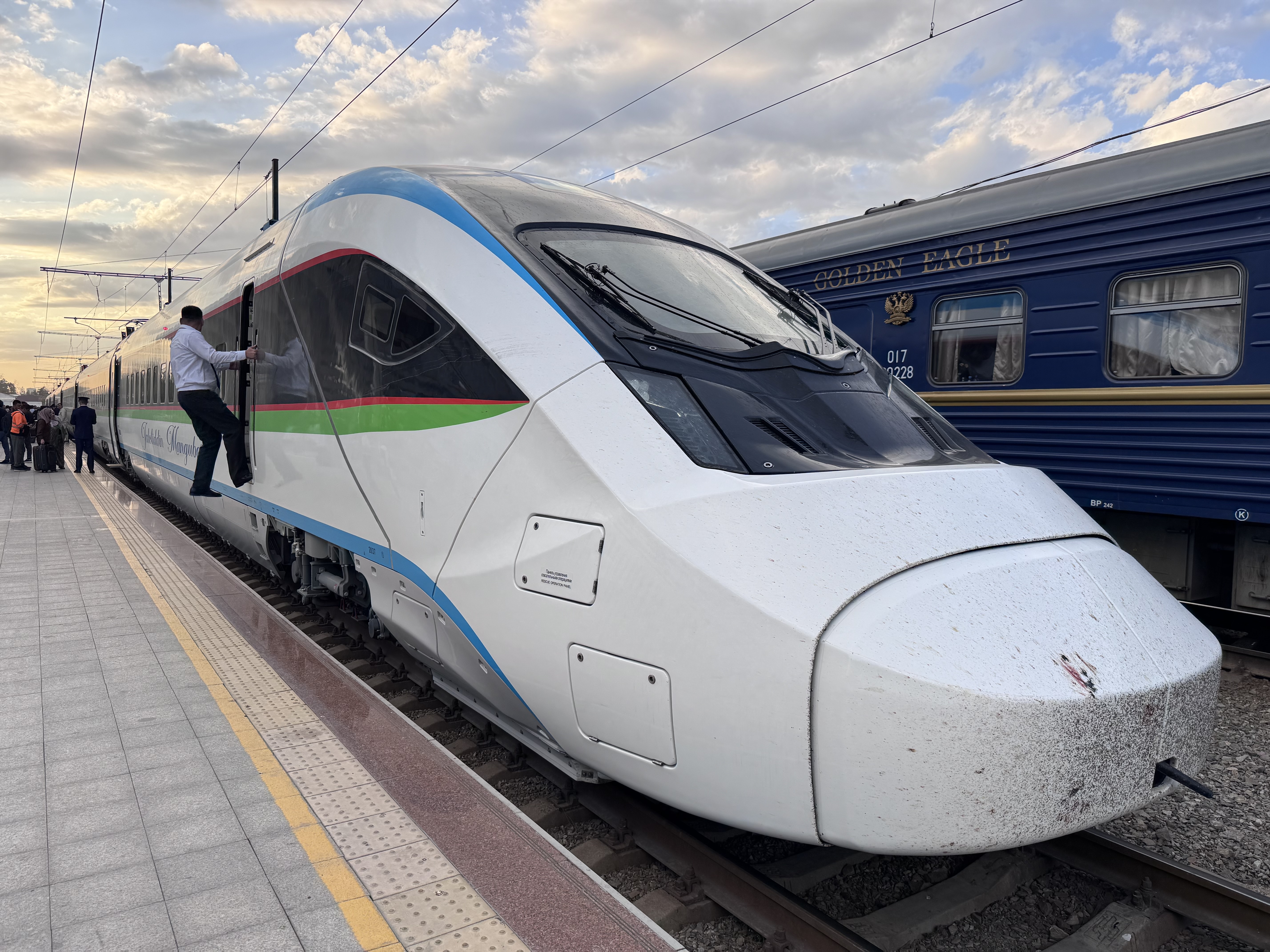
After independence the country began modernizing its rails, focusing first on passenger comfort and then on speed. The breakthrough came in 2011 with the introduction of the Afrosiyob high-speed trains built by Spain’s Talgo.
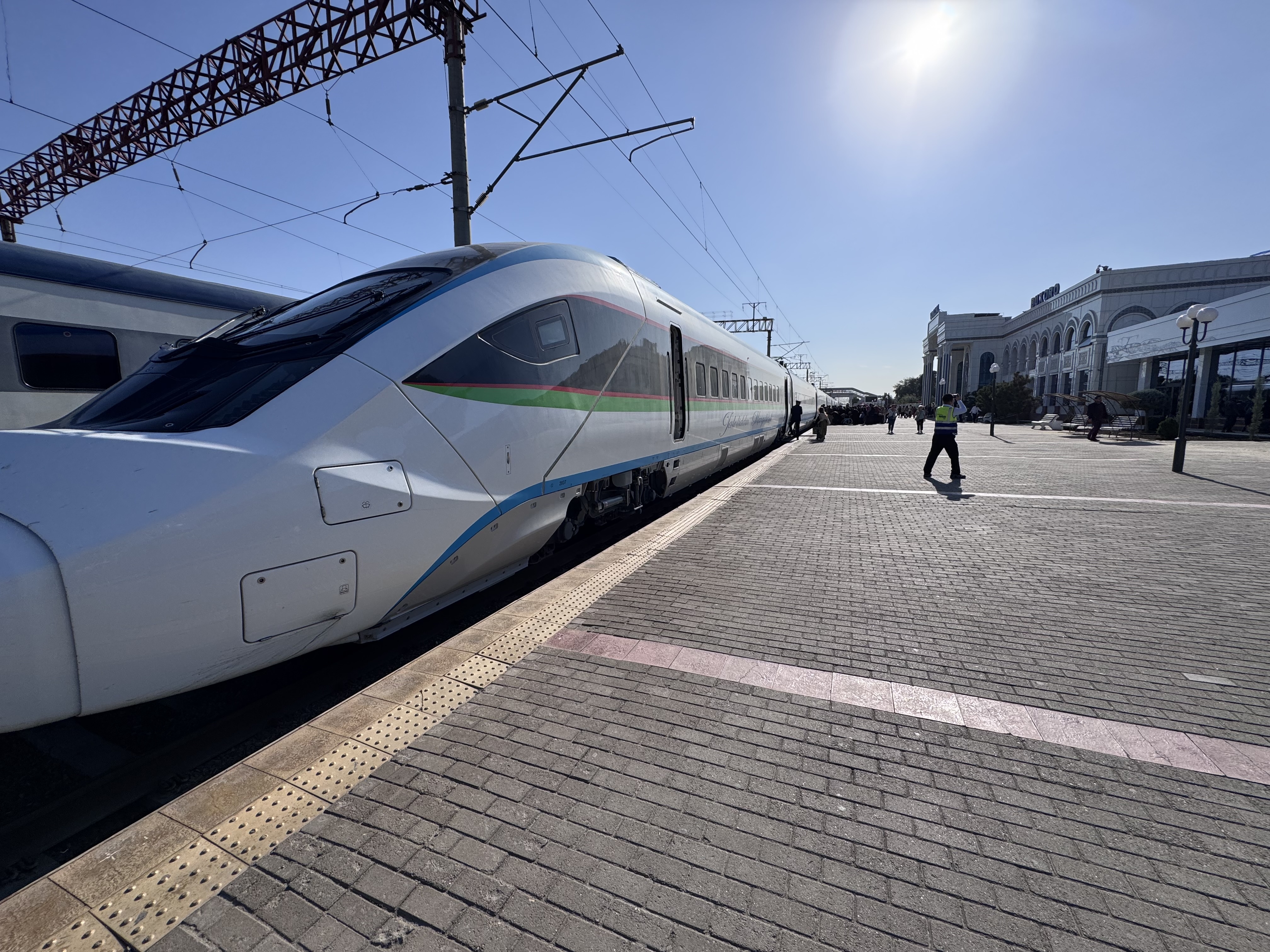
These Spanish trainsets cut the Tashkent to Samarkand journey from more than four hours to roughly two hours and soon extended service to Bukhara. In 2026 Uzbekistan Railways added a new generation of Korean-built trains that pushed the high-speed corridor farther west to Khiva, completing a continuous modern spine across the heart of the country.
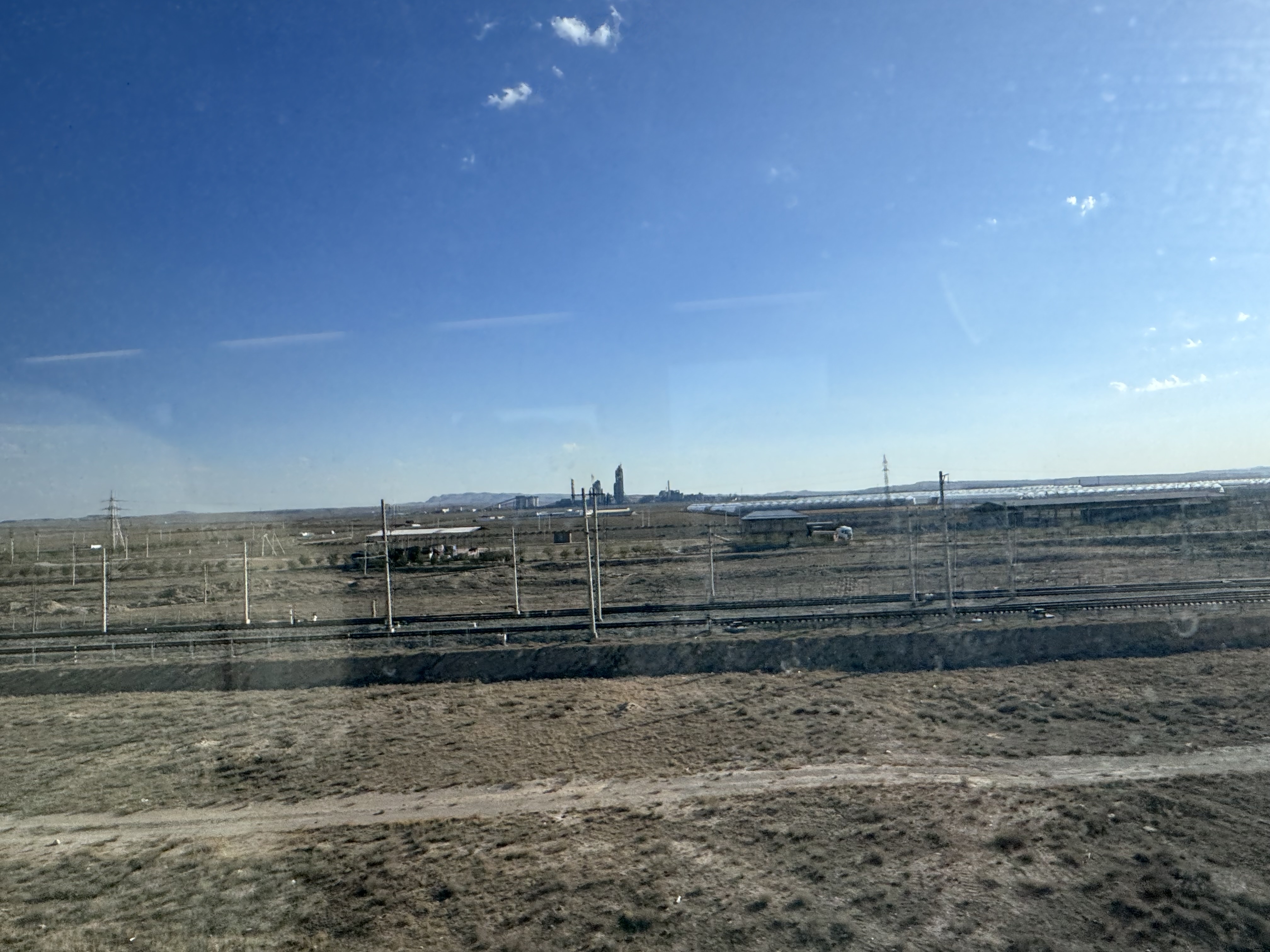
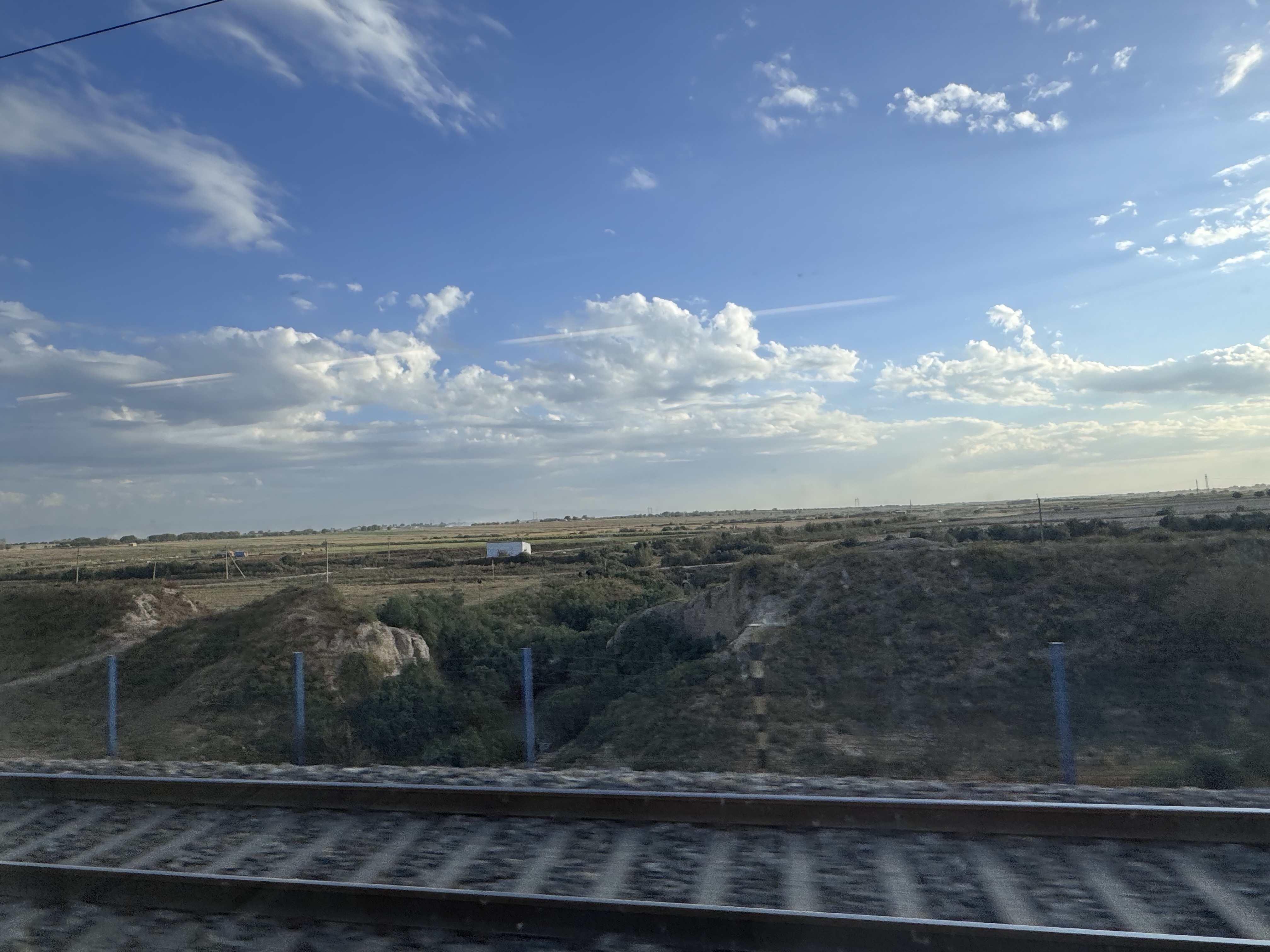
The route from Bukhara to Samarkand follows the upgraded high-speed line that runs roughly two hundred twenty kilometers across the open ...
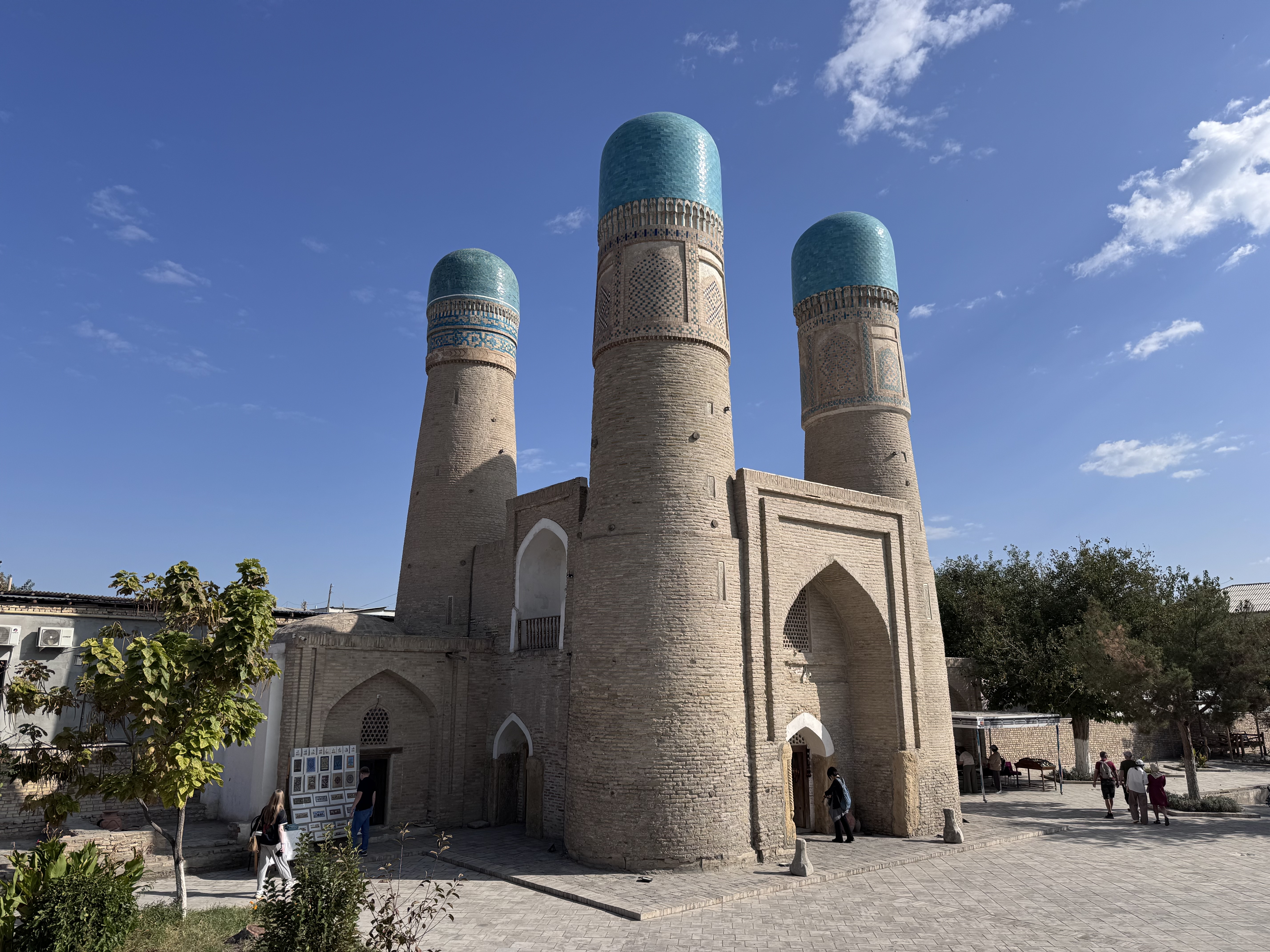
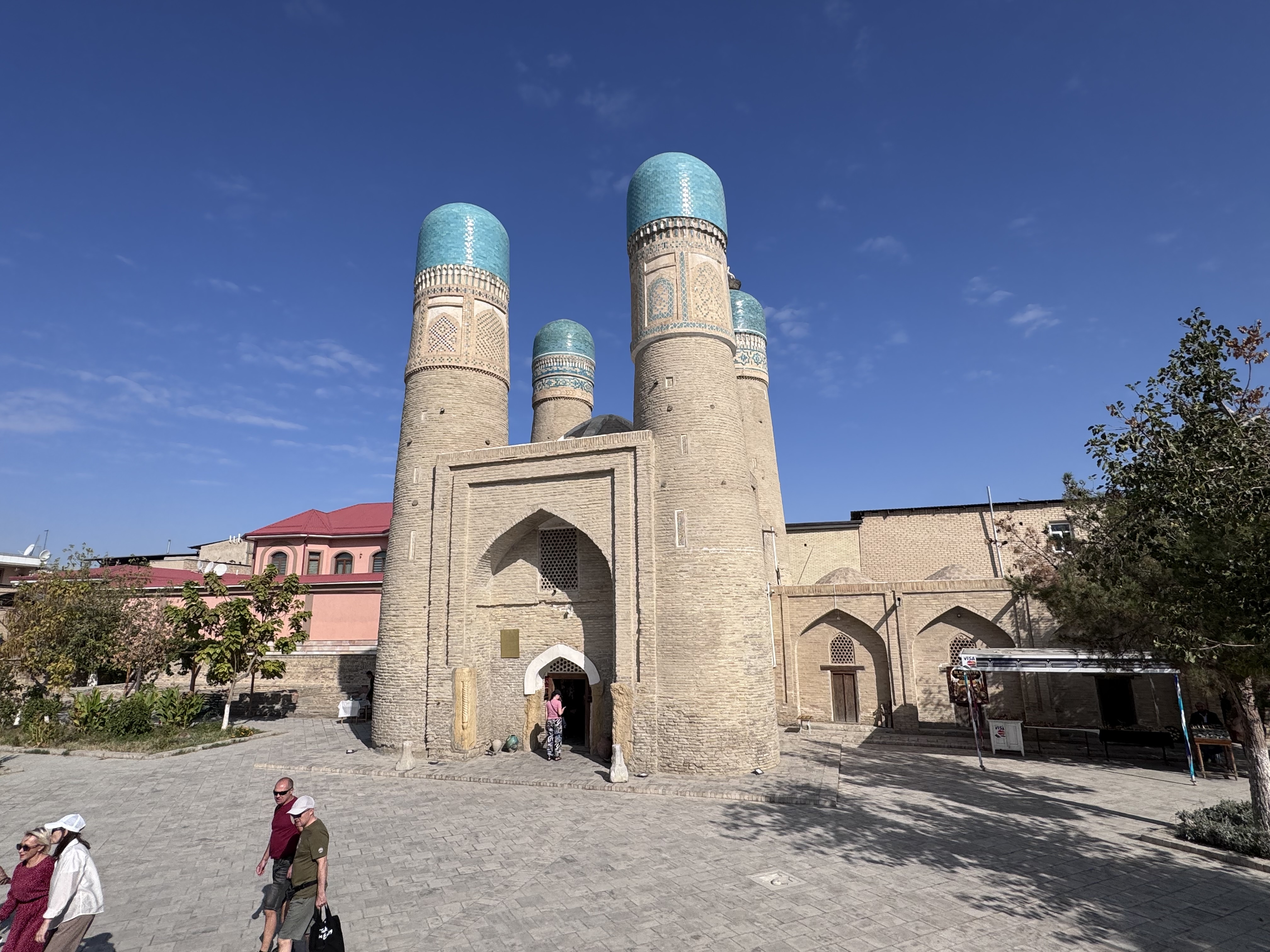
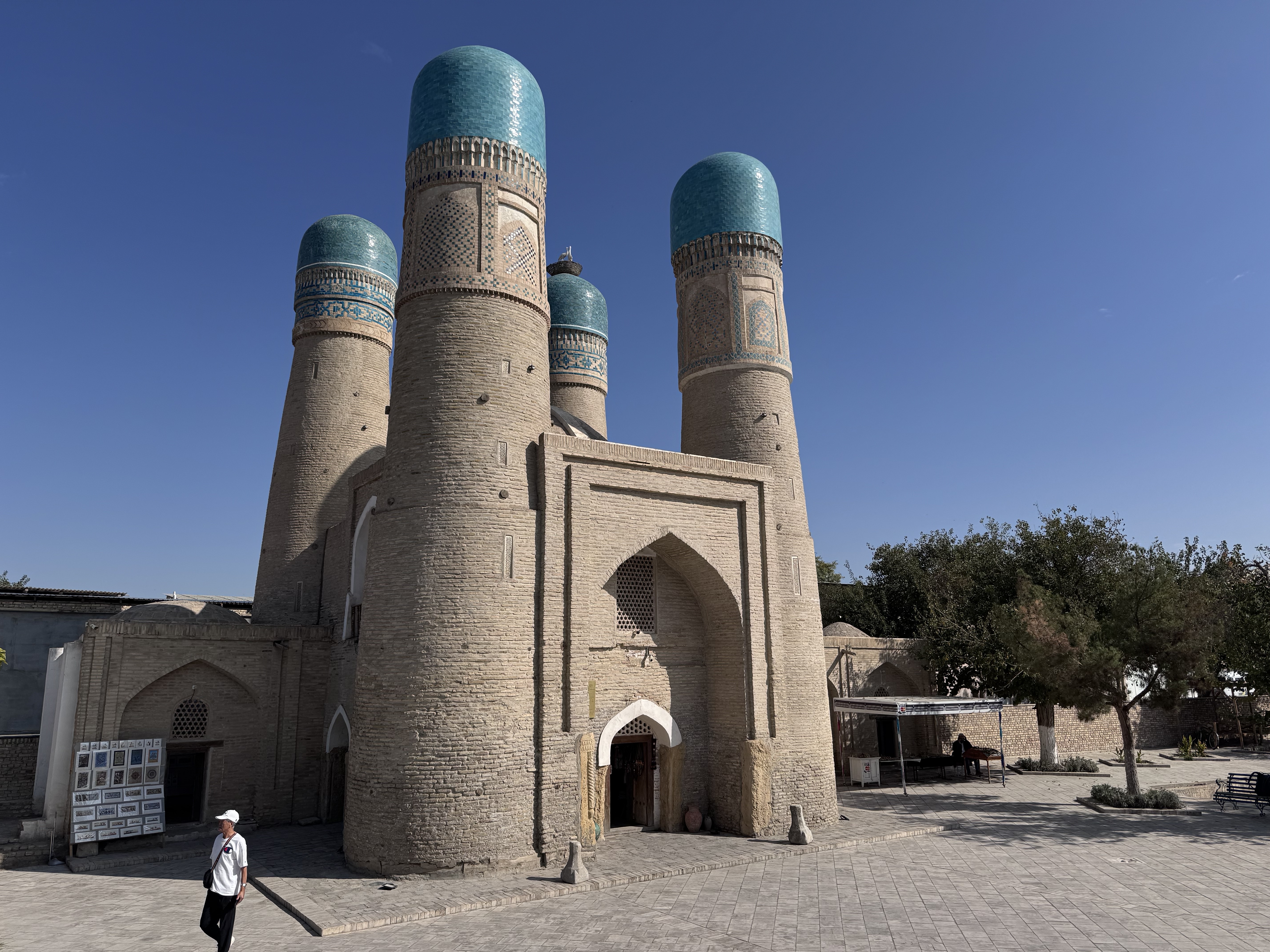
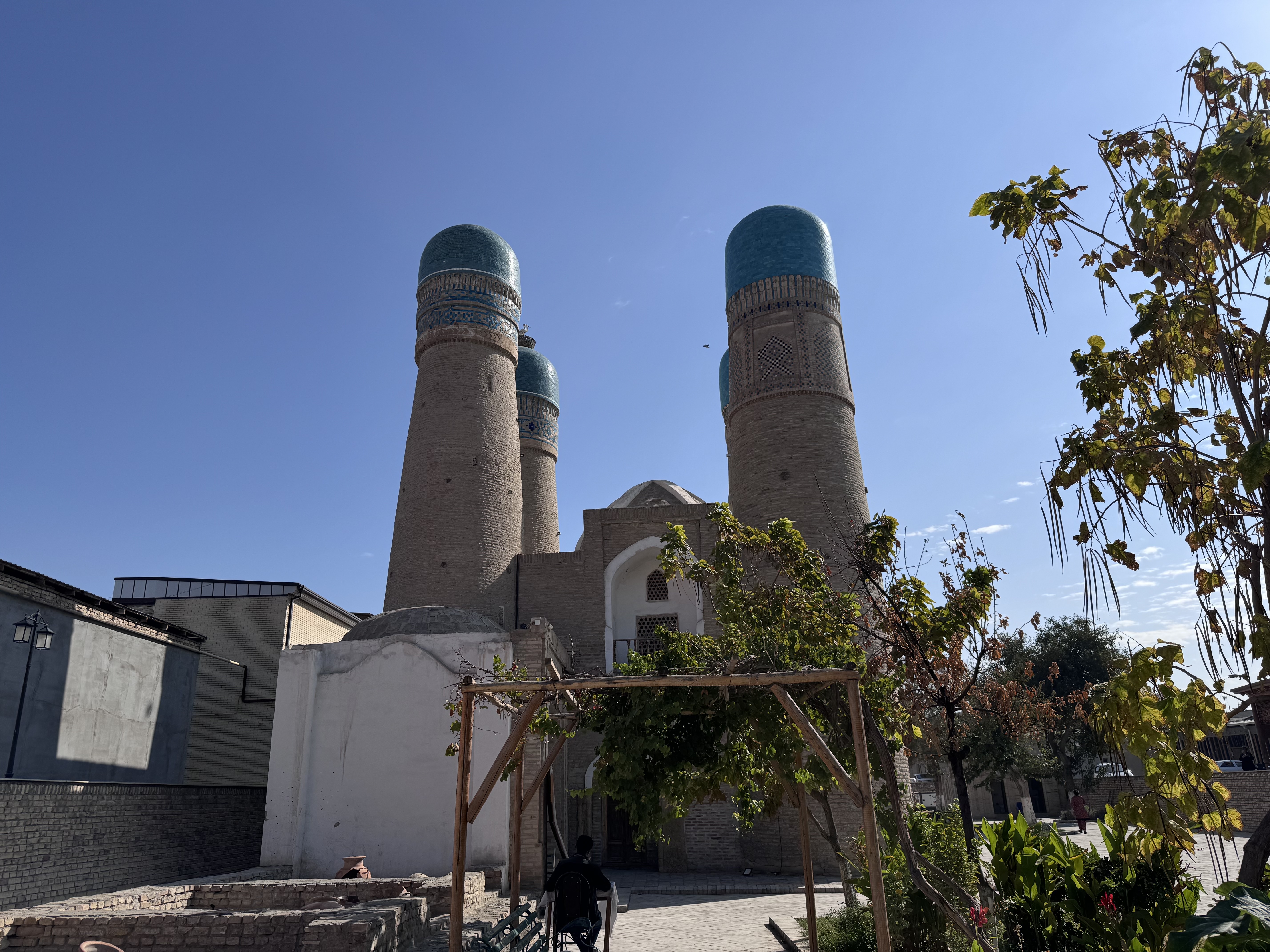
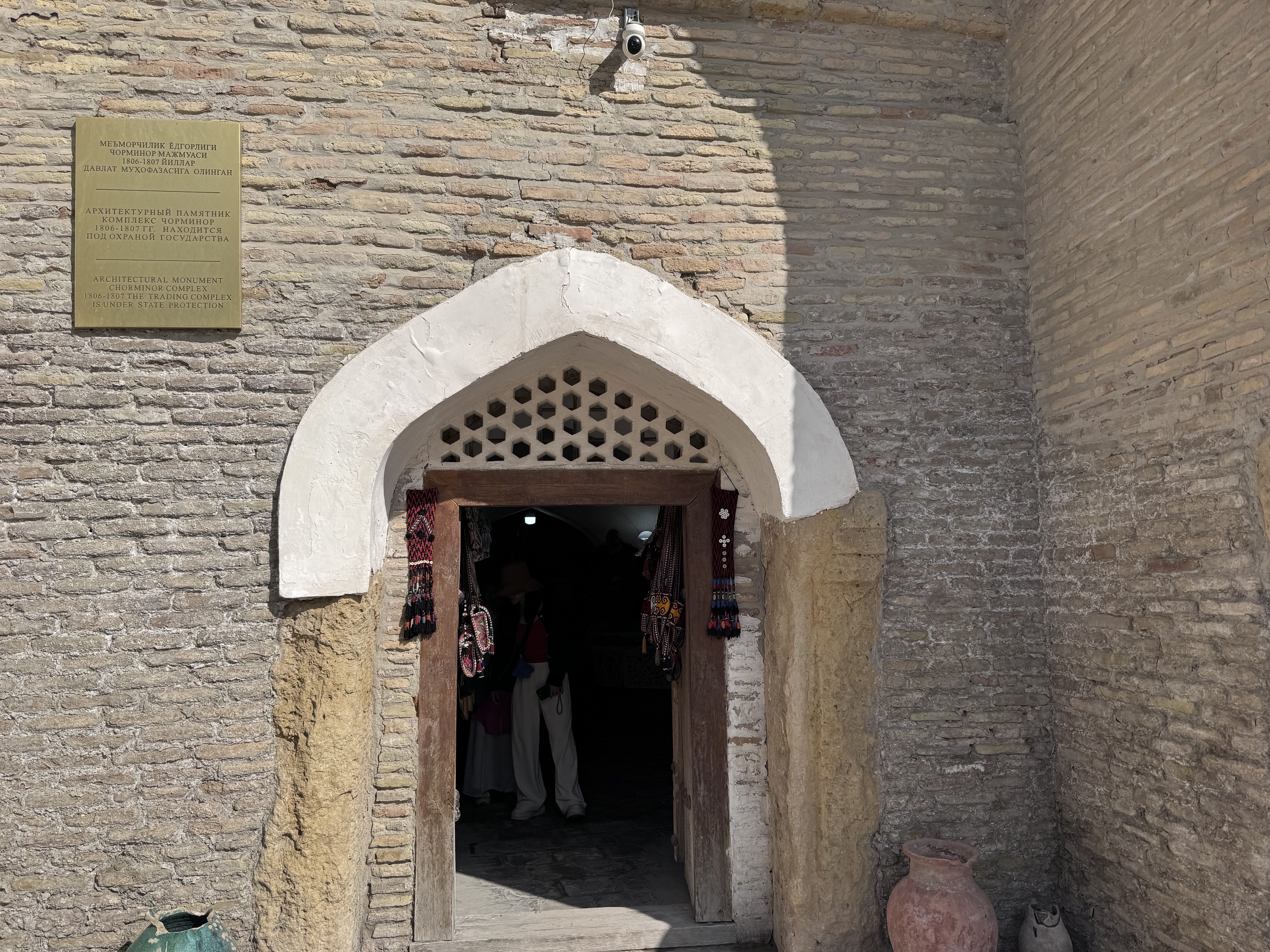
Chor Minor (also called the Madrasah of Khalif Niyaz-kul) is a distinctive early 19th century gatehouse in Bukhara’s historic center, Uzbekistan.
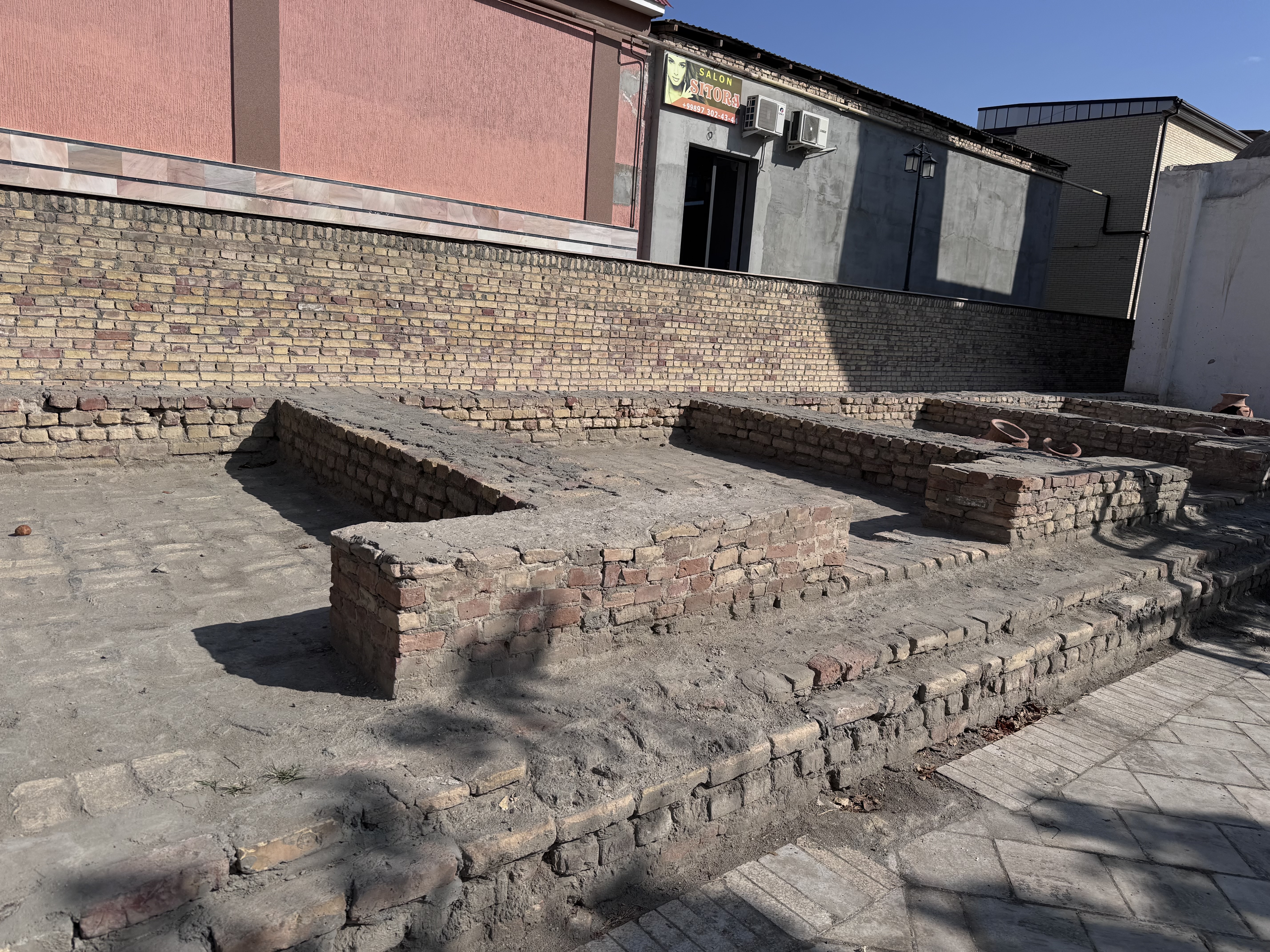
Built in 1807 by the wealthy Turkmen merchant and imam Khalif Niyaz-kul under the Manghit dynasty, it once formed the ornate entrance to a larger madrasa complex that has largely disappeared.
The compact brick structure is crowned by a central dome and four corner towers topped with turquoise ceramic domes; the towers are decorative rather than true minarets and give the building its Persian name meaning “four minarets.” Its unusual design, possibly inspired by India’s Charminar, stands apart from conventional Bukharan architecture.
One tower collapsed in 1995 and was later restored with UNESCO support. Today it remains a protected part of the UNESCO World Heritage Site of Bukhara’s Historic Center.
Chor Minor Madrasah: Bukhara’s Hidden Four Tower Gem & UNESCO World Heritage Site - Uzbekistan 2026
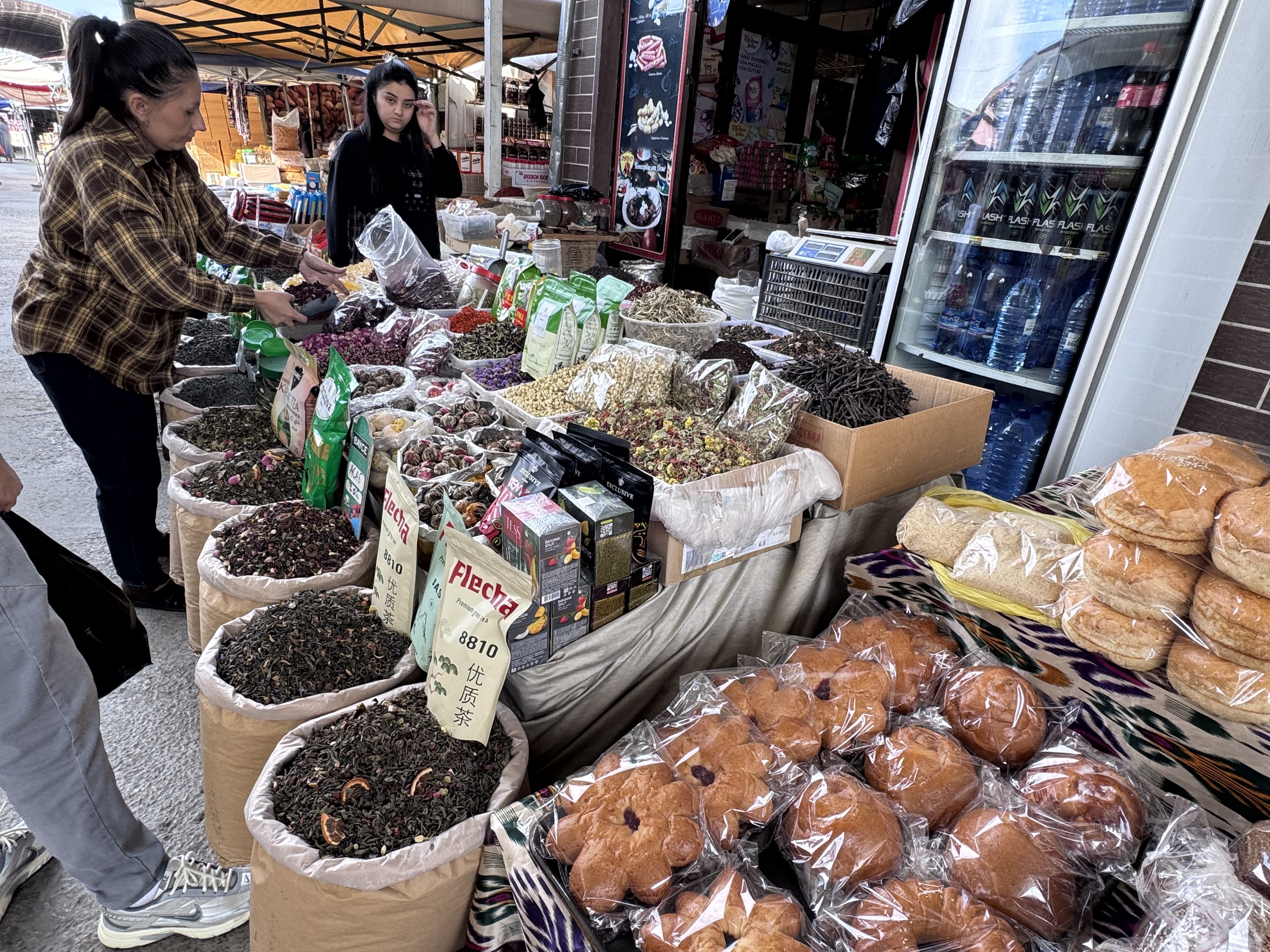
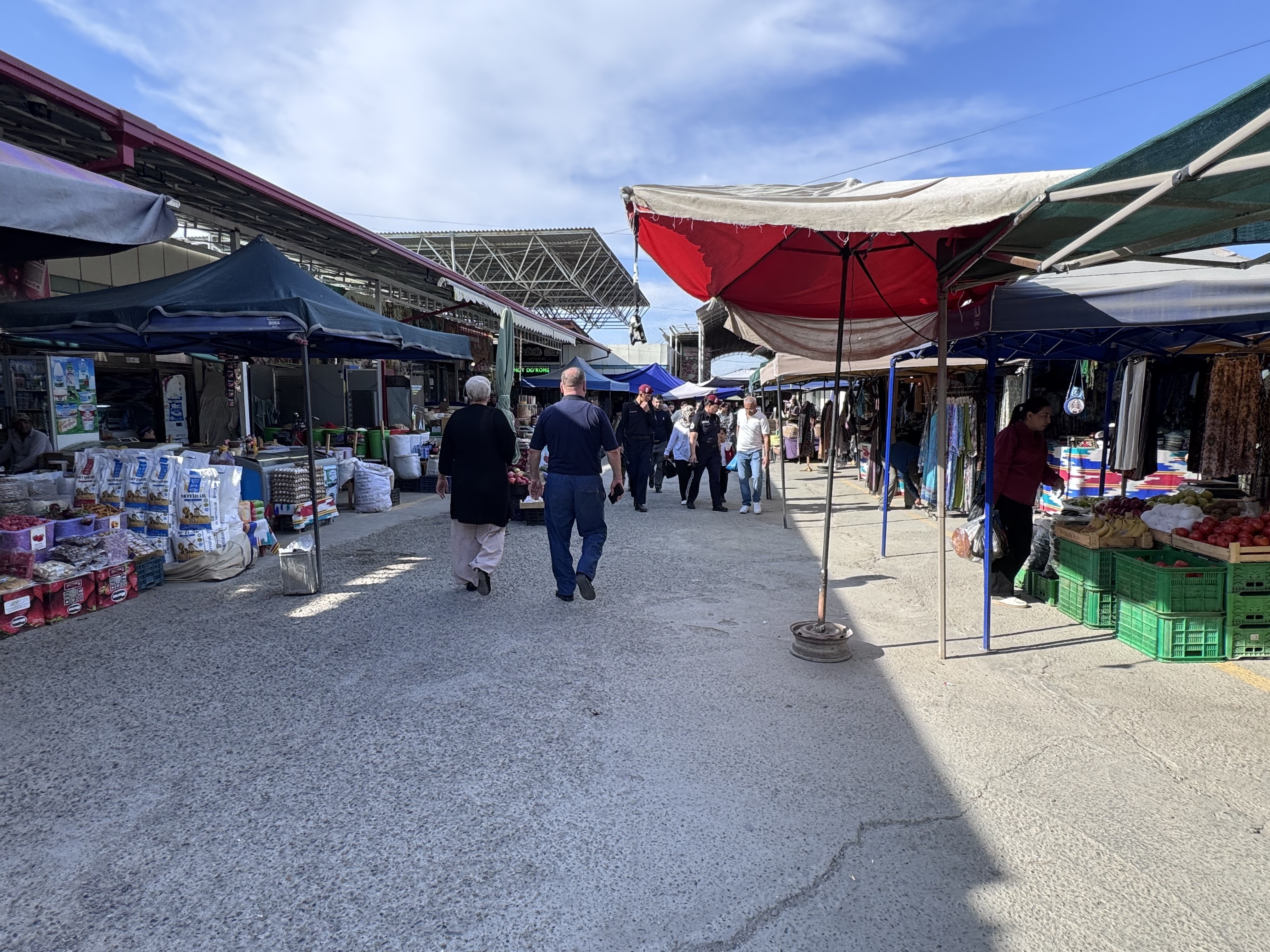
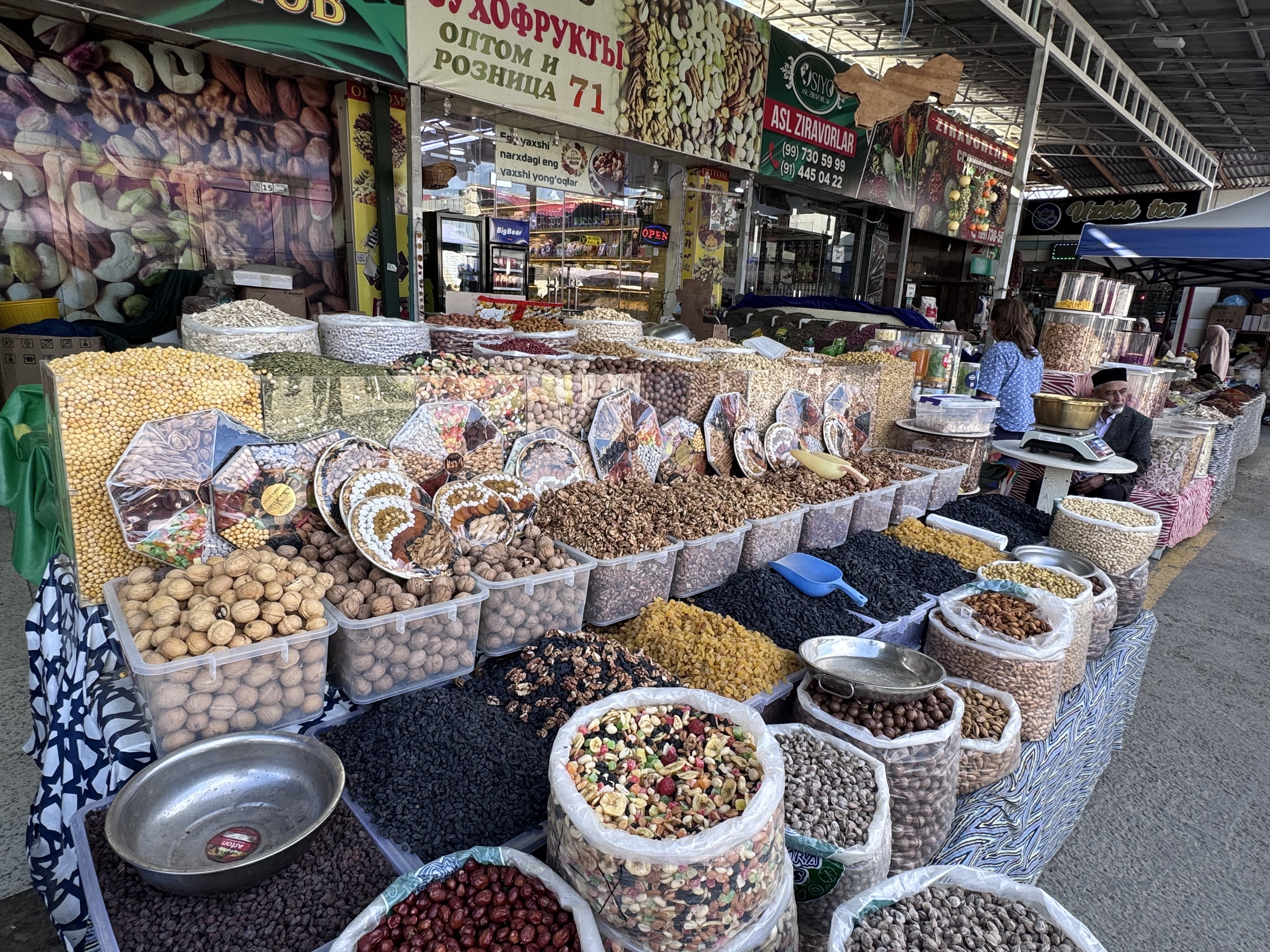
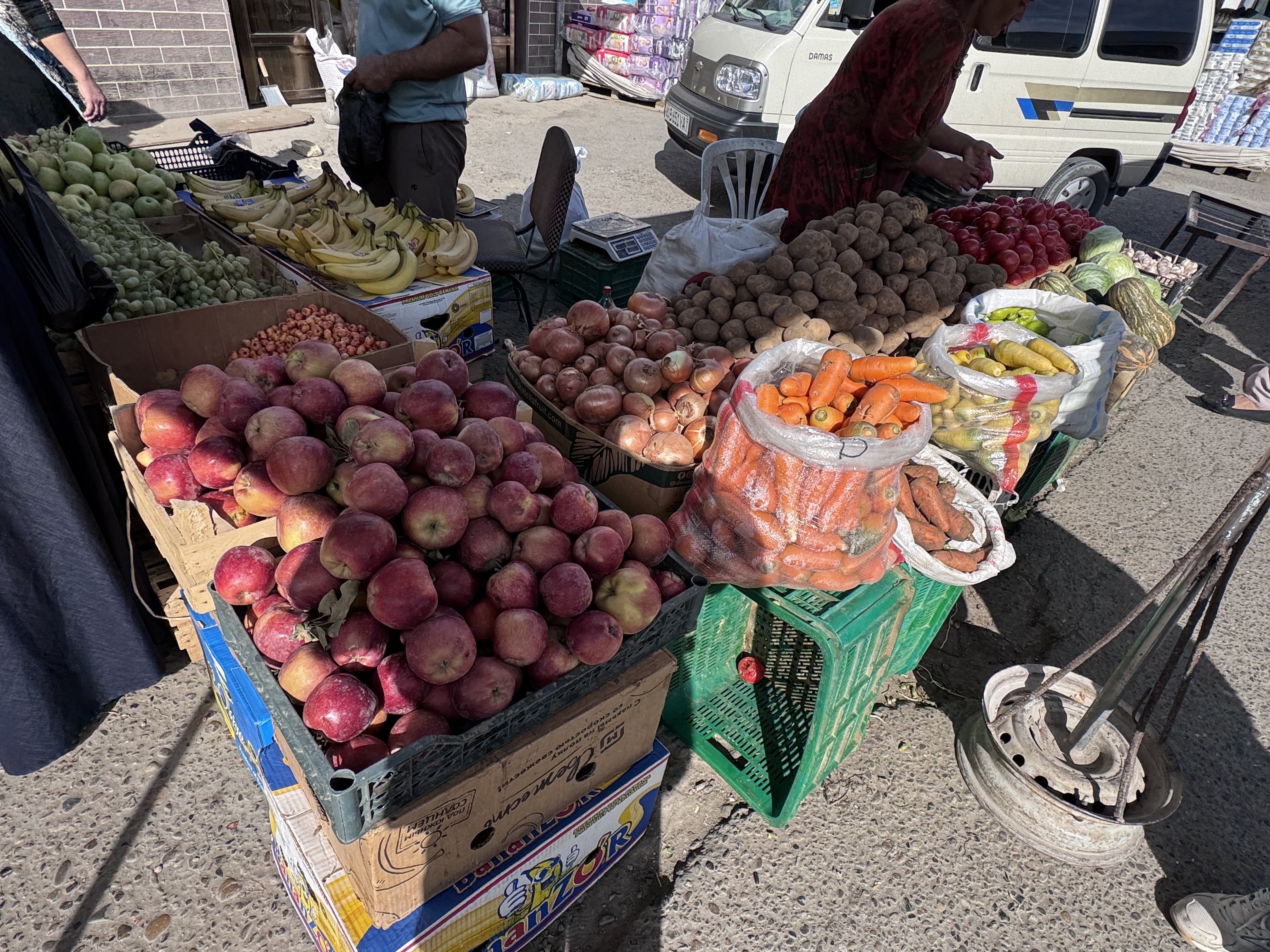
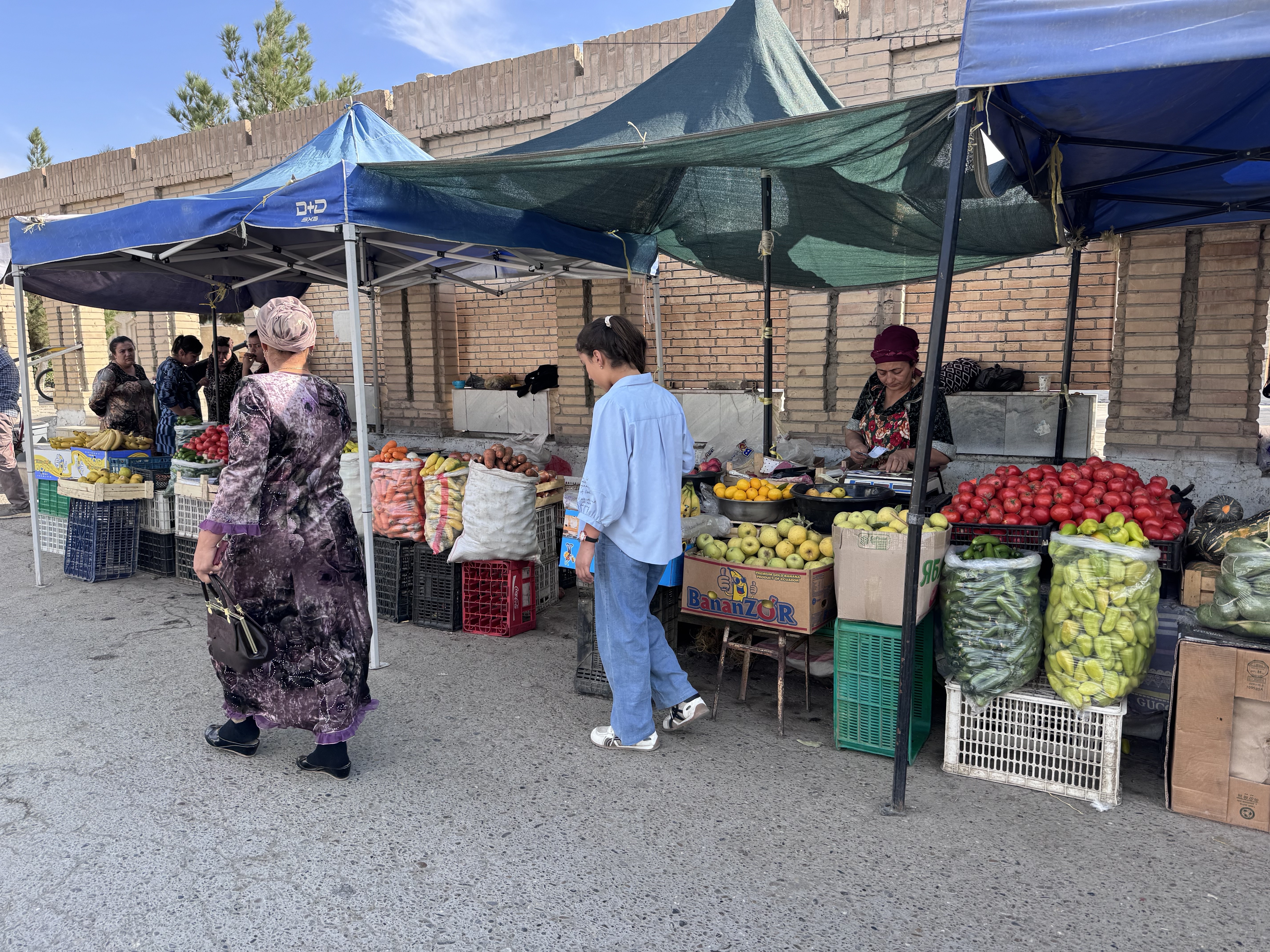
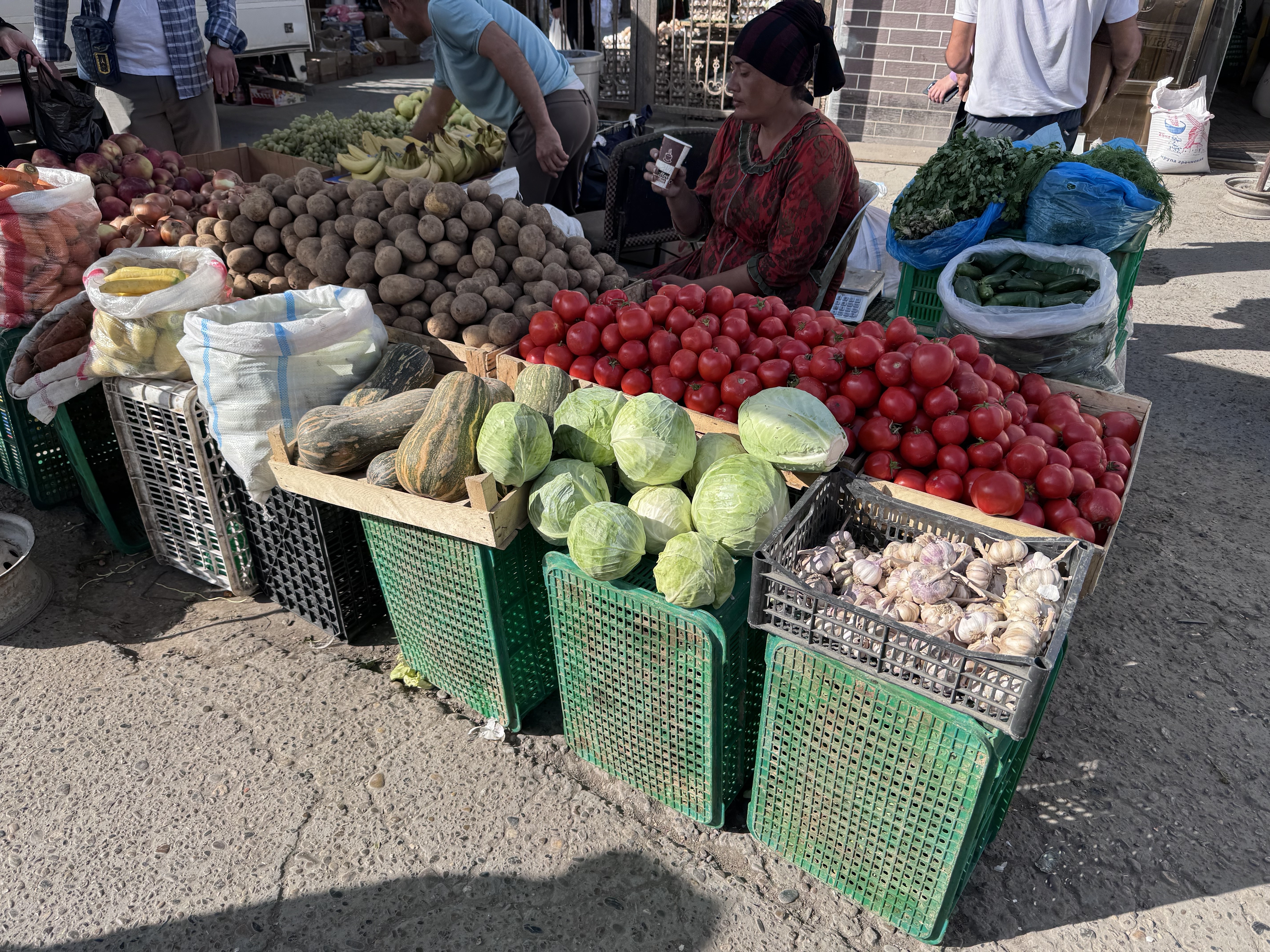
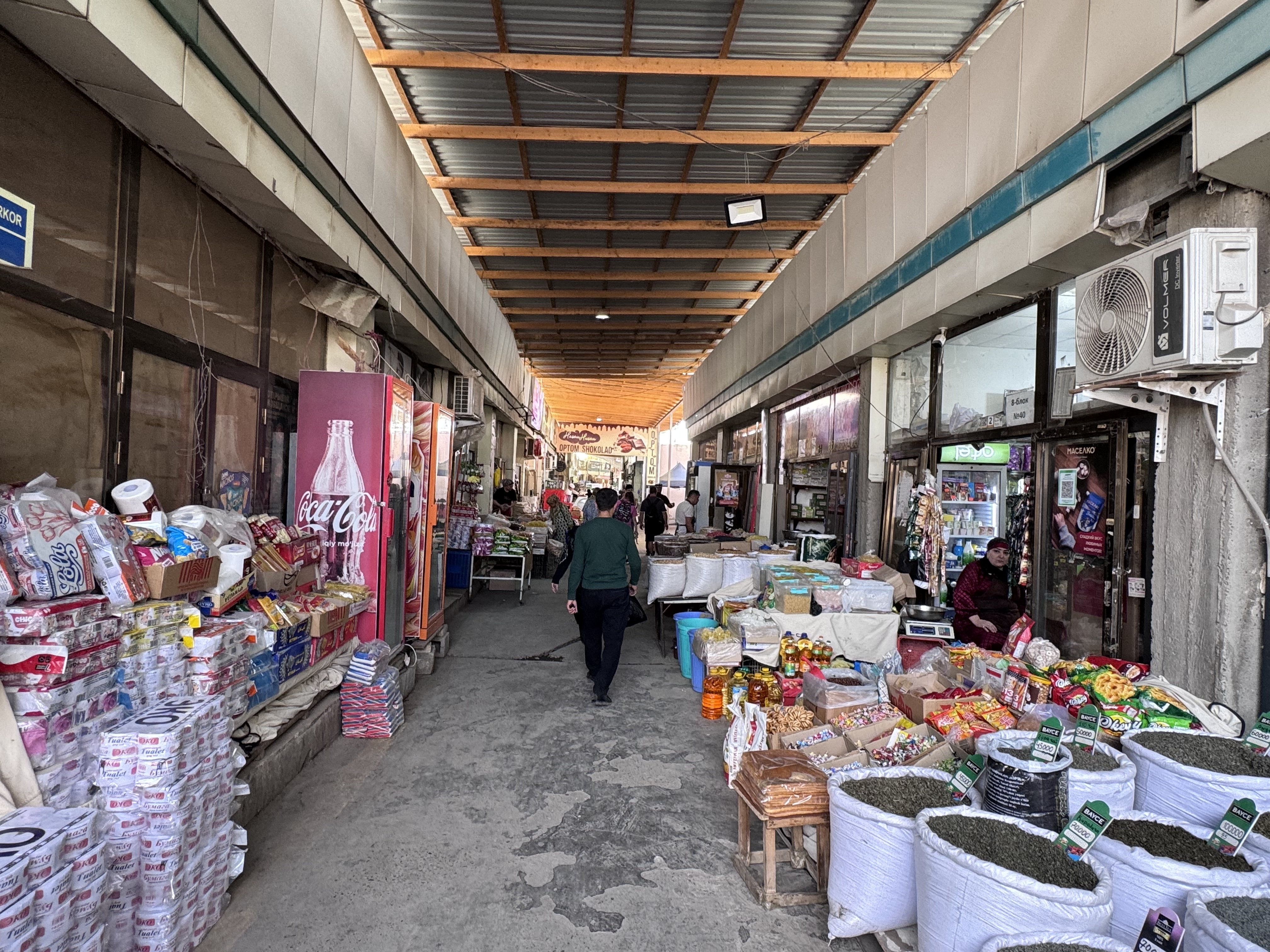
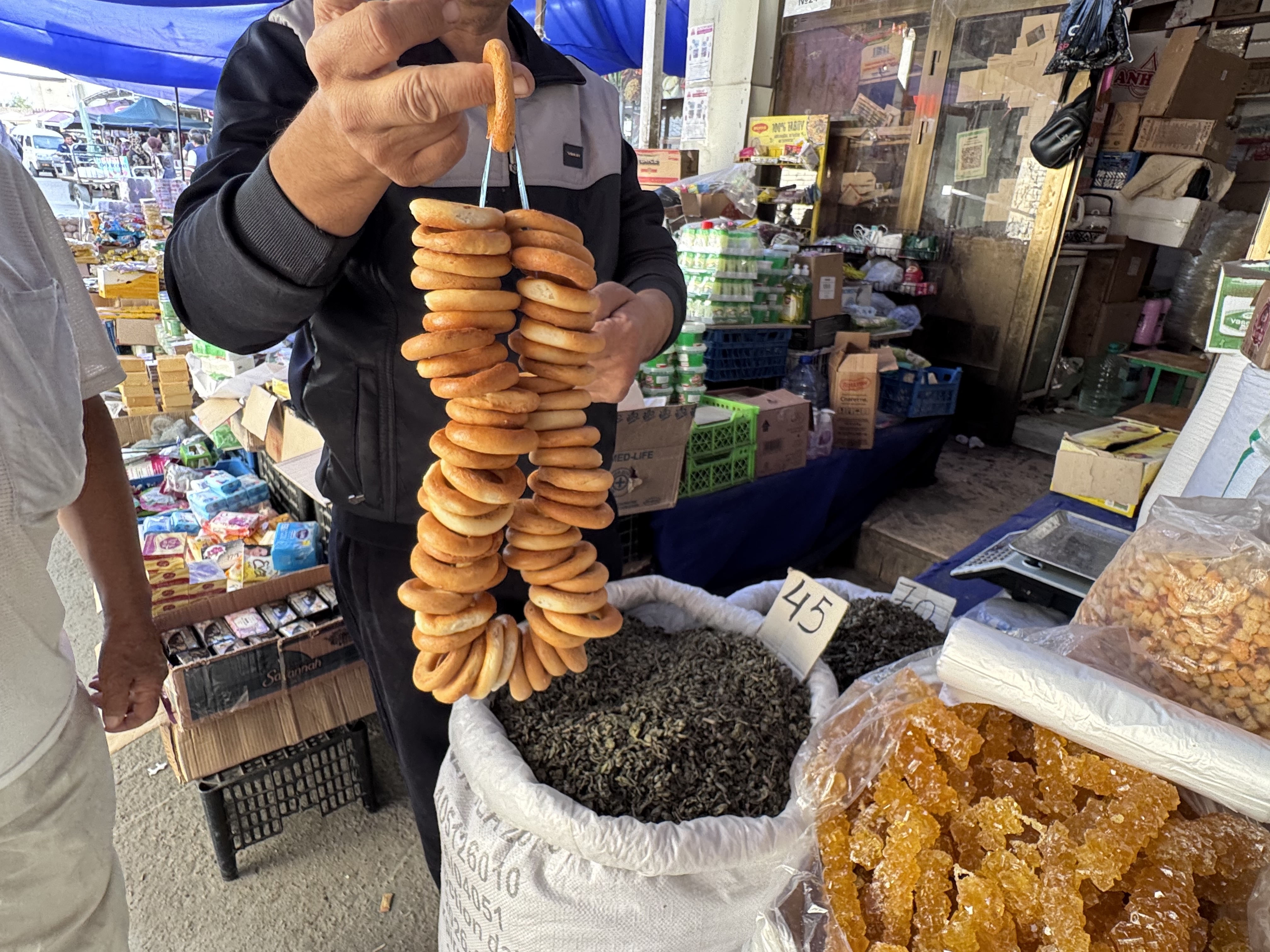
Markaziy Bozor, also known as Kolkhoznyy Rynok or the Central Market of Bukhara, stands on the northern edge of the historic city, close to the Chashma-Ayub Mausoleum, the remains of Talipach Gate, and the green expanse of Samanid Park.
Unlike the sixteenth century covered trading domes that fill the tourist core of the old town, this large marketplace serves the daily needs of local residents and visitors seeking an unfiltered glimpse of contemporary Uzbek life.
Formed during the Soviet period and operating in its present form since the 1980s, it continues Bukhara’s long commercial tradition while occupying a modern site outside the main UNESCO protected monuments.
Farmers from villages within a fifty kilometer radius bring fresh produce each morning, filling the stalls with melons, watermelons, plums, figs, vegetables, dairy products, meats, spices, nuts, dried fruits, honey, and freshly baked flatbreads known as lepyoshka. Sections for clothing, household goods, and simple prepared foods ...